Cite
MLA
“Direct Action Day and the Great Calcutta Killings.” Hindu History, 2026, https://www.hinduhistory.in/ghatana/direct-action-day-calcutta-1946/. Accessed .
APA
Hindu History. (2026). Direct Action Day and the Great Calcutta Killings. Retrieved , from https://www.hinduhistory.in/ghatana/direct-action-day-calcutta-1946/
01The call
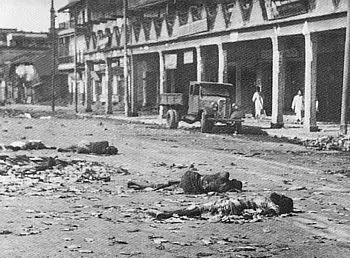
In July 1946 the League withdrew from the Cabinet Mission plan, and Muhammad Ali Jinnah announced Direct Action to achieve Pakistan. Bengal was the one province with a League government, under the Chief Minister H. S. Suhrawardy. His government declared 16 August a public holiday. A large League rally gathered at the Ochterlony Monument that afternoon, and attacks on Hindu shops and homes began in the city that day.
02Four days
For three days the police did little and the army was called in late. Hindus and Sikhs organised their own defence, among them Gopal Mukherjee’s group in central Calcutta, and the killing went both ways; victims on both sides were mostly poor workers, hawkers and boatmen. The Statesman, which first called it the Great Calcutta Killing, put the dead at 2,000 to 3,000 in its early reports; later estimates are commonly about 4,000, with many thousands injured and about a lakh made homeless.
03The chain that followed
Calcutta broke the hope of a united India. In October came the attacks on Hindus in Noakhali and Tippera; in late October and November Hindu mobs killed Muslims in large numbers in Bihar, and there was killing at Garhmukteshwar in the United Provinces. Within a year the League’s demand was granted and the country was partitioned. Suhrawardy’s handling of the police in those days was condemned by the Governor of Bengal, Sir Frederick Burrows, in his reports to the Viceroy.