Cite
MLA
“Noakhali and Tippera killings.” Hindu History, 2026, https://www.hinduhistory.in/ghatana/noakhali-1946/. Accessed .
APA
Hindu History. (2026). Noakhali and Tippera killings. Retrieved , from https://www.hinduhistory.in/ghatana/noakhali-1946/
01Lakshmi Puja night
Hindus were less than a fifth of Noakhali’s people but held much of its land and trade. After the Calcutta killings, speeches by Ghulam Sarwar Hussaini, a local pir and politician, stirred crowds in Ramganj. From 10 October armed bands moved through the police circles of Ramganj, Begumganj, Lakshmipur and others, and into Faridganj, Hajiganj and Chandpur in Tippera. The house of the Bar Association president Rajendra Lal Roy Chowdhury at Karpara was among the first attacked; he and men of his family were killed.
02The toll
The official estimate of the dead was about 200; the writer Sukumar Roy counted 285 Hindus killed, and other Hindu accounts gave far higher numbers. Conversions were on a much larger scale. The Bengal Chief Minister H. S. Suhrawardy himself told the Assembly of 9,895 cases of conversion in Tippera alone, and said those in Noakhali ran into thousands. A report by the retired judge Edward Simpson, made for the Bengal government and kept from publication, counted 22,550 in three police circles of Tippera. Tens of thousands of Hindus fled to relief camps.
03Gandhi in Noakhali
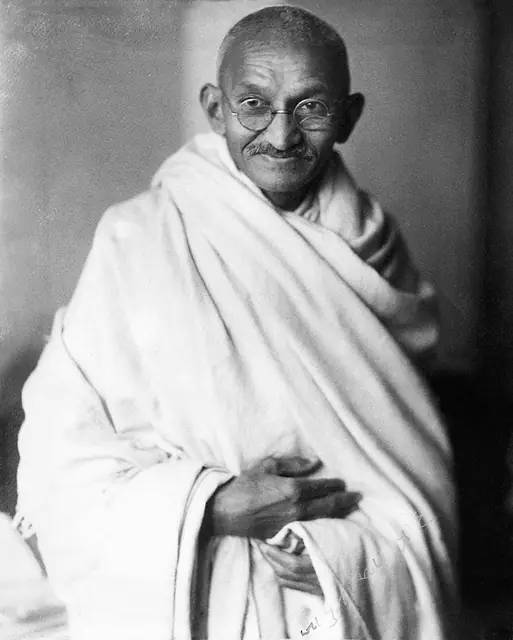
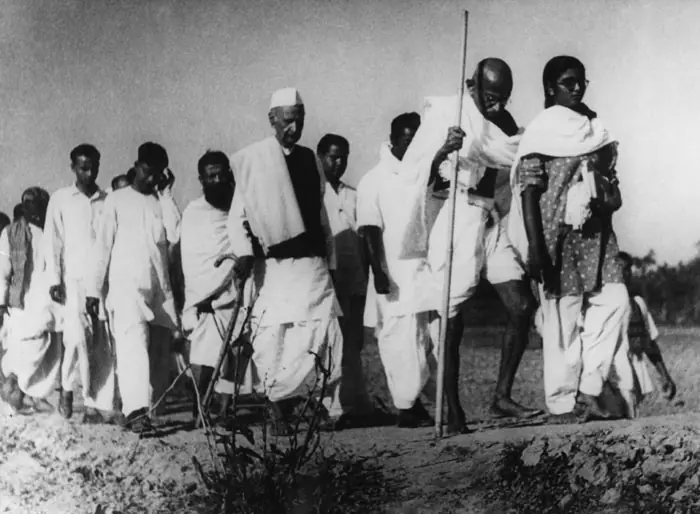
Gandhi reached Noakhali on 7 November 1946 and stayed until March 1947, walking barefoot from village to village to bring Hindus back to their homes. Acharya J. B. Kripalani and his wife Sucheta Kripalani worked in the relief camps. Most Hindu families did not return to stay. Noakhali, with Calcutta before it, persuaded many Hindus of Bengal that they could not live safely in a Pakistan, and led to the demand for Bengal itself to be divided.