Cite
MLA
“Aurangzeb reimposes the jizya.” Hindu History, 2026, https://www.hinduhistory.in/ghatana/reimposition-of-jizya-1679/. Accessed .
APA
Hindu History. (2026). Aurangzeb reimposes the jizya. Retrieved , from https://www.hinduhistory.in/ghatana/reimposition-of-jizya-1679/
01The tax
The jizya was a yearly tax that Islamic law laid on non-Muslim subjects, graded by wealth. Akbar ended it in 1564, and for more than a century Mughal Hindus did not pay it. The Maasir-i-Alamgiri records that in April 1679 Aurangzeb ordered it collected again from the Hindus throughout his dominions. Under the law women, children, the old, the disabled and the destitute were exempt, and the rest paid in three grades: poor, middling and rich.
02Protest at the fort
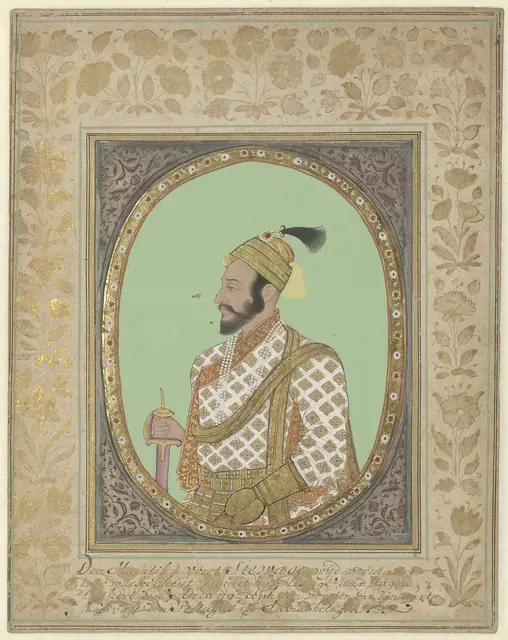
The same chronicle tells that crowds of Hindus of Delhi gathered below the jharokha of the fort to plead against the tax, and that when they blocked the emperor’s way to the Friday prayer, he ordered elephants driven through them; many were trampled. A letter of protest in Shivaji’s name, kept in Persian and translated by Jadunath Sarkar, told the emperor that God is the Lord of all and not of Muslims alone, and that taxing Hindus was against justice.
03What followed
The jizya came in the same years as the temple orders of 1669 and the war against Marwar from 1679. Rajput, Maratha, Jat, Sikh and Bundela resistance spread through the last decades of the reign. After Aurangzeb’s death the tax lapsed and was restored more than once, and it was finally given up in 1720 under Muhammad Shah, at the request of Sawai Jai Singh of Amber.