Cite
MLA
“Destruction of the Keshava Deva temple, Mathura.” Hindu History, 2026, https://www.hinduhistory.in/ghatana/destruction-of-keshava-deva-mathura-1670/. Accessed .
APA
Hindu History. (2026). Destruction of the Keshava Deva temple, Mathura. Retrieved , from https://www.hinduhistory.in/ghatana/destruction-of-keshava-deva-mathura-1670/
01The temple of Bir Singh Deo
Raja Bir Singh Deo Bundela of Orchha built a new temple of Keshava Deva at the Katra Keshavdev mound in Mathura in Jahangir’s reign, around 1618. The chronicler of Aurangzeb’s court put its cost at thirty-three lakh rupees. Its tall red-sandstone shikhara was said to be seen from Agra, and the French jeweller Jean-Baptiste Tavernier, who saw it in the 1650s, described it as one of the grandest temples in India.
02Ramzan, 1670
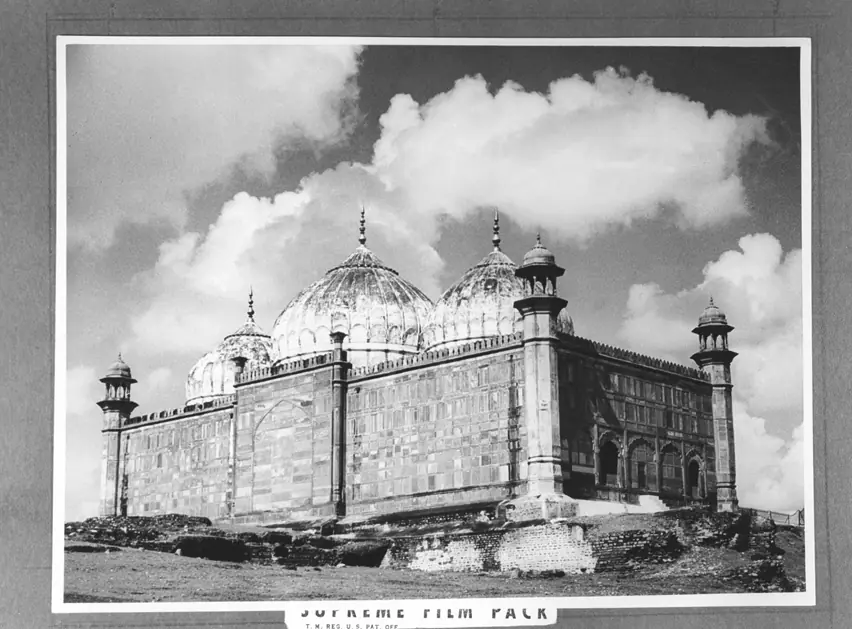
The Maasir-i-Alamgiri records that in Ramzan of the 13th regnal year, which fell in January 1670, the emperor ordered the demolition of the temple at Mathura known as the Dehra of Keshav Rai, and that his officers carried it out in a short time. A grand mosque was built on the site at great cost. The chronicle adds that the jewelled idols were carried to Agra and buried under the steps of the mosque of Jahanara Begum, so that they would be trodden on. The town was renamed Islamabad in court records for a time.
03After
The Shahi Idgah still stands on the temple’s plinth. In 1944 the land of Katra Keshavdev was bought with the help of Jugal Kishore Birla at the urging of Pandit Madan Mohan Malaviya, and a trust built the present Shri Krishna Janmasthan temples beside the Idgah from the 1950s onward. Suits over the site are being heard by the Allahabad High Court.