Cite
MLA
“Mata Sita.” Hindu History, 2026, https://www.hinduhistory.in/devata/sita/. Accessed .
APA
Hindu History. (2026). Mata Sita. Retrieved , from https://www.hinduhistory.in/devata/sita/
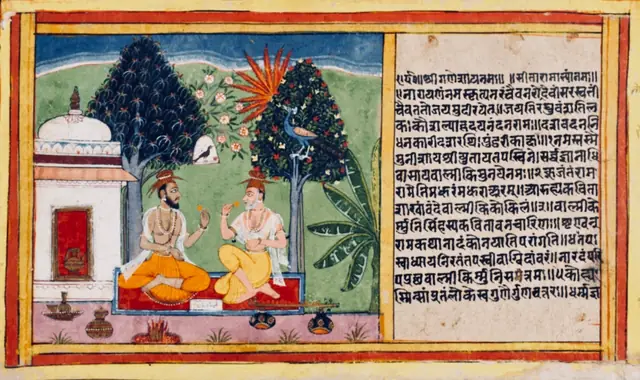
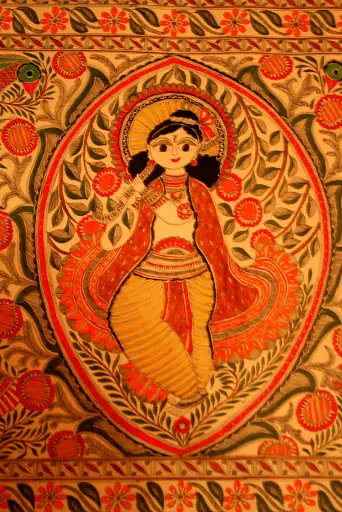
Two-armed, usually holding a lotus, seated or standing at Shri Rama’s left in the Ram Darbar with Lakshmana and Hanuman before them. In Ramayana paintings she is easy to find: alone under the Ashoka tree in Lanka, ringed by rakshasis, or in a forest hut at Panchavati as the golden deer runs past.
01Born of the furrow
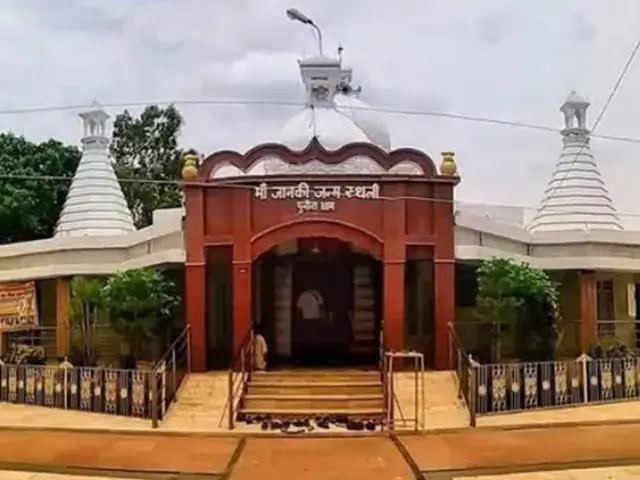
Sīta in Sanskrit means a furrow. A hymn of the fourth mandala of the Rigveda (4.57) already calls on Sita, the furrow, to turn kindly towards the ploughman. In the Bala Kanda of the Valmiki Ramayana, Raja Janaka of Videha tells Vishvamitra how he was ploughing the ground to make it ready for a yajna when a girl rose out of the earth. He named her Sita and raised her as his own: ayonija, not born of any womb. Mithila still points to the field. At Punaura near Sitamarhi, beside Sita Kund, she is worshipped alone as a young girl, and Janaki Navami on Vaishakha Shukla Navami is her day.
02Through the Ramayana
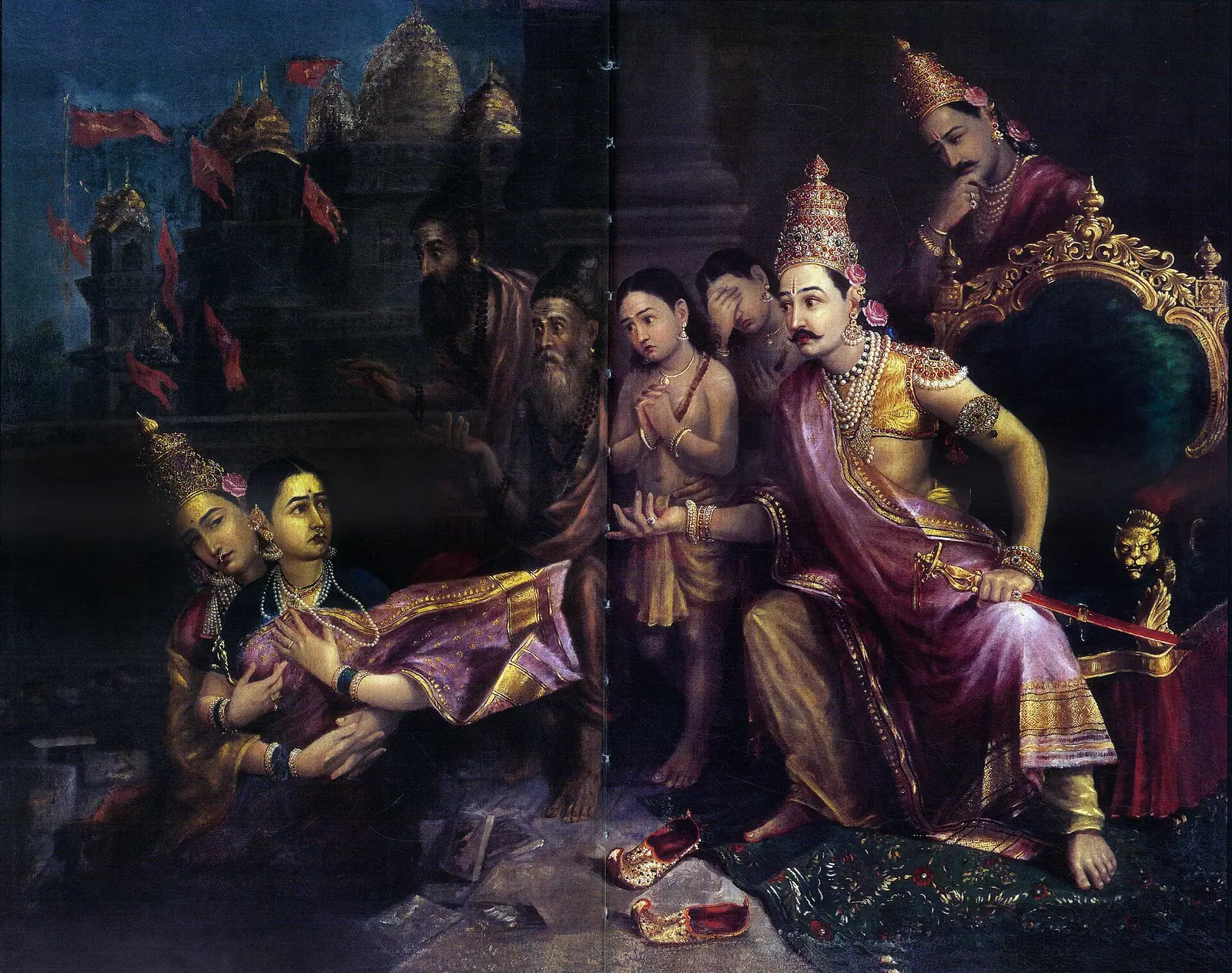
Shri Rama won her by breaking the bow of Shiva in Janaka’s court. She chose the forest with him rather than the palace without him, and it was from the hut at Panchavati that Ravana carried her to Lanka. In the Ashoka grove she refused him month after month until Hanuman came with Rama’s ring. After the war, many tellings have her pass through fire. The Uttara Kanda goes on: sent to the forest, she gave birth to Lava and Kusha in Maharshi Valmiki’s ashram, and at the last called on her mother Bhumi Devi, who opened and took her back. The Adbhuta Ramayana tells a fiercer katha, in which Sita becomes Mahakali and slays the thousand-headed Ravana.
03Janakpur and the Sita temples
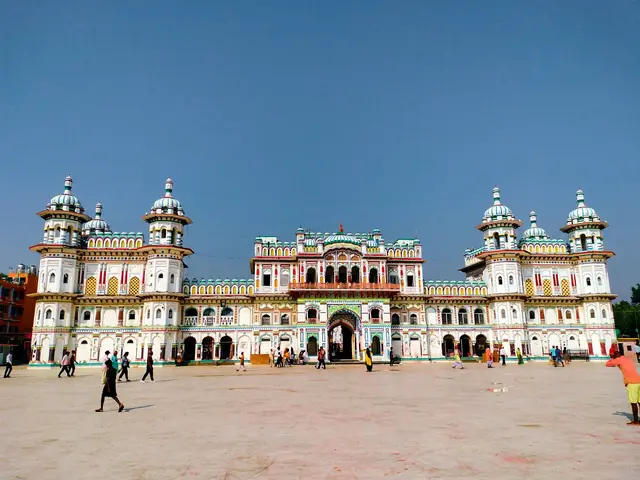
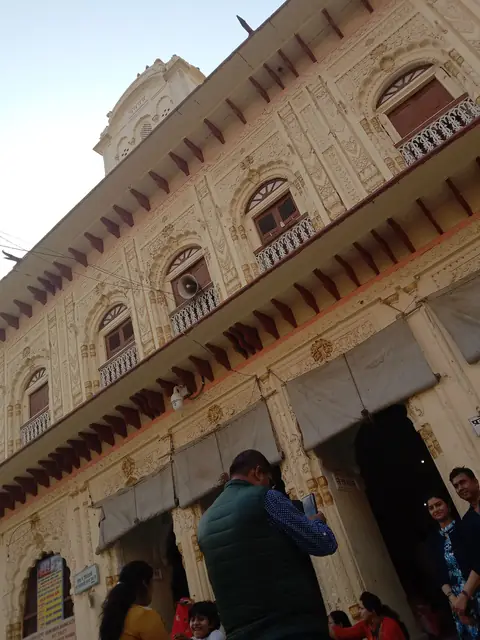
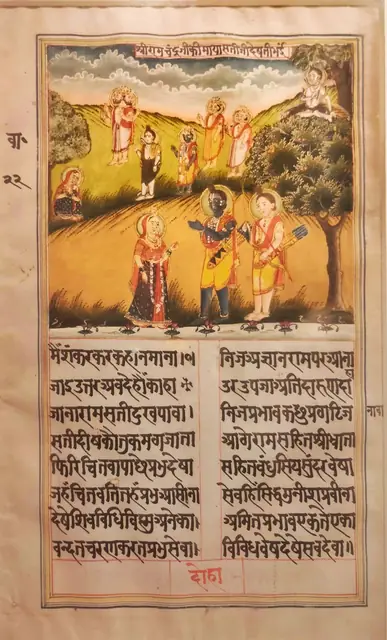
Janakpur, across the border in Nepal, is held to be Janaka’s capital. Its white Janaki Mandir was built by Queen Vrisha Bhanu of Tikamgarh and finished around 1911; people call it the Nau Lakha Mandir after the nine lakh rupees it is said to have cost. Every year on Vivah Panchami, Margashirsha Shukla Panchami, the city re-enacts the wedding of Sita and Rama, and a baraat comes from Ayodhya. In Ayodhya, Kanak Bhawan is remembered as the palace Kaikeyi gave Sita on her arrival as a bride. In north India the name is spoken before his: Siyaram, Sitaram, and Tulsidas opens the Ramcharitmanas by bowing to her.
In the texts
- Valmiki Ramayana, Bala Kanda and Sundara Kanda
- Rigveda 4.57 (hymn to the furrow)
- Adbhuta Ramayana
- Ramcharitmanas of Tulsidas