01Galava’s spring
Water comes out of the rock through a stone cow’s mouth high in the gorge and runs down into one tank after another; the kunds never run dry, even in the Rajasthan summer. The tradition of the place names the rishi Galava, who did tapas here, and the name Galta comes from him. Pilgrims bathe in the Galta kund on Makar Sankranti, and on Kartik Purnima. Above the gorge, a steep path leads to the small Surya temple on the ridge, from where the whole of Jaipur lies spread out below.
02Payahari’s peeth
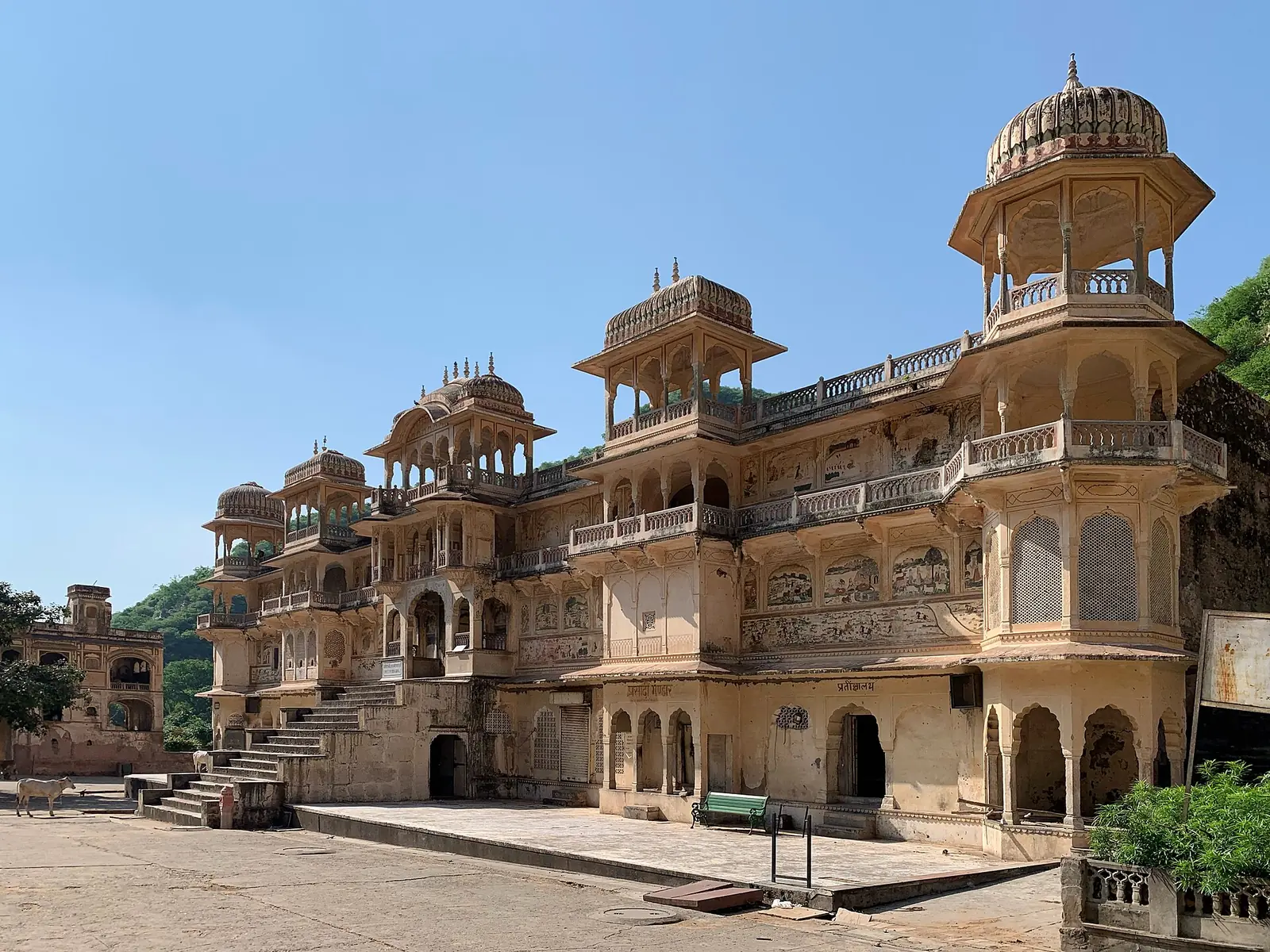
In the early 16th century the saint Krishnadas Payahari, a disciple in the line of Swami Ramananda, settled at Galta; he lived on milk alone, hence the name Payahari. The Kachhwaha court of Amber came under his influence, and Galta became the leading seat of the Ramanandis, the sampradaya of Tulsidas’s Rama-bhakti. Its abbots sat high in the councils of the sadhus. The pink-walled temples and havelis lining the gorge were built in the 18th century by Rao Kriparam, a diwan of Sawai Jai Singh II. Troops of monkeys own the place now.
The life of this place
- early 16th centuryKrishnadas Payahari establishes the Ramanandi seat at Galta.
- 18th centuryRao Kriparam builds the present temples along the gorge.
Galta is about 10 km east of the Jaipur city centre; you can walk over the ridge from the Surya temple side or drive to the gorge. Keep food out of sight of the monkeys.