01Panchavati of the Ramayana
In Valmiki’s Aranya Kanda, Agastya sends Rama to Panchavati on the Godavari, and Lakshmana builds a leaf hut there. Here Shurpanakha came, and Lakshmana cut off her nose; the name Nashik is taken by local tradition from nasika, the nose. From here Ravana carried Sita away. The Sita Gufa, a narrow cave by five old banyans, is shown as the place she stayed. Ramkund on the Godavari, where pilgrims bathe and immerse ashes, is a short walk downhill, and the Simhastha Kumbh is held on these ghats.
02Black stone, and an open door
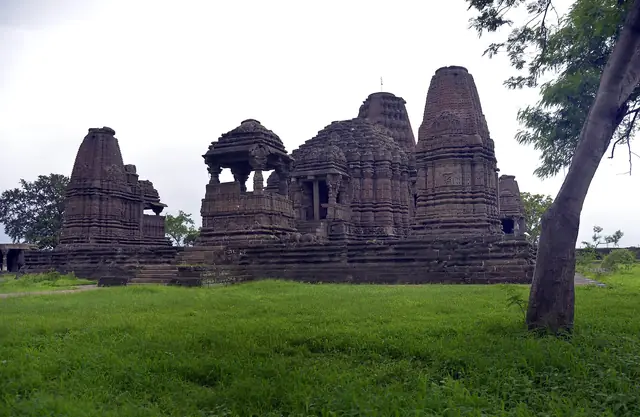
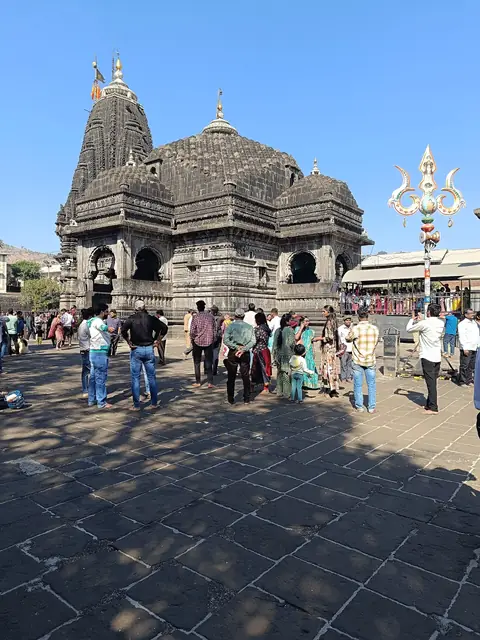
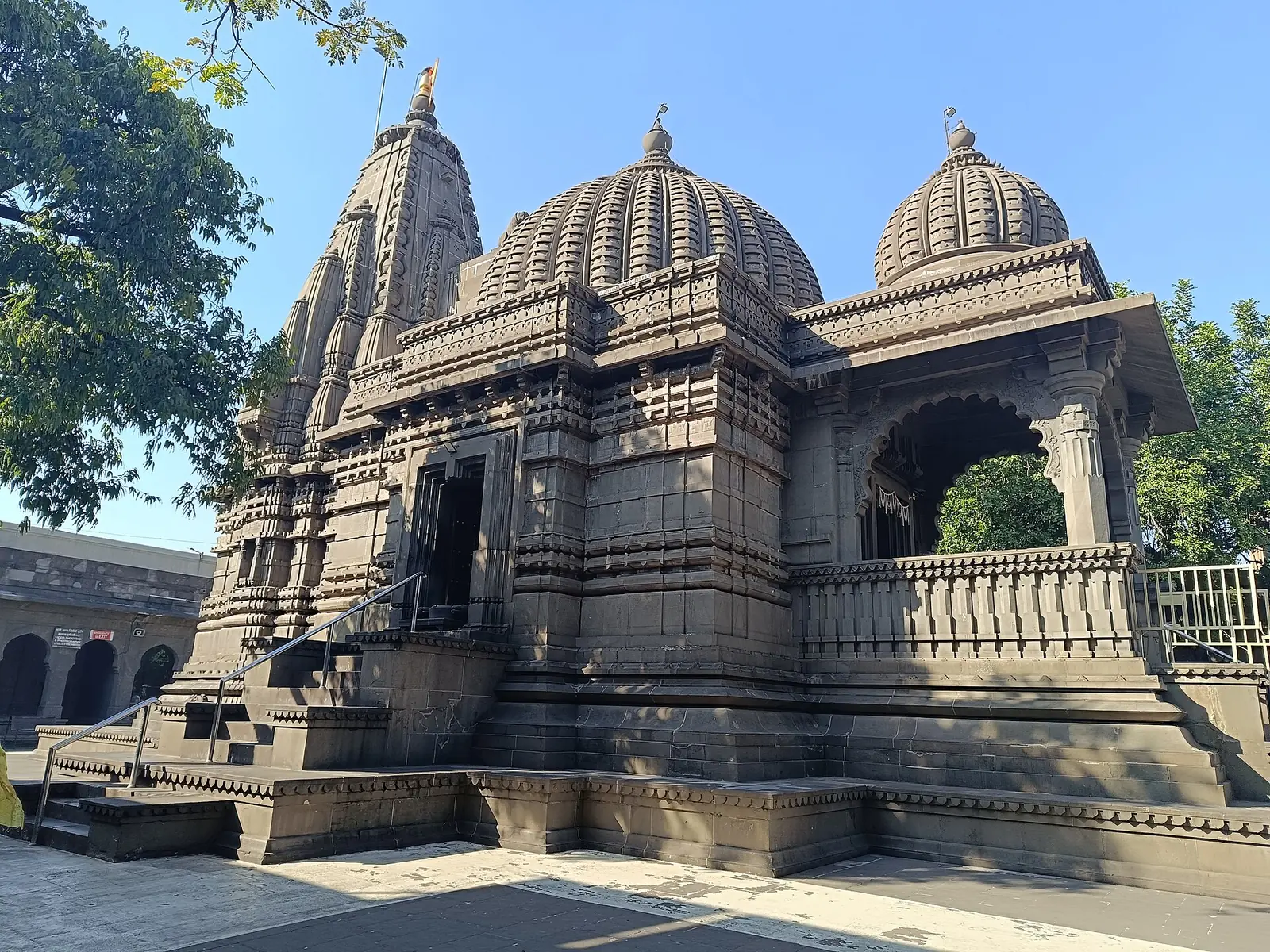
An older wooden shrine stood on the spot. The present temple, in black stone with a tall shikhara and a walled court, was paid for by Sardar Rangarao Odhekar and completed in the late 18th century; the murtis of Rama, Sita and Lakshmana are also black, which gives the temple its name. On 2 March 1930 Dr B. R. Ambedkar and Dadasaheb Gaikwad led thousands in a satyagraha at its gates, demanding entry for the communities then barred. The agitation went on for about five years. The temple is open to all today.
The life of this place
- late 18th centurySardar Rangarao Odhekar builds the present black-stone temple.
- 2 March 1930Dr Ambedkar begins the Kalaram temple entry satyagraha.
In Panchavati, Nashik; Ramkund and Sita Gufa are within a few minutes’ walk. Ram Navami brings a rath yatra.