01Urns in the red earth
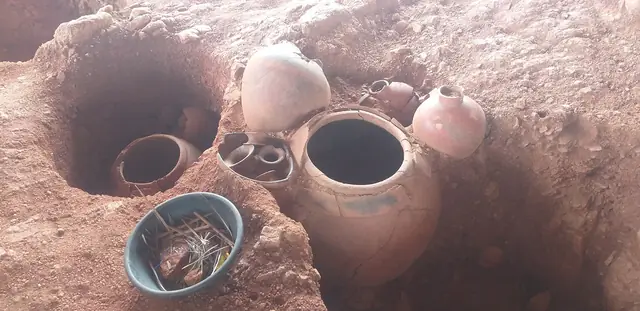
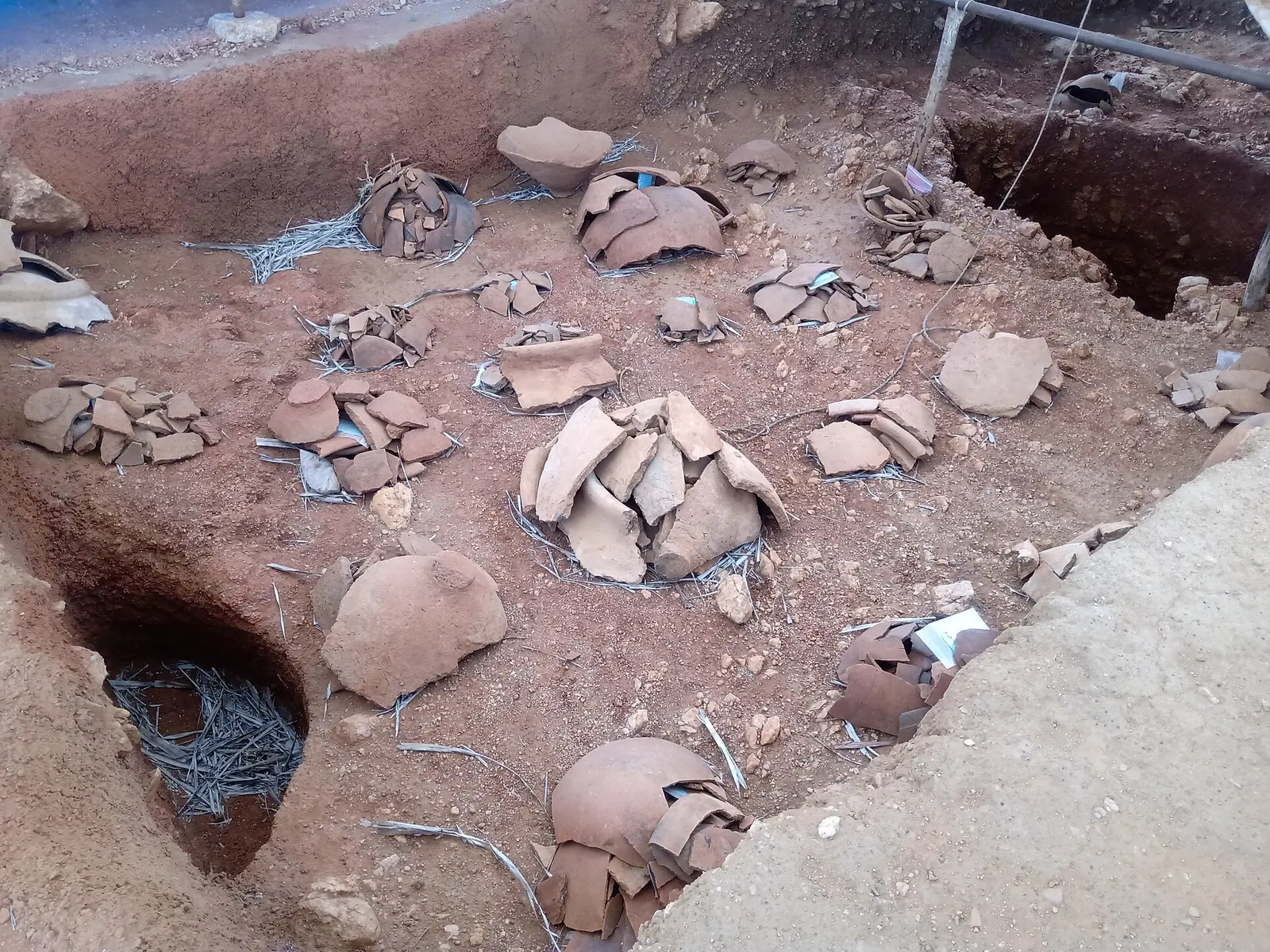
The burial ground covers more than 100 acres of low hillock beside the Tamirabarani. The dead, or their bones, were placed in large red-and-black pots and buried with offerings: iron swords, spears and sickles, bronze bowls and figures of animals, beads, and thin gold bands for the forehead. The German traveller Andrew Jagor dug here in 1876, and Alexander Rea of the Archaeological Survey excavated on a large scale between 1899 and 1905; many of his finds went to the Government Museum, Chennai.
02New digging
The ASI returned in 2004 under T. Satyamurthy and found more urns, some holding complete skeletons, along with traces of a habitation area. Since 2020 the ASI and the Tamil Nadu department have dug again, and the Union Budget of 2020 named Adichanallur among five sites to be developed as iconic sites with museums. Some urns carry marks scratched before firing. The dates of the site span much of the first millennium BCE, and work on its chronology continues.
The life of this place
- 1876Andrew Jagor makes the first excavation.
- 1899–1905Alexander Rea excavates for the Archaeological Survey.
- 2004The ASI resumes excavation.
- 2020Named an iconic site in the Union Budget; new excavations begin.
About 24 km from Tirunelveli on the Thoothukudi road. Some urns are displayed in situ under glass.