Cite
MLA
“The debate of Shankara and Mandana Mishra.” Hindu History, 2026, https://www.hinduhistory.in/darshana/shankara-mandana-debate/. Accessed .
APA
Hindu History. (2026). The debate of Shankara and Mandana Mishra. Retrieved , from https://www.hinduhistory.in/darshana/shankara-mandana-debate/
What defines it
- 01
The stake: sannyasa or return to household life
- 02
Ubhaya Bharati as judge, with two garlands
- 03
Karma-kanda against jnana-kanda
- 04
Mandana becomes Sureshvara in the tradition
- 05
Sharadamba of Sringeri
01The parrots at the gate
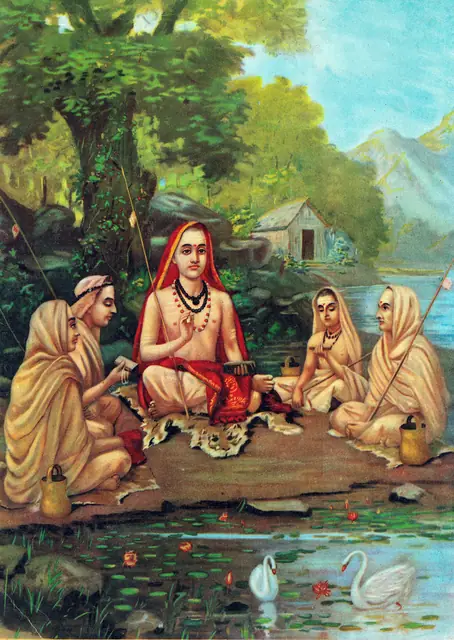
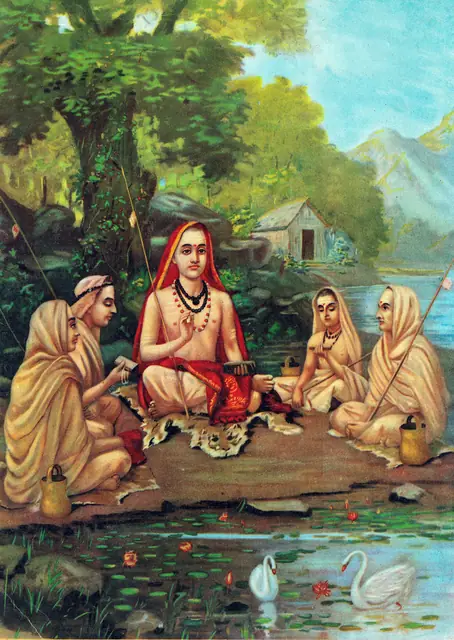
The account is told in the Shankara Digvijaya ascribed to Madhava-Vidyaranya and in other lives of Shankara. At Prayag, Shankara found Kumarila Bhatta already seated in a fire of husk, atoning for having learnt from Buddhist teachers and then defeated them. Kumarila would not leave the fire, but sent Shankara to his foremost disciple, Mandana Mishra of Mahishmati. Ask for his house, Kumarila said, and you will know it by the caged parrots at the gate debating whether the Vedas are valid of themselves, whether karma gives its fruit without Ishvara, and whether the world is eternal. Mandana was a great householder and ritualist, and he held that karma, not renunciation, was what the Veda asked of a man.
02Two garlands
The two agreed on a stake: if Mandana lost, he would take sannyasa and become Shankara’s disciple; if Shankara lost, he would return to the householder’s life. Mandana’s wife Ubhaya Bharati, whom the tradition honours as Sarasvati herself, was chosen as judge, and she placed a fresh garland on each man’s neck, saying that whoever’s garland withered first would be counted defeated. The Sringeri account says the debate went on for several days, on whether the Upanishads teach Brahman as the goal or only support ritual. Mandana’s garland faded, and Ubhaya Bharati gave her verdict against her husband. In the tradition she then debated Shankara herself before she too accepted the result.
03Sureshvara, and what historians say
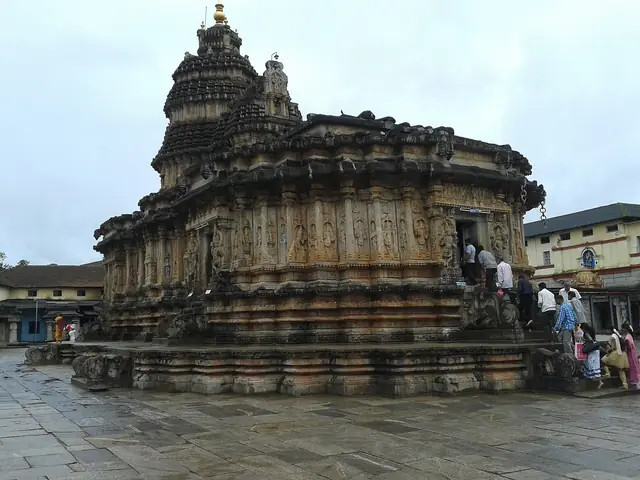
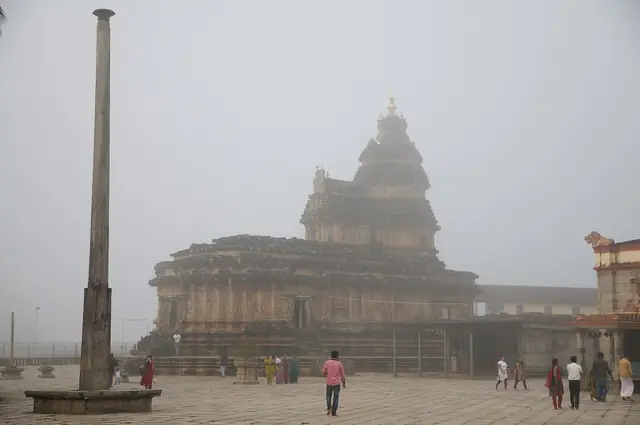
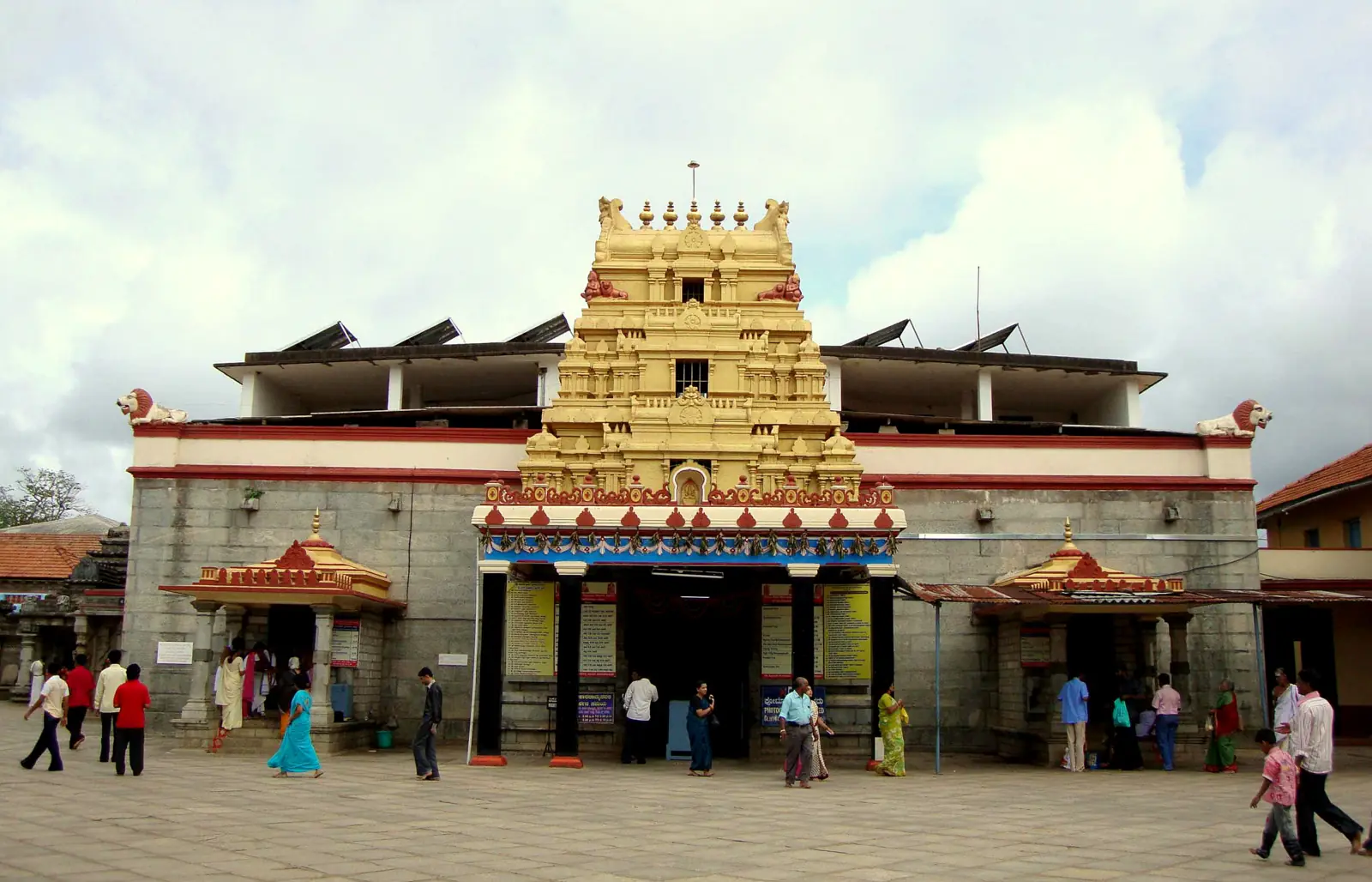
Mandana took sannyasa and, in the Sringeri tradition, became Sureshvaracharya, first head of the Sringeri matha, where Ubhaya Bharati is worshipped as Sharadamba. The story is the classic model of what a shastrartha should be: a public contest of learning, a fair judge, and a stake both sides honour. Historians add some caution. The written lives of Shankara are much later than his time and differ in detail. The Mandana Mishra who wrote the Brahmasiddhi taught a form of Advaita that differs on points from Sureshvara’s, and scholars such as Kuppuswami Sastri doubted that the two were one man, while others find the evidence open. Mahishmati itself is placed by some at Mahishi in Bihar and by others at Maheshwar.
Great masters
In the texts
- Shankara Digvijaya (Madhaviya), cantos 7–10
- Brahmasiddhi of Mandana Mishra
- Naishkarmya Siddhi of Sureshvara