Cite
MLA
“Sea voyages in the Jatakas.” Hindu History, 2026, https://www.hinduhistory.in/samudra/jataka-sea-voyages/. Accessed .
APA
Hindu History. (2026). Sea voyages in the Jatakas. Retrieved , from https://www.hinduhistory.in/samudra/jataka-sea-voyages/
What defines it
- 01
Supparaka Jataka (No. 463): the blind pilot of Bharukaccha
- 02
Mahajanaka Jataka (No. 539): shipwreck on the way to Suvarnabhumi
- 03
Baveru Jataka (No. 339): a peacock sold in Baveru
01The blind pilot of Bharukaccha
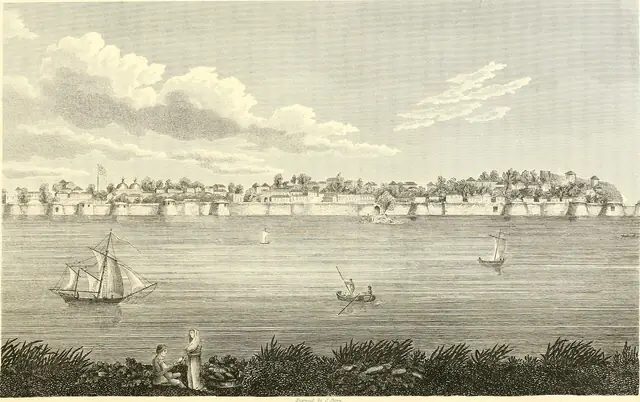
The Supparaka Jataka tells of a master mariner of Bharukaccha, modern Bharuch, who has lost his sight from the salt spray. Merchants beg him to come anyway. Far out, the ship passes seas the crew cannot name, and the old pilot knows each one by the colour and behaviour of the water, and knows when to turn for home. The story keeps a sailor’s pride in knowing the sea by heart.
02Mahajanaka and the sea goddess
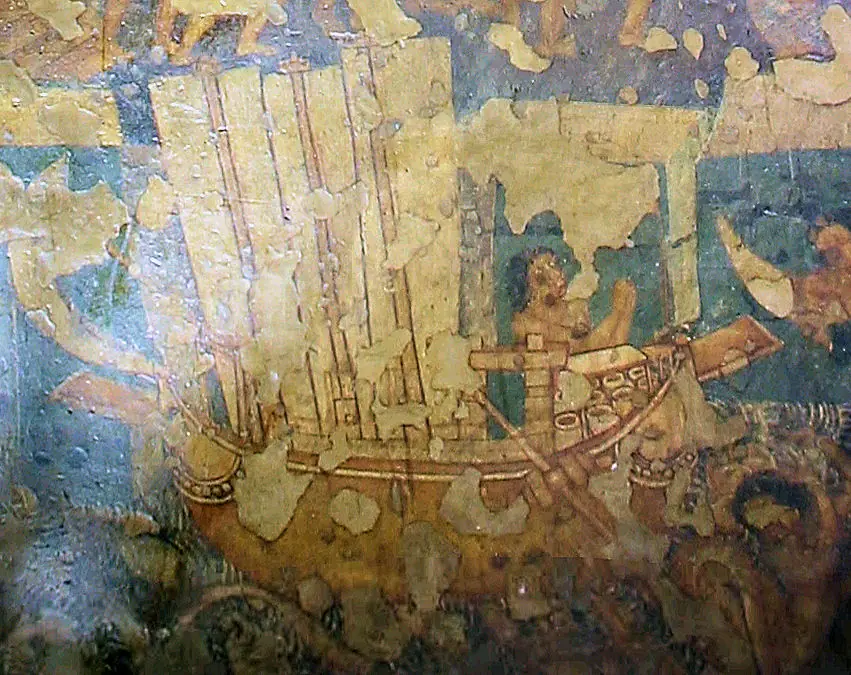
In the Mahajanaka Jataka a prince of Videha sails from Champa for Suvarnabhumi to win back his fortune. The ship breaks up in mid-ocean. He oils his body, ties himself to the mast and swims for seven days without giving up, until the goddess Manimekhala, set to guard the sea, lifts him and carries him to Mithila. Manimekhala is still known in the coastal lore of Thailand and Cambodia.
03A peacock for Baveru
The Baveru Jataka has Indian merchants sail to a land called Baveru, which many scholars read as Babylon. They first sell a crow, a bird the people there had never seen, for a hundred coins. On the next voyage they bring a trained peacock that dances to a clap, and it fetches a thousand. Behind the joke is a memory of Indian ships trading with the Gulf.
In the texts
- Jataka, Pali canon (Khuddaka Nikaya)