01A king asks for the Bharata
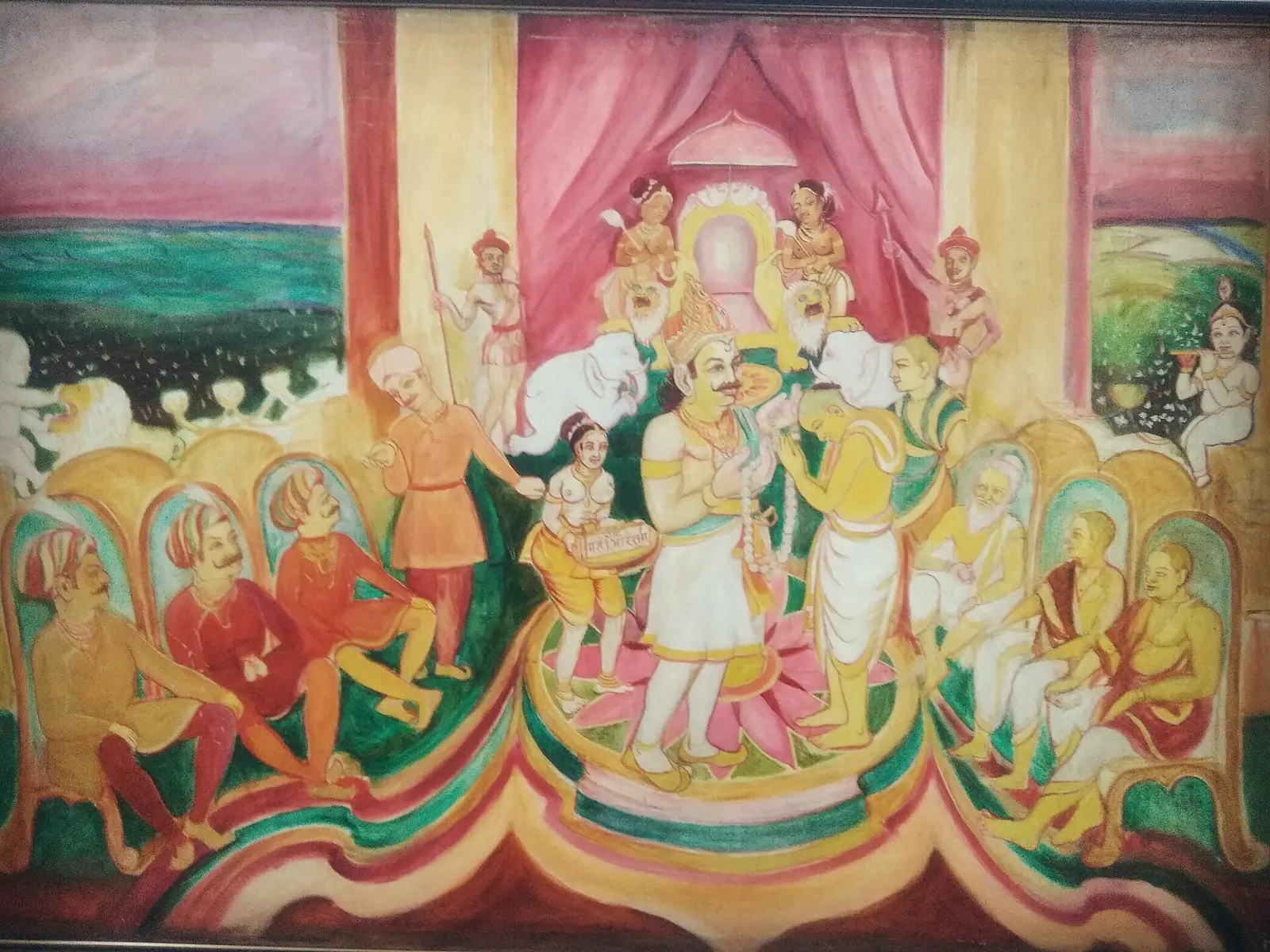
In the opening of his Adi Parva, Nannaya says that Rajaraja Narendra, a devotee of the Mahabharata, asked him to render it in Telugu so that all could hear it. He names his fellow scholar Narayana Bhatta as his helper. Nannaya did not translate verse for verse. He shaped the story in Telugu champu, verse with passages of prose, and set out his own three aims: clarity of narrative, beauty of sound, and a store of fine sayings. Before him Telugu had inscriptions and some verse; after him it had a literary language with Sanskrit learning in it.
02The Kavitrayam
Nannaya’s work stops partway through the Aranya Parva. Some two centuries later Tikkana Somayaji of Nellore wrote the fifteen parvas from the Virata to the end, and in the 14th century Errana completed the unfinished Aranya. Telugu calls the three the Kavitrayam, the trinity of poets. Nannaya also wrote the Sanskrit text of the Nandampudi copper-plate grant of Rajaraja Narendra, dated 1053 CE, which names him as its composer. The Andhra Shabda Chintamani, a grammar of Telugu written in Sanskrit, is traditionally his, though some scholars doubt it.