
01Two poems in one year
Pampa tells us he was born in 902 and finished the Adipurana at thirty-nine, in Shaka 863, that is 941 CE. Both his great works are in the champu form, verse and prose mixed. The Adipurana tells the lives of Rishabhanatha and his sons Bharata and Bahubali, and is a Jain work through and through. The Vikramarjuna Vijaya follows Vyasa’s Mahabharata but makes Arjuna its hero, and Pampa openly models Arjuna on his patron Arikesari. Readers have long been moved most by his Karna, loyal to Duryodhana to the end though he knows his birth.
02The brother’s inscription
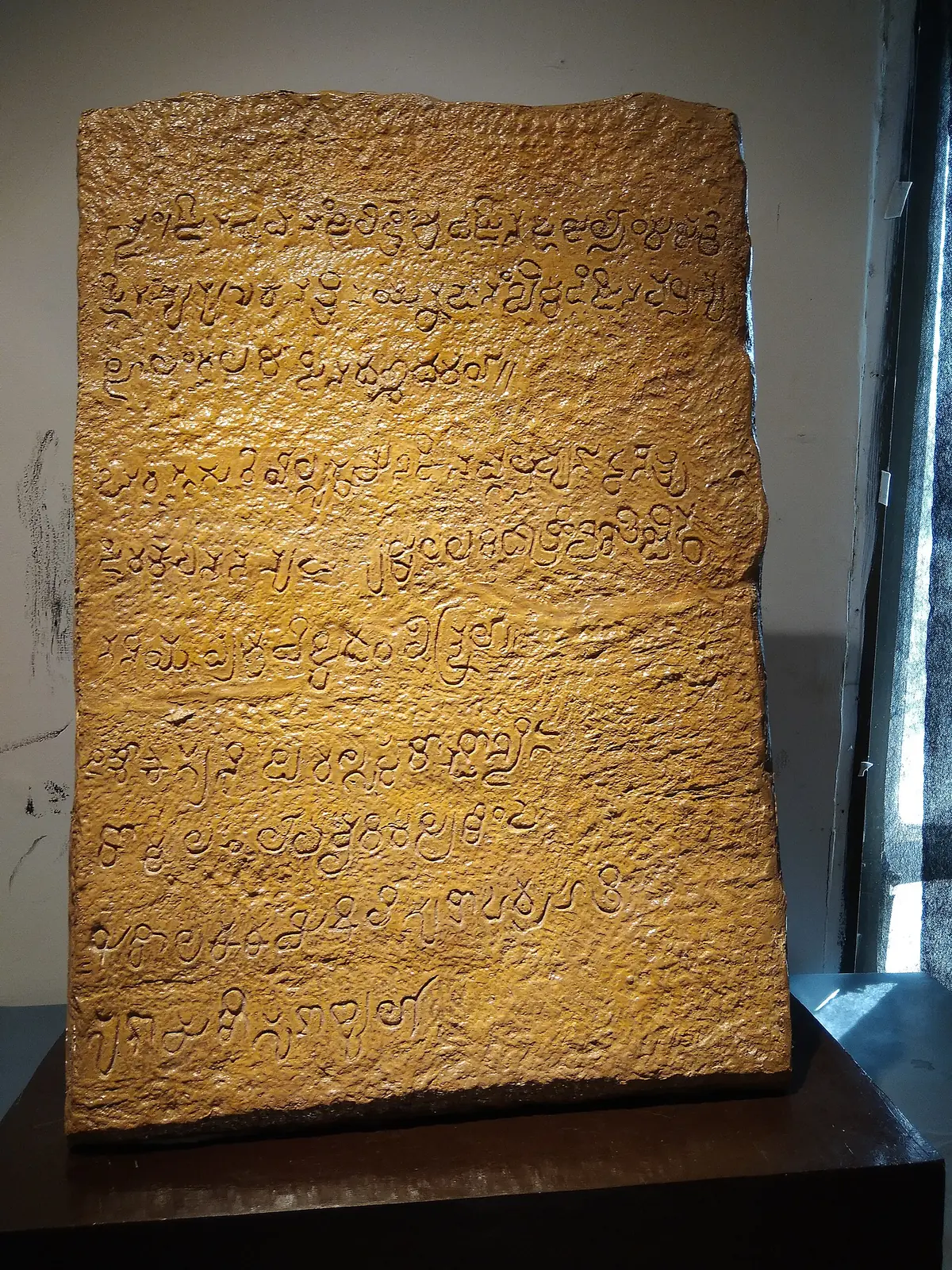
Arikesari ruled at Vemulavada in today’s Telangana as a feudatory of the Rashtrakutas, and he rewarded Pampa with the village of Dharmapura. Much of what we know of Pampa’s family comes from stone. On Bommalagutta hill at Kurikyala, near Karimnagar, his younger brother Jinavallabha cut an inscription in the mid-10th century that praises Pampa and records the Jain images he set up there. The same inscription carries three Telugu verses in the kanda metre, among the oldest Telugu poetry known. Karnataka’s highest literary award, given since 1987, bears Pampa’s name.