01Seen through three doors
The murti is too long to be seen at once. It lies across the sanctum, about 18 feet from head to foot, and the pilgrim looks through three doors in turn: the face and the Shiva linga beneath the Lord’s right hand through the first, the navel with Brahma on the lotus through the second, the feet through the third. The figure is not carved from one stone. It is built of 12,008 salagramas from the Gandaki in Nepal, held together with katusharkara yogam, a plaster of herbs, jaggery and resins. Abhishekam is therefore done only on the utsava murti, never on the main one.
02The fire and the gift of a kingdom
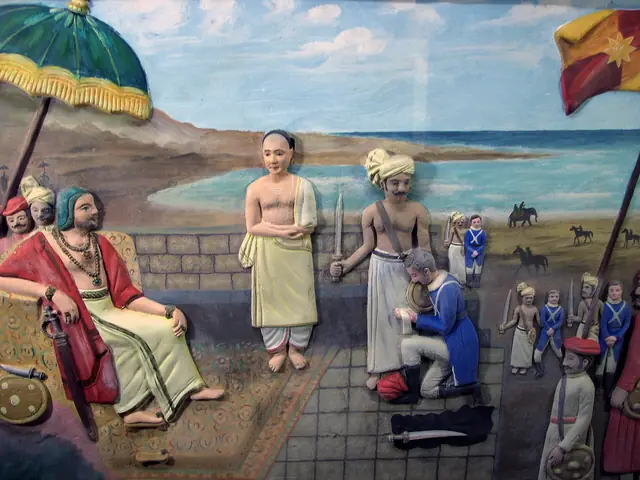
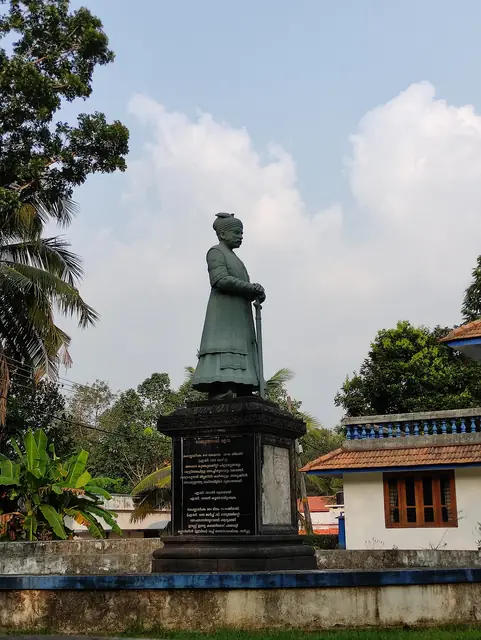
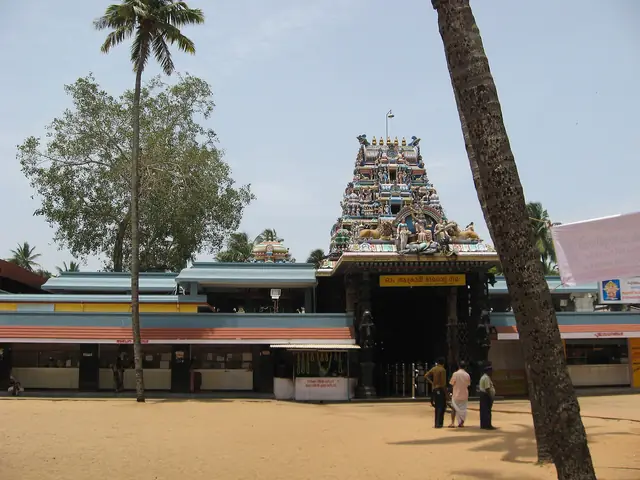
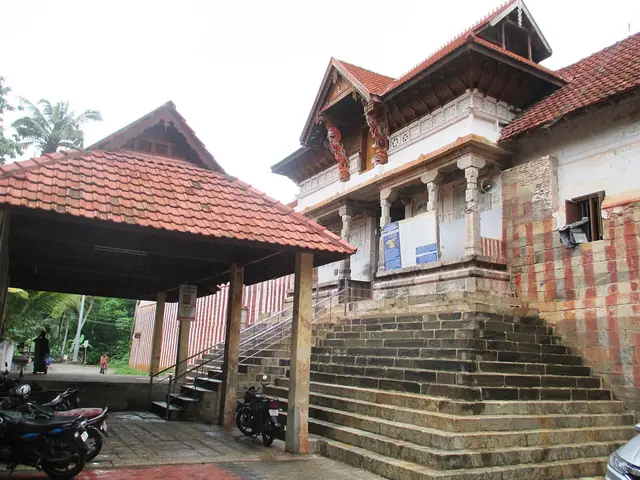
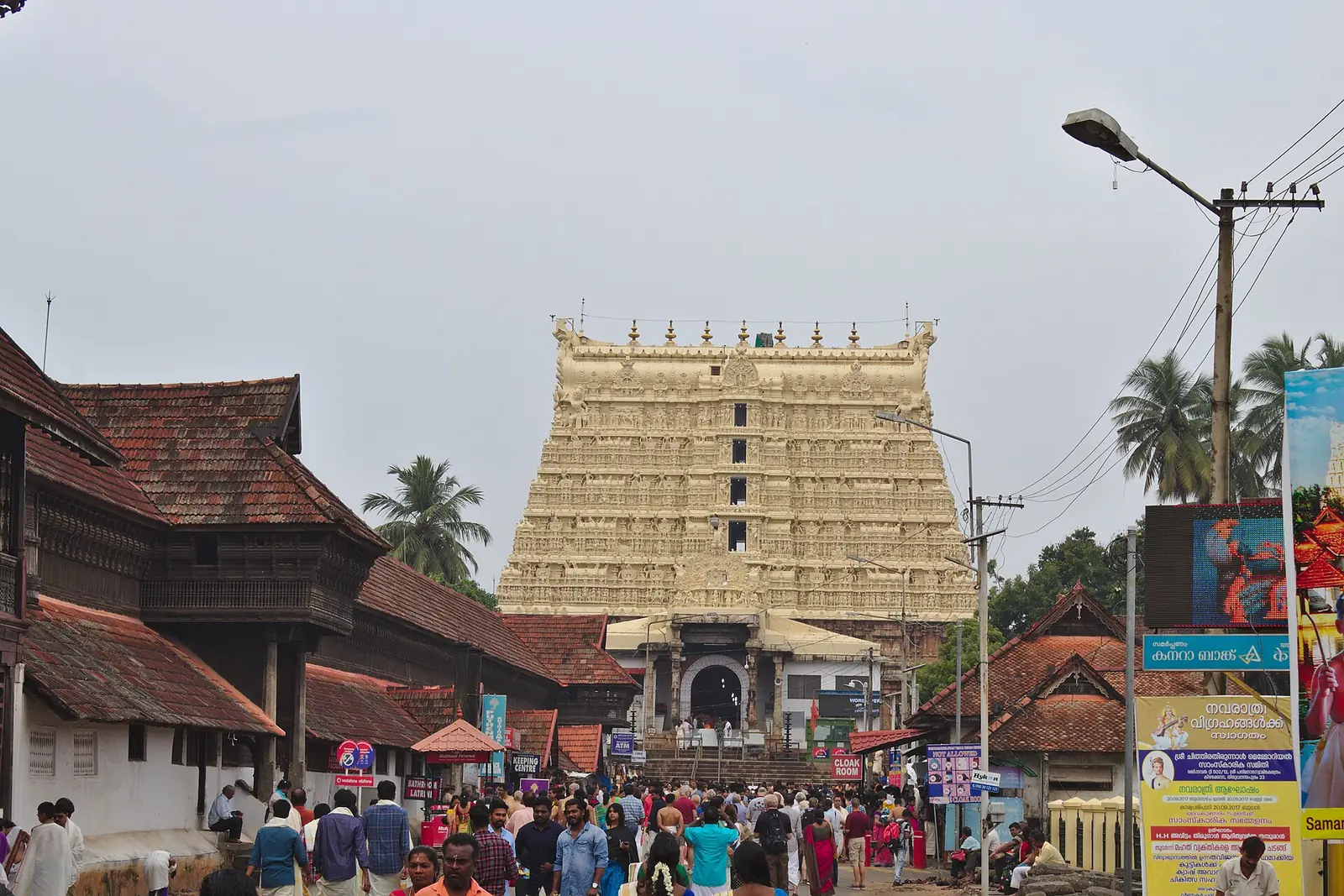
A fire in 1686 left the old wooden temple badly damaged. Marthanda Varma, who built Travancore into a strong state between 1729 and 1758, rebuilt it in stone, with the present murti consecrated in the 1730s and the great east gopuram raised in the same years. In January 1750 he performed the Thrippadidanam: he placed his state sword on the steps of the sanctum and gave the whole kingdom to Padmanabha. In 2011 the Supreme Court ordered an inventory of the temple’s vaults, which held gold and jewels gathered over centuries. In July 2020 the same court upheld the rights of the Travancore royal family in the temple’s management.
The life of this place
- Alvar ageNammalvar sings of Padmanabha at Ananthapuram in the Tiruvaymoli.
- 1686Fire damages the temple.
- 1730sMarthanda Varma rebuilds the temple in stone and reconsecrates the murti.
- January 1750Thrippadidanam: Travancore is dedicated to Padmanabha.
- 2011Supreme Court-ordered inventory of the temple vaults.
- July 2020Supreme Court upholds the Travancore family’s rights in the temple’s administration.
Only Hindus may enter. Men wear a mundu and go bare-chested; women wear a sari or mundu with a blouse.