
Cite
MLA
“Sama Gana: the chant of the Sama Veda.” Hindu History, 2026, https://www.hinduhistory.in/kala/sama-gana/. Accessed .
APA
Hindu History. (2026). Sama Gana: the chant of the Sama Veda. Retrieved , from https://www.hinduhistory.in/kala/sama-gana/
What defines it
- 01
Rig Vedic verses sung to fixed melodies (samans)
- 02
Stobha syllables added to the text
- 03
Notes shown on the fingers
- 04
Sung by the udgatr at the soma yajna
01Veda of song
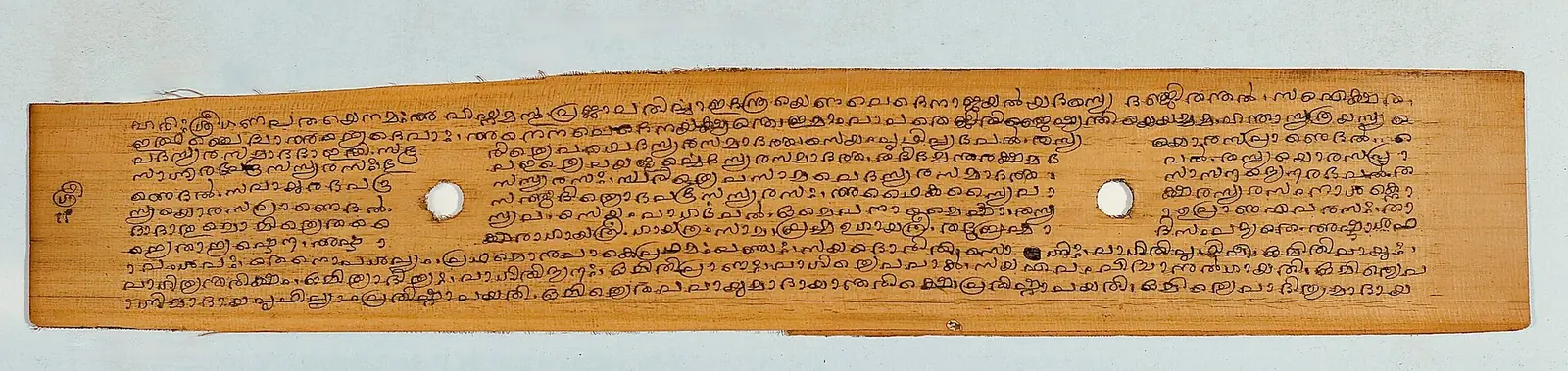
In the Gita (10.22) Shri Krishna says, “Of the Vedas I am the Sama Veda.” Its mantras are almost all Rig Vedic verses, but the udgatr priest sings them to fixed melodies, the samans, stretching vowels and adding syllables called stobha such as hau and hoyi. The Chandogya Upanishad opens by praising the udgitha, the sung Om, as the rasa, the finest part, of the saman. The ganas, the song books, carry the melodies separately from the text: Gramageya and Aranyageya for the village and the forest.
02From saman to svara
The Naradiya Shiksha, the phonetic manual of the Sama Veda, matches the notes of the chant to the notes of worldly music: the seven svaras that later became sa, ri, ga, ma, pa, dha, ni. Sama singers count their notes downwards and show them on the fingers, a hand-notation that also guards against error. Sharngadeva, in the opening of the Sangita Ratnakara, says that Brahma drew music out of the Sama Veda, and every later musician has repeated it.
03Where it is still sung
Of the thousand shakhas the Puranas speak of, three survive: Kauthuma, chiefly in Gujarat and the north; Ranayaniya, in Karnataka and Maharashtra; and Jaiminiya, kept alive by Nambudiri families in Kerala and by a few Tamil families. UNESCO recognised the tradition of Vedic chanting in 2003. The surest way to hear Sama Gana is at a Somayaga or Athirathram in Kerala, or at a Veda pathashala on its annual recitation day.