Cite
MLA
“Mridangam.” Hindu History, 2026, https://www.hinduhistory.in/kala/mridangam/. Accessed .
APA
Hindu History. (2026). Mridangam. Retrieved , from https://www.hinduhistory.in/kala/mridangam/
What defines it
- 01
Jackwood barrel body
- 02
Black soru disc on the right head
- 03
Wet semolina on the left head for bass
- 04
Tani avartanam solo
01Nandi’s drum
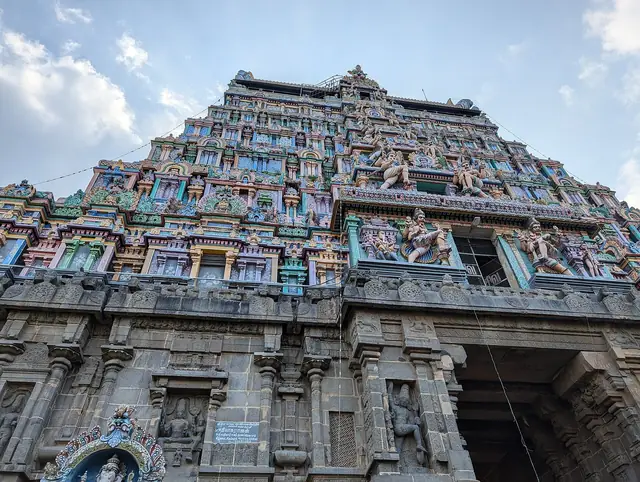
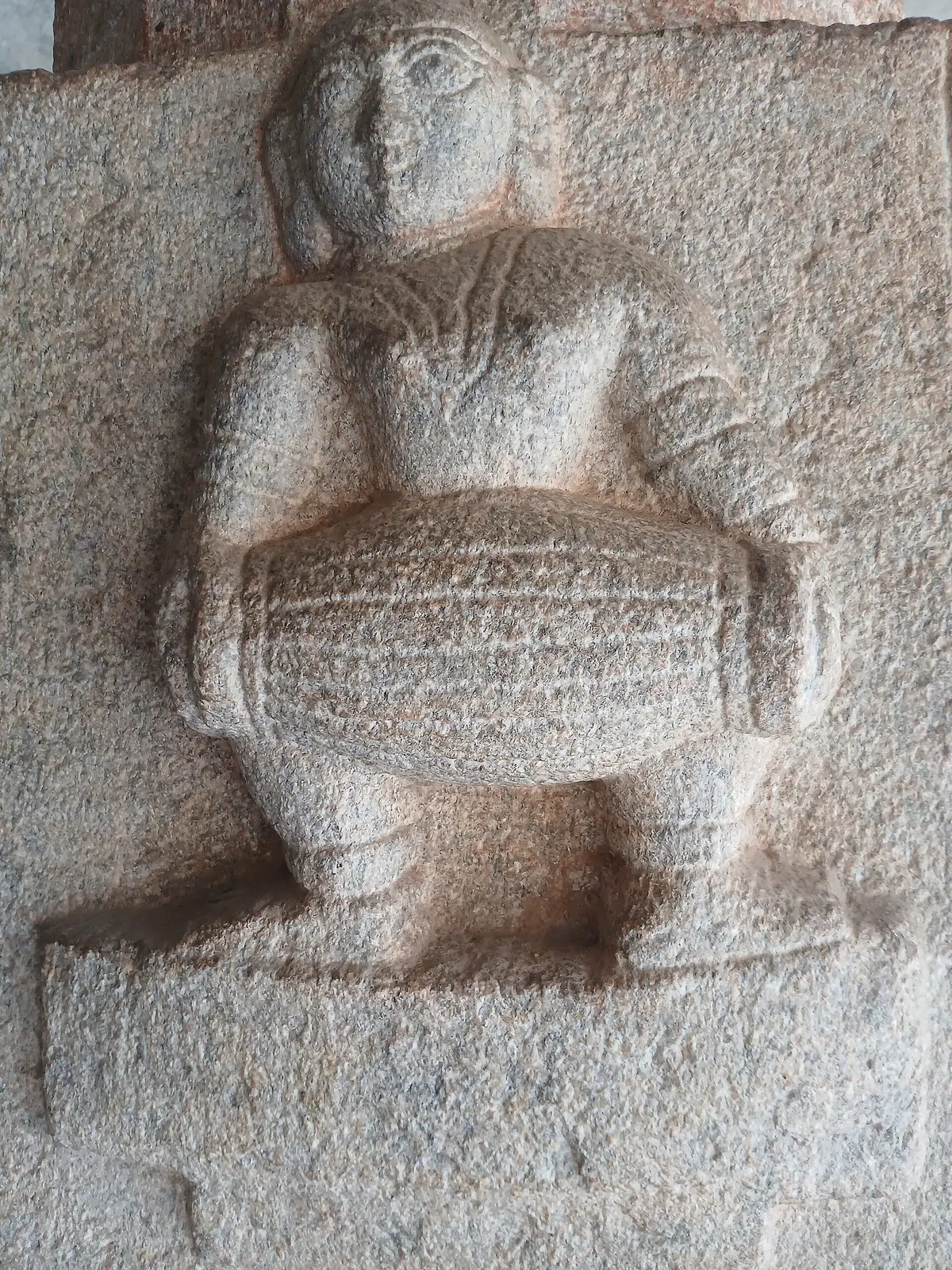
When Bhagwan Shiva dances the tandava at dusk, the Shiva Purana and the temple hymns place Nandi at the mridanga, keeping the beat. The Natya Shastra gives long chapters to the pushkara drums, mridanga, panava and dardura, how they are made and tuned and which strokes they sound. Early mridangas were of clay, as the name says. Temple sculptures from Badami to Belur show drummers in the dance panels, and the Chidambaram reliefs show the drum beside Nataraja.
02How it is made
The body is hollowed from one log of jackwood. The right head, valanthalai, is three layers of hide with a black disc, the soru or karanai, of iron filings and rice paste built up in many thin coats; it gives the drum a clear pitch tuned to the singer’s sa. The left head, thoppi, is left bare and a pinch of wet semolina paste is pressed on before each concert for the deep bass. Leather straps run the length of the body, and small wooden pegs under them tune it.
03The great players
Palghat Mani Iyer and Palani Subramania Pillai set the 20th-century standard, the first for his weight and accompaniment, the second for the bright left-hand work of the Pudukottai school. Umayalpuram Sivaraman, T. K. Murthy and Karaikudi Mani carried it on. A concert’s tani avartanam, the drum solo in which the mridangam and ghatam trade patterns, is the moment many listeners wait for. Mridangam makers still work in Thanjavur and in Chennai’s Mylapore.