Cite
MLA
“Bhagwan Surya.” Hindu History, 2026, https://www.hinduhistory.in/devata/surya/. Accessed .
APA
Hindu History. (2026). Bhagwan Surya. Retrieved , from https://www.hinduhistory.in/devata/surya/
तत्सवितुर्वरेण्यं भर्गो देवस्य धीमहि। धियो यो नः प्रचोदयात्॥
tat savitur vareṇyaṃ bhargo devasya dhīmahi | dhiyo yo naḥ pracodayāt ||
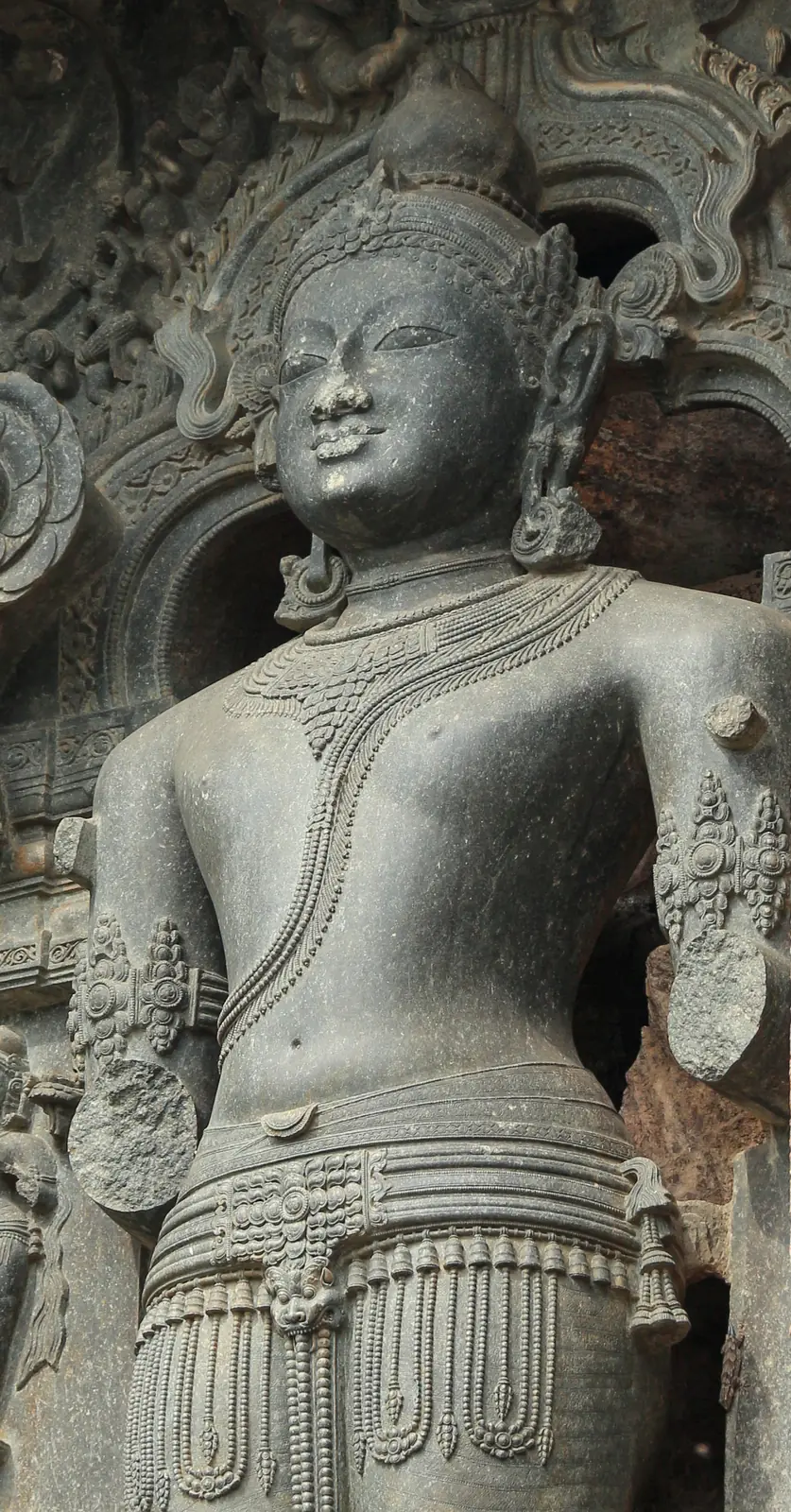
Standing or riding a chariot drawn by seven horses with Aruna as charioteer, holding a full-blown lotus in each of his two hands, often with a halo. Northern murtis show him in a tunic and tall boots; Usha and Pratyusha loose arrows beside him to scatter the dark.
01The Gayatri and the Veda
The most recited mantra of the Veda is addressed to him: tat savitur vareṇyam, the Gayatri of Vishvamitra (Rigveda 3.62.10), which every dvija repeats at the three sandhyas. Another hymn (Rigveda 1.115) calls him the eye of Mitra, Varuna and Agni and the self of all that moves and stands still. In the Yuddha Kanda of the Ramayana, before the final battle, Maharshi Agastya teaches Rama the Aditya Hridayam, and Rama recites it three times before facing Ravana.
02Arghya at sunrise
Water poured from a copper lota towards the rising sun, through which the sun is seen, is the simplest daily worship in a Hindu home. Surya Namaskar, the twelve-step salutation, is done facing him at dawn. Makar Sankranti marks his entry into Capricorn and the turn of the year north; in Tamil Nadu it is Pongal. Ratha Saptami falls in Magha. In Bihar and eastern Uttar Pradesh, Chhath is his greatest festival: for four days in Kartik, women fast and stand in rivers to offer arghya to the setting and then the rising sun.
03The great sun temples
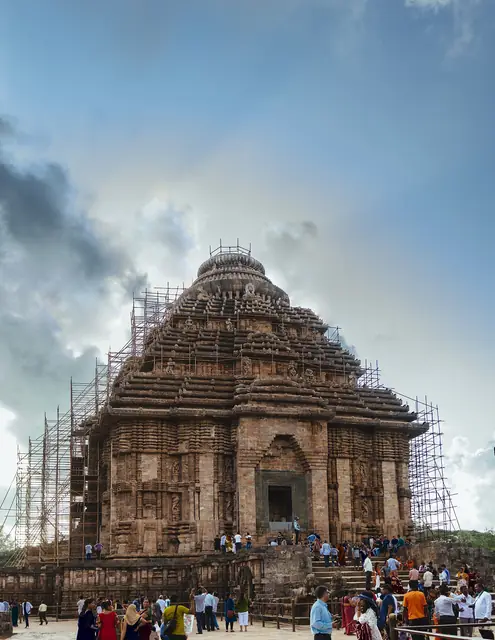
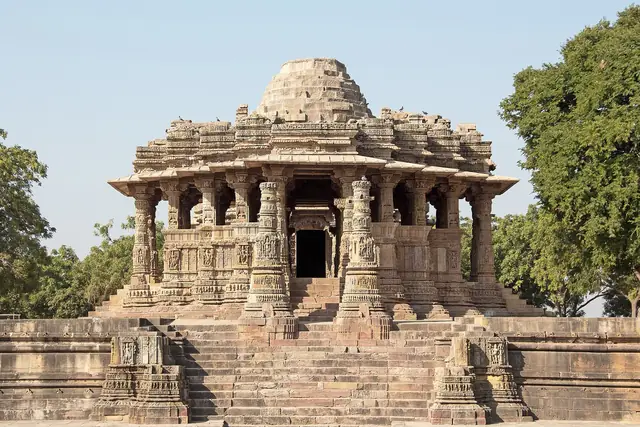
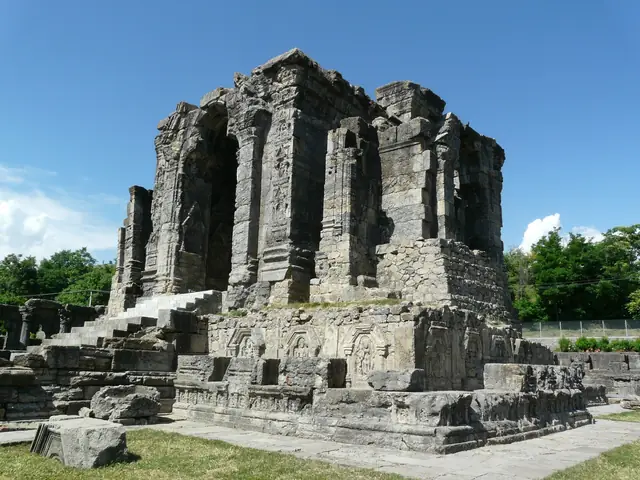
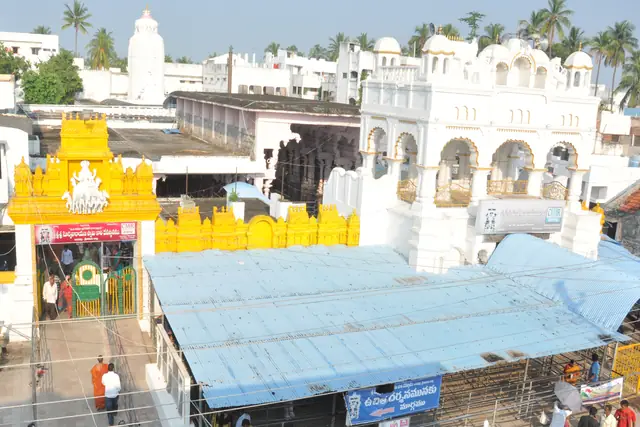
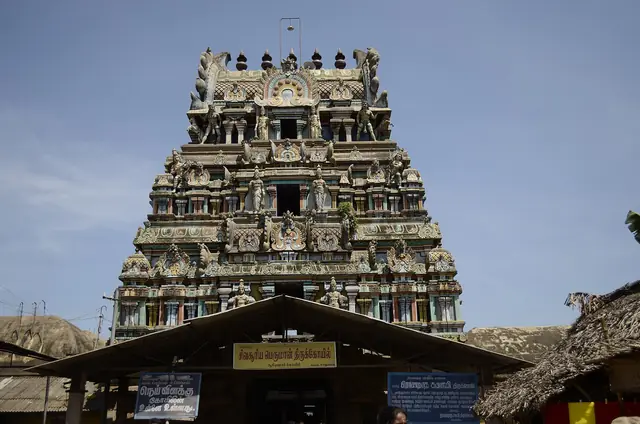
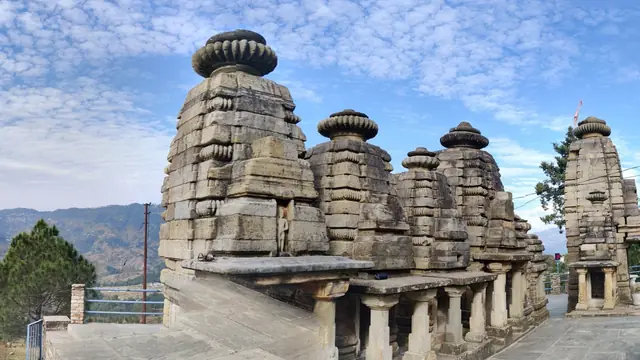
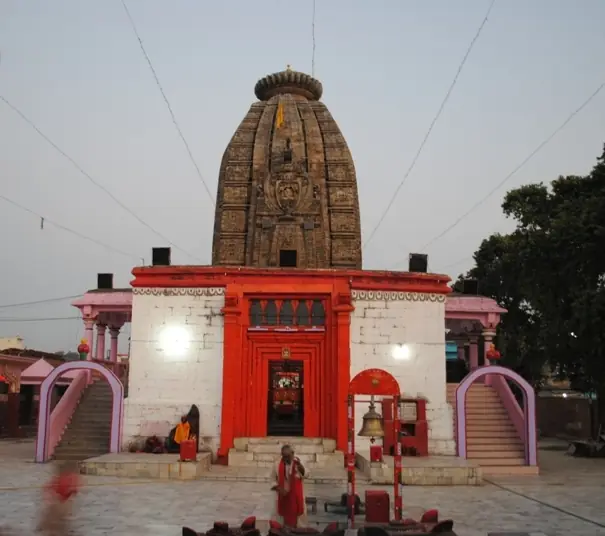
Konark in Odisha was built as a giant stone chariot with twenty-four carved wheels and seven horses, under Narasimhadeva I of the Eastern Gangas in the thirteenth century. At Modhera in Gujarat, raised in 1026–27 under Bhima I, the sun enters the sanctum at the equinoxes across a stepped tank. In Kashmir, Lalitaditya Muktapida built the Martanda temple in the eighth century; it was destroyed in the time of Sultan Sikandar and stands in ruin. Arasavalli in Andhra and Suryanar Kovil in Tamil Nadu still hold daily worship.
In the texts
- Rigveda 3.62.10 (Gayatri), 1.50 and 1.115
- Aditya Hridayam (Valmiki Ramayana, Yuddha Kanda)
- Bhavishya Purana, Brahma Parva
- Samba Purana