Cite
MLA
“Khmer script.” Hindu History, 2026, https://www.hinduhistory.in/lipi/khmer-script/. Accessed .
APA
Hindu History. (2026). Khmer script. Retrieved , from https://www.hinduhistory.in/lipi/khmer-script/
01Sanskrit verse, Khmer prose
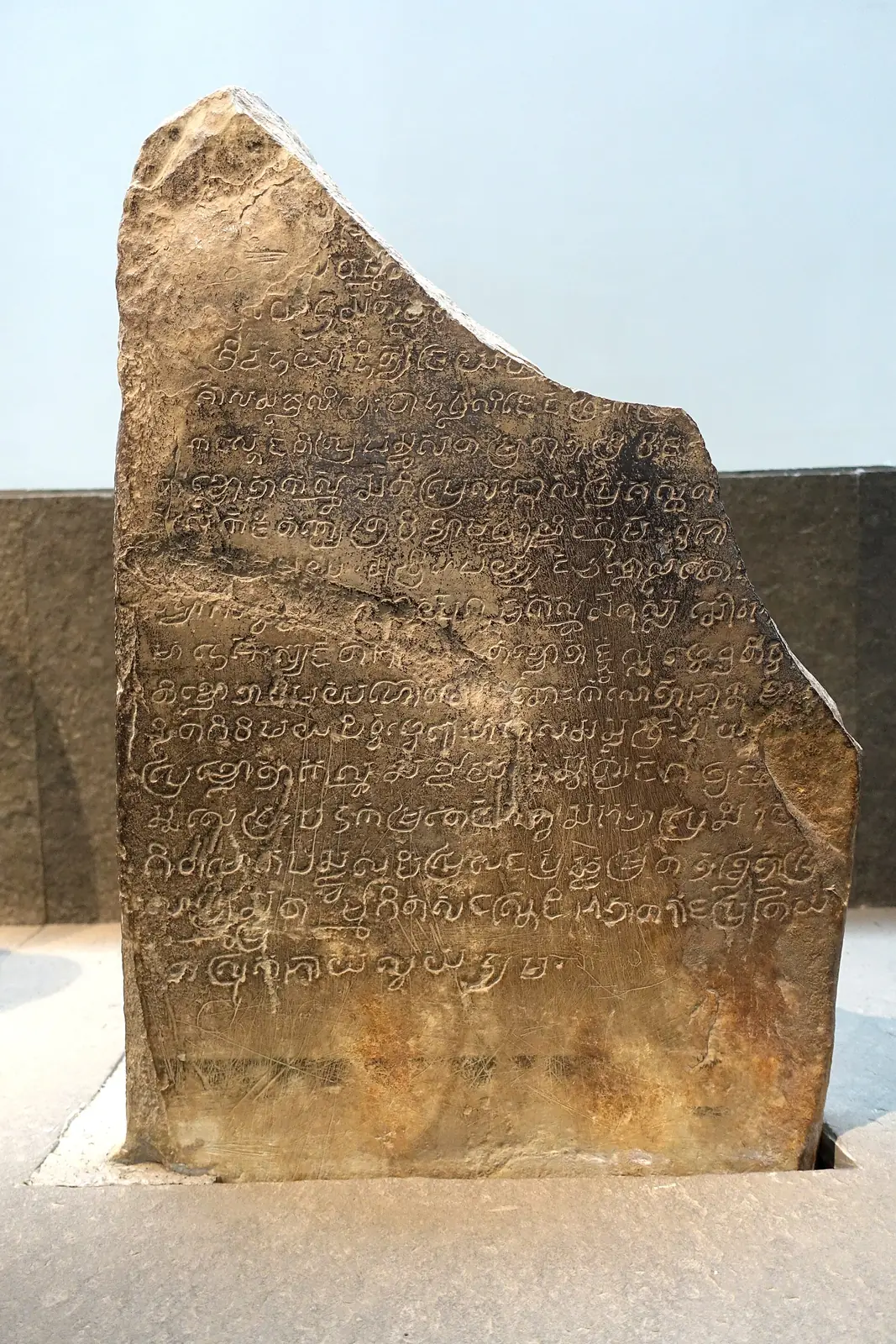
The kingdoms of Funan and Chenla on the Mekong set up stone steles in a script taken from the Pallava coast. A typical stele has two faces: Sanskrit verses in elaborate metres praising Shiva, Vishnu or Harihara and the king, and Khmer prose listing the land, rice, cattle and temple servants given. The oldest dated Khmer text, from Angkor Borei, is of 611 CE. The stele from Dong Thap in Vietnam, dated 639 CE, records gifts to Shiva in both languages.
02Angkor and after
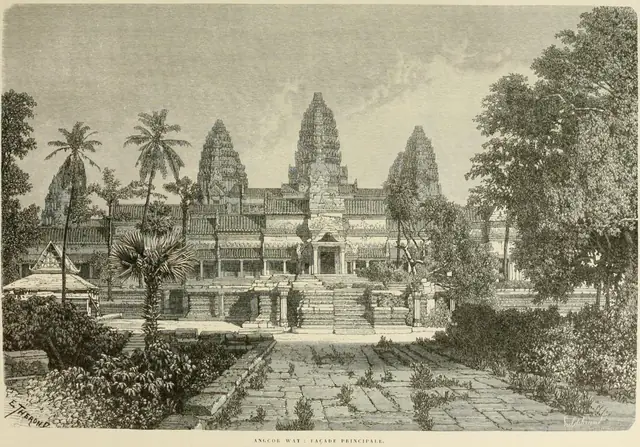
Under the Angkor kings, from the 9th century, the script reached its classical form. The Sdok Kak Thom stele of 1052 CE tells, in Sanskrit and Khmer, how one priestly family served the Devaraja cult for two and a half centuries. In the 13th century the Thai of Sukhothai shaped their own script from Old Khmer, and Lao writing followed from it. Angkor Wat itself, built for Bhagwan Vishnu under Suryavarman II in the 12th century, carries short Khmer labels in its carved gallery of the king’s procession, naming him and his generals one by one.
03Coedès and today
George Coedès published more than a thousand of these inscriptions in his eight-volume Inscriptions du Cambodge (1937–66), and much of what is known of Angkor’s kings comes from them. Khmer script is the national script of Cambodia, and the Sanskrit words it carried, from deva to nagara, are still in everyday Khmer speech. Cambodian children learn the consonants in the same order as an Indian varnamala, ka, kha, ga, gha, nga.