Cite
MLA
“Mathura School of Sculpture.” Hindu History, 2026, https://www.hinduhistory.in/kala/mathura-school/. Accessed .
APA
Hindu History. (2026). Mathura School of Sculpture. Retrieved , from https://www.hinduhistory.in/kala/mathura-school/
What defines it
- 01
Mottled red Sikri sandstone
- 02
Massive standing yakshas
- 03
Early images of Balarama and Vasudeva
- 04
Smiling seated Buddhas in abhaya
- 05
Jain ayagapatas from Kankali Tila
01Yakshas, Balarama, Vasudeva
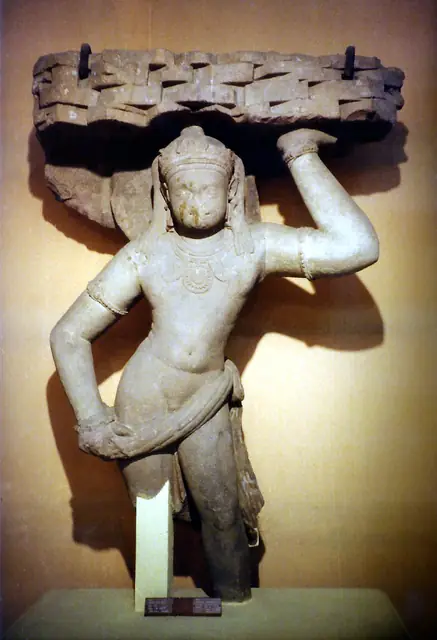
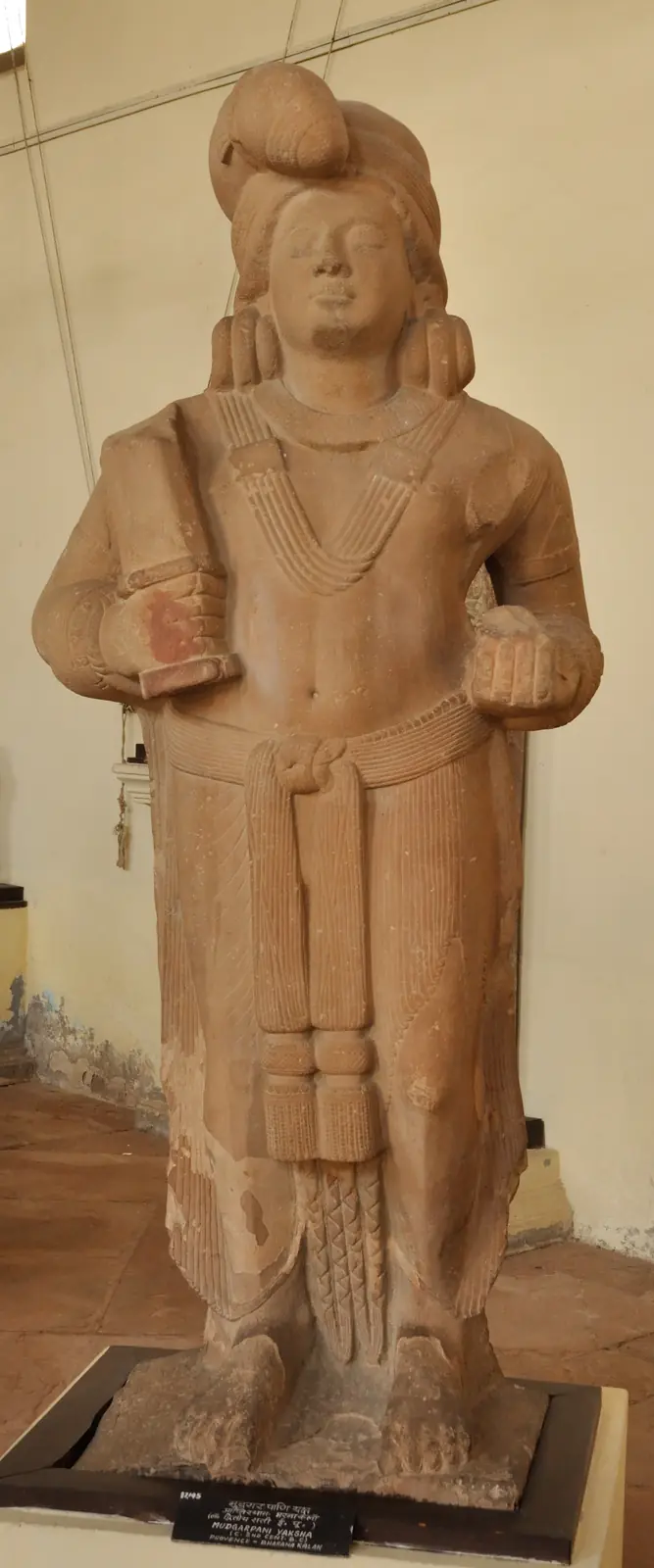
Mathura, the city of Shri Krishna, carved in the mottled red sandstone of nearby Sikri. The earliest works are massive standing yakshas, like the Parkham Yaksha and the Mudgarpani Yaksha of around the 2nd century BCE. Then come some of the first images of the Devatas: Balarama under the serpent hood, Vasudeva-Krishna, Lakshmi, Kartikeya and the Saptamatrikas. At Kankali Tila, the Jain site of Mathura, sculptors made ayagapatas, carved votive slabs, and seated Tirthankaras.
02The Kushana age
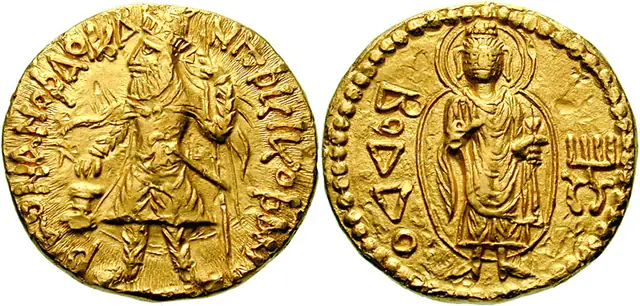
Under the Kushana kings, in the first centuries CE, Mathura made the seated Buddha with a shaven head, a broad smile and the right hand raised in abhaya, the Katra Buddha being the most famous. The Kushanas themselves are there: the headless standing statue of Kanishka, inscribed with his name, from their shrine at Mat. Mathura images are full-bodied, robust and frontal, with a light, almost transparent robe. In the Gupta age the school refined into the calm standing Buddhas of the 5th century.
03The Mathura Museum
The Government Museum in Mathura, founded in 1874, holds the finest collection in the world of this school: the Kanishka statue, the Katra Buddha, the yakshas and the Jamalpur standing Buddha. The State Museum in Lucknow holds much of the Kankali Tila Jain sculpture. A visit to the museum pairs naturally with darshan at the Shri Krishna Janmabhoomi, close by. Give the museum two hours; the yakshas alone deserve one.