Cite
MLA
“Gandhara School of Sculpture.” Hindu History, 2026, https://www.hinduhistory.in/kala/gandhara-school/. Accessed .
APA
Hindu History. (2026). Gandhara School of Sculpture. Retrieved , from https://www.hinduhistory.in/kala/gandhara-school/
What defines it
- 01
Grey-blue schist and stucco
- 02
Wavy hair and toga-like robes
- 03
Princely, jewelled Bodhisattvas
- 04
Narrative panels of the Buddha’s life
01The land of Gandhari
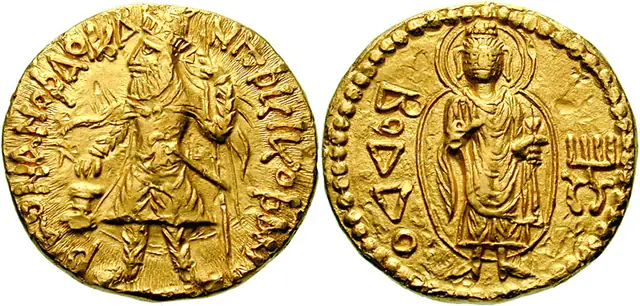
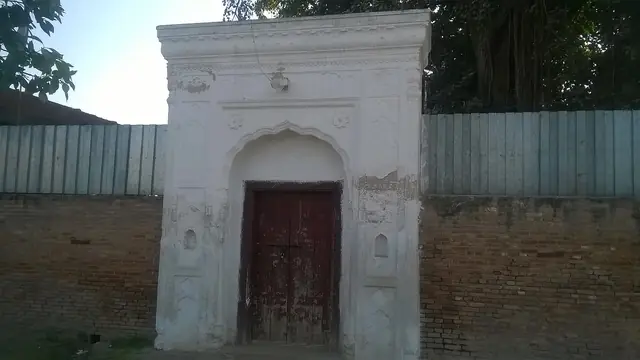
Gandhara is one of the sixteen mahajanapadas, and Gandhari of the Mahabharata was its princess. Taxila, its great city, was a seat of learning, and tradition places Chanakya there. After Alexander’s raid, Greek kingdoms ruled here, then Shakas and the Kushanas. Under Kanishka, a great patron of the Buddhist sangha, the monasteries of the Peshawar valley and Swat were filled with sculpture. The Kanishka casket, found at Shah-ji-ki-Dheri near Peshawar in 1908–09, bears his name.
02Schist and stucco
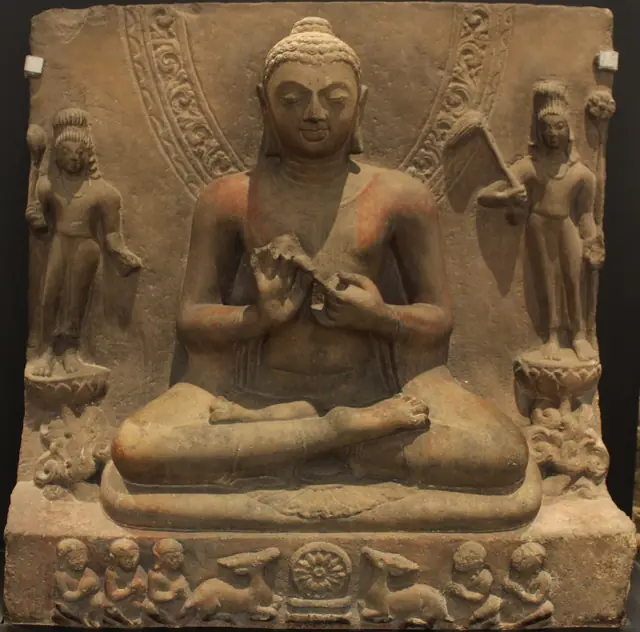
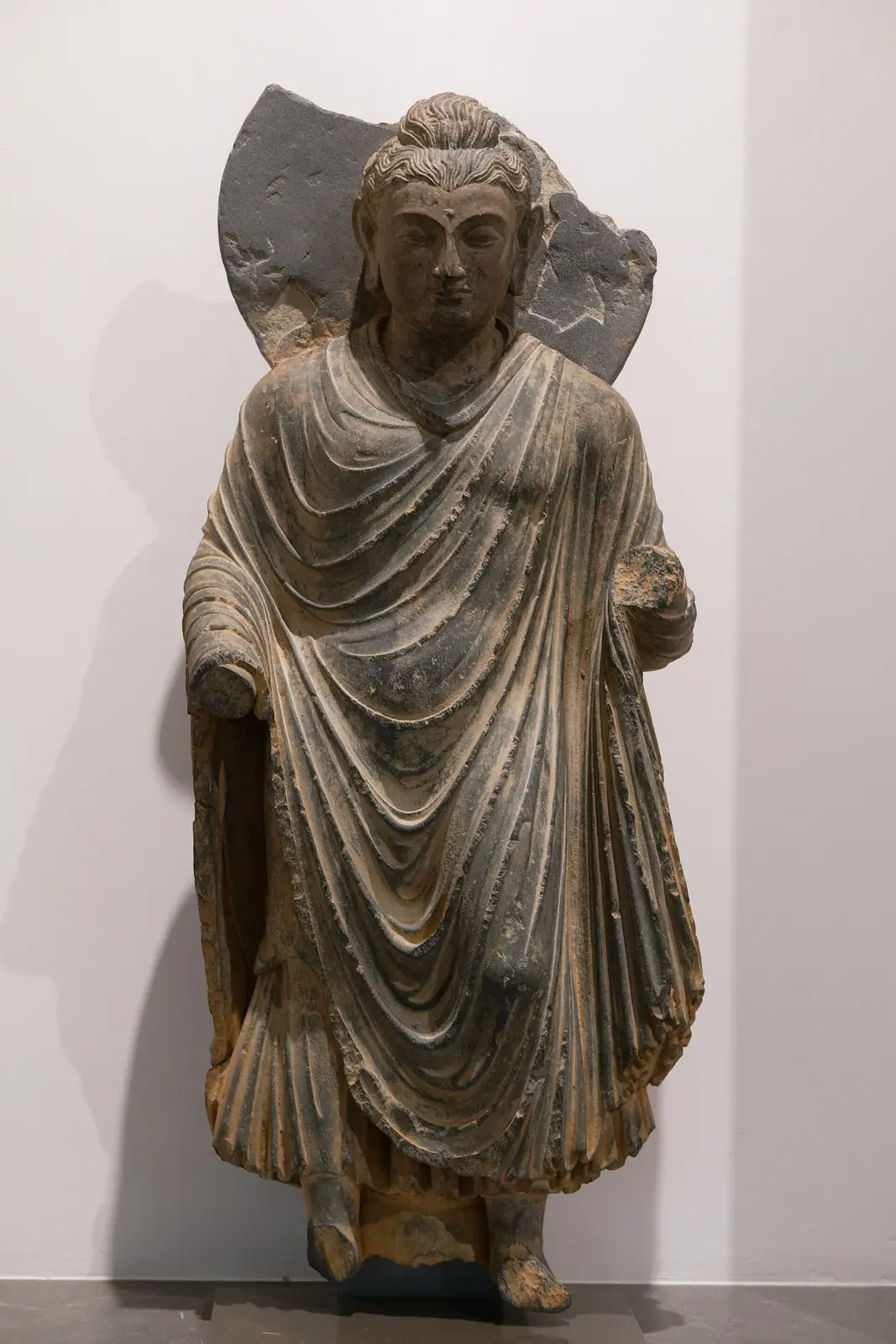
Sculptors worked in grey-blue schist and, later, in stucco and clay. Their Buddha has wavy hair gathered in a topknot, a face of Greek cast, and a heavy robe falling in deep folds like a toga. Bodhisattvas wear turbans, moustaches and princely jewellery. Narrative panels show the Buddha’s birth, the great departure, the defeat of Mara and the parinirvana. Gandhara and Mathura, at much the same time, made the first images of the Buddha in human form, each in its own manner.
03Where it is now
The sites lie in Pakistan and Afghanistan, and much of the sculpture is in the Peshawar Museum, the Lahore Museum and the Taxila Museum, with more in the Indian Museum in Kolkata, the National Museum in New Delhi, the Chandigarh Government Museum and the Musée Guimet in Paris. The giant Buddhas of Bamiyan, a later work of the same broad tradition, were blown up by the Taliban in March 2001.