01Bura Aditya
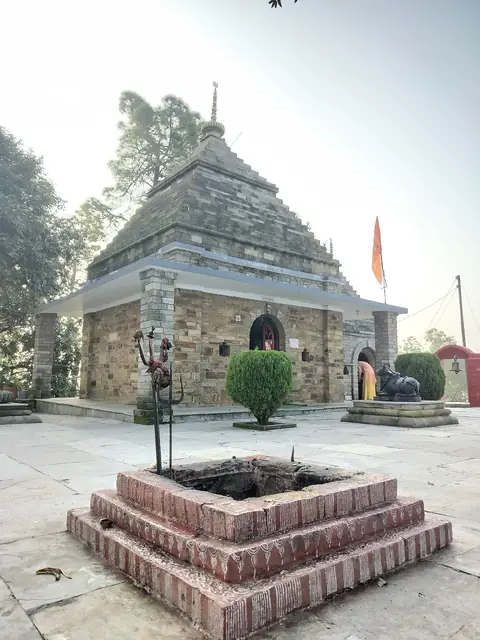
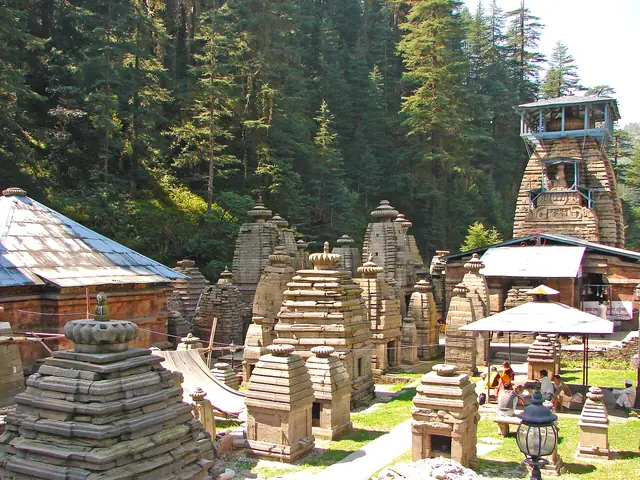
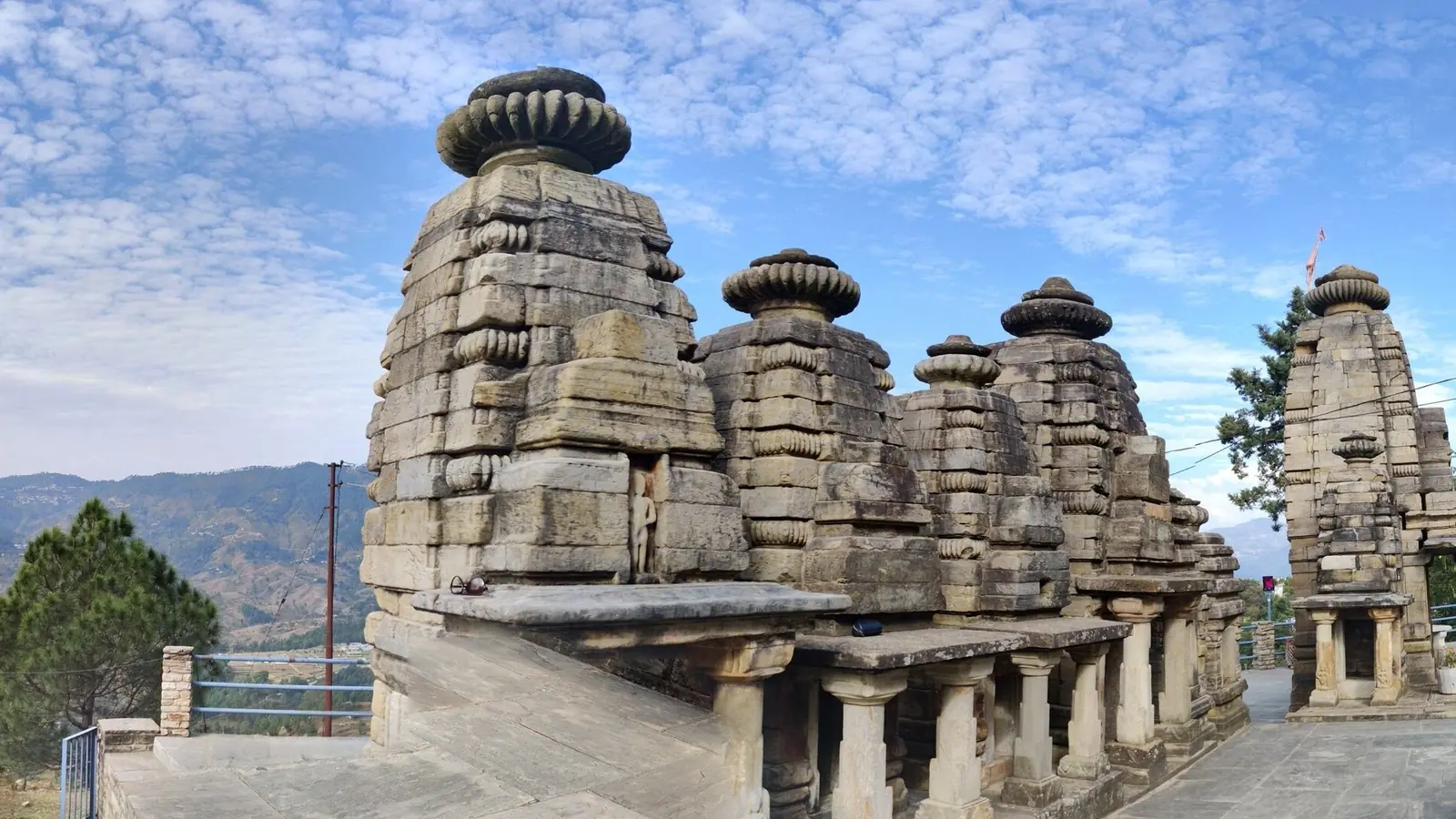
Katarmal takes its name from Katarmalla, a king of the Katyuri house that ruled Kumaon and Garhwal from the valley of the Gomti before the Chands. The main shrine faces east, its tall curvilinear shikhara of grey stone now leaning a little with age, and the Surya inside is known locally as Bura Aditya or Vriddhaditya, the old Sun. Around it stand about forty-four smaller temples to Shiva, Parvati, Lakshmi-Narayan, Ganesh and other deities, a whole temple town on a terrace looking across to the Kosi valley.
02The carved doors
The temple was famous for its doors and panels of carved wood, rare survivors of early Himalayan woodwork. After thefts of images from the site in the 20th century, the doors were taken to the National Museum in New Delhi for safe keeping, where they can still be seen. The ASI looks after the group today. The walk from the road at Kosi climbs through pine forest for a couple of kilometres, and few visitors make it, so the place is usually quiet.
The life of this place
- c. 9th centuryThe Katyuri king Katarmalla builds the Sun temple.
Katarmal is about 17 km from Almora on the Kosi road; a motorable road now reaches close to the temple.