
01The first shloka
On the bank of the Tamasa, Valmiki watched a pair of krauncha birds. A hunter’s arrow struck the male, and the female cried over him. Grief rose in the sage and came out of his mouth as a curse in perfect metre, “Ma nishada…”. He was startled by it himself. Then Bhagwan Brahma appeared and told him that this shoka, sorrow, had become shloka, verse, by Saraswati’s will, and that he should now tell the whole life of Rama, which Narada had just recounted to him.
Valmiki sat in yoga, Bala Kanda says, and saw the whole of it as it had happened: every word spoken, every laugh, every step. He taught the finished poem to two boys in his ashrama, Lava and Kusha, who sang it before Rama himself.
02How the book is arranged
Seven kandas, from Rama’s birth in the Bala Kanda to his return to his own Vishnu form in the Uttara Kanda. Each kanda is divided into sargas, cantos, and almost all of it is in the anushtubh metre that was born at the Tamasa. Bala Kanda itself gives the size: 24,000 shlokas. A tradition among reciters holds that each thousand begins with a syllable of the Gayatri mantra, so the poem carries the Gayatri hidden in it.
The text has come down in northern and southern manuscript families with small differences in wording and numbering. Gita Press prints the southern text; the Oriental Institute at Baroda published a Critical Edition between 1960 and 1975 after comparing manuscripts from across the country.
03Read and sung today
In many homes the whole Ramayana is read in nine days, the navaha parayana, finishing on Ram Navami in Chaitra. The Sundara Kanda is read on its own, often on Tuesdays and Saturdays, for Hanuman’s blessing. In Kerala the month of Karkidakam, July to August, is Ramayana masam, when families read the Malayalam Adhyatma Ramayanam every evening.
Then there is the Ramlila, the katha acted on open grounds across north India in the days before Dussehra. At Ramnagar, across the Ganga from Kashi, it runs for about a month and moves from one part of the town to another, so the audience walks with Rama from Ayodhya to Lanka. UNESCO placed the Ramlila on its list of intangible heritage in 2008.
04Retold in every language of Bharat
Kambar’s Iramavataram, the Kamba Ramayanam, usually placed in the 12th century, is the summit of Tamil poetry; it was first recited, the Srirangam tradition says, in the mandapam of the Ranganatha temple. Krittibas Ojha’s Bengali Ramayan of the 15th century is still sung in village homes of Bengal. Telugu has the Ranganatha Ramayanamu of Gona Budda Reddy, Assamese the Saptakanda Ramayana of Madhava Kandali (14th century), Odia the Jagamohana Ramayana of Balarama Das, Marathi Eknath’s Bhavartha Ramayana, and Malayalam Thunchath Ezhuthachan’s Adhyatma Ramayanam Kilippattu.
Each poet kept Valmiki’s order of events and added the colour of his own land and his own bhakti. Kalidasa’s Raghuvamsha and Bhavabhuti’s Uttararamacharita drew on Valmiki in Sanskrit itself.
05Adhyatma Ramayana and the Manas
The Adhyatma Ramayana, found in the Brahmanda Purana, is the katha as Bhagwan Shiva told it to Mata Parvati, with Rama openly the Supreme Brahman. Here Sita is kept safe in Agni and a Maya Sita, a shadow, is carried off. Goswami Tulsidas drew on it for the Ramcharitmanas, which he began in Ayodhya on Ram Navami of Samvat 1631, 1574 CE, in Awadhi.
Several episodes everyone knows come from these later tellings and not from Valmiki. The Lakshmana Rekha is not in Valmiki; the Manas alludes to it through Mandodari. In Valmiki, Ahalya is not a stone but lives unseen in tapas; the stone is the later tellings’ image. Shabari tasting each berry and the squirrel at the setu are loved additions of devotional and regional tradition.
06Across Southeast Asia
Rama crossed the sea long before any modern ship. In Java the Old Javanese Kakawin Ramayana was written in the 9th century, and the same century carved the katha in stone on the balustrades of Prambanan, where it is still danced at night under the temple. At Angkor Wat a 12th-century relief shows the battle of Lanka along a whole gallery wall.
Cambodia tells it as the Reamker, Laos as Phra Lak Phra Lam, Malaysia as the Hikayat Seri Rama, Myanmar as the Yama Zatdaw. Thailand’s Ramakien was set down under King Rama I at the end of the 18th century; the kings of the present Thai dynasty take the name Rama, and the old capital was Ayutthaya, after Ayodhya.
Read it part by part
- 1Bala Kanda बालकाण्डम्
The book of childhood. It opens with Narada and the krauncha birds, tells of Rama’s birth to King Dasharatha after a great yajna, his years with Maharshi Vishvamitra, and ends with the breaking of Shiva’s bow in Mithila and the four weddings.
- 2Ayodhya Kanda अयोध्याकाण्डम्
The book of Ayodhya and the longest after the Yuddha Kanda. A coronation is announced and undone in a single night; Rama leaves for fourteen years in the forest, Dasharatha dies of grief, and Bharata refuses the throne and rules with Rama’s sandals.
- 3Aranya Kanda अरण्यकाण्डम्
The book of the forest. Ten quiet years among the rishis of the Dandaka end at Panchavati on the Godavari, where Shurpanakha’s insult brings war, a golden deer draws Rama away, and Ravana carries Sita off while the old vulture Jatayu gives his life to stop him.
- 4Kishkindha Kanda किष्किन्धाकाण्डम्
The book of the vanara kingdom. At Pampa Rama meets Hanuman and makes friendship with the exiled Sugriva, kills Vali, waits out the rains, and sends the vanaras to every corner of the earth; the southern party learns from Sampati that Sita is in Lanka.
- 5Sundara Kanda सुन्दरकाण्डम्
Hanuman leaps a hundred yojanas of ocean, finds Sita in Ravana’s Ashoka grove and gives her Rama’s ring. He then shakes Lanka to its roots, sets it ablaze with his own burning tail and carries Sita’s chudamani back to Rama.
- 6Yuddha Kanda युद्धकाण्डम्
The longest kanda: Rama receives Vibhishana, bridges the sea and lays siege to Lanka. Kumbhakarna, Indrajit and at last Ravana fall; Sita comes through the fire and Rama returns to Ayodhya to be crowned.
- 7Uttara Kanda उत्तरकाण्डम्
The kanda of what came after: the rishis tell Rama the past of Ravana and Hanuman, and Rama’s reign is told to its end. Sita goes to Valmiki’s ashrama, Lava and Kusha are born and sing this very Ramayana before their father, Sita returns into the Earth, and Rama enters the Sarayu.
Famous verses
मा निषाद प्रतिष्ठां त्वमगमः शाश्वतीः समाः। यत्क्रौञ्चमिथुनादेकमवधीः काममोहितम्॥
O hunter, may you find no rest for endless years, for you killed one of the pair of krauncha birds while it was lost in love.Valmiki Ramayana, Bala Kanda 2.15
यावत्स्थास्यन्ति गिरयः सरितश्च महीतले। तावद्रामायणकथा लोकेषु प्रचरिष्यति॥
Brahma’s word to Valmiki: as long as the mountains stand and the rivers flow on the earth, the katha of the Ramayana will be told among the worlds.Valmiki Ramayana, Bala Kanda 2.36
Every later Rama katha, from Kalidasa and Kambar to Tulsidas, begins from Valmiki, and the poem has been translated into every Indian language and most of the world’s. Its people became the measure of conduct in Hindu homes: a son like Rama, a brother like Lakshmana or Bharata, a devotee like Hanuman.
Characters
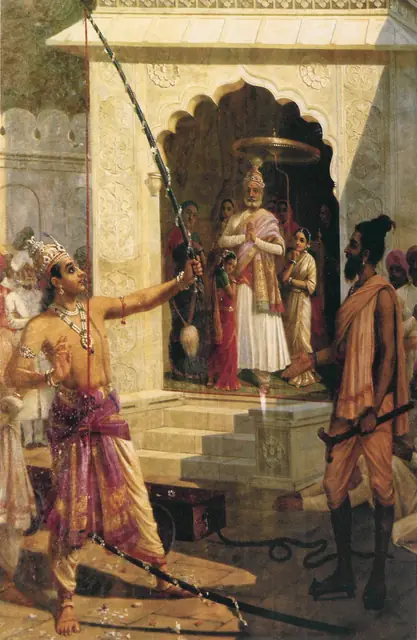 रामःShri RamaPrince of Ayodhya, avatar of Vishnu
Eldest son of Dasharatha and Kausalya, born on Chaitra Shukla Navami in the Treta Yuga as the seventh avatar of Bhagwan Vishnu. Valmiki shows him as a man: he weeps for Sita, rages at the sea, doubts and grieves. What never moves is his word. He gave up a kingdom in a morning to keep his father’s promise, and he kept every promise he made after. Hindus call him Maryada Purushottam, the best of men within the bounds of dharma, and Ram Rajya is still the name for just rule.
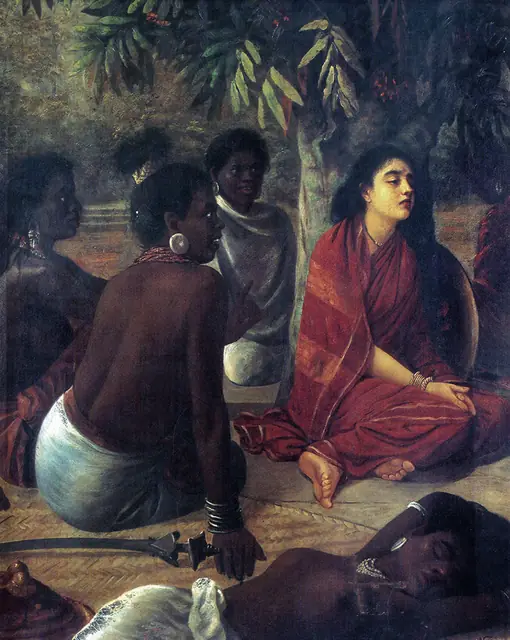 सीताSitaDaughter of the Earth, Rama’s wife
Janaka found her in a furrow of the yajna ground, so she is Bhumija, daughter of the Earth, and Janaki, Maithili, Vaidehi after her father and his land. She chose the forest over the palace, refused Ravana for nearly a year with a blade of grass held between them as her answer, and walked through fire unharmed. Valmiki calls the whole poem “the great deeds of Sita” as much as Rama’s. For devotees she is Mata Lakshmi; Ram Navami and Janaki Navami in Vaishakha honour the pair.
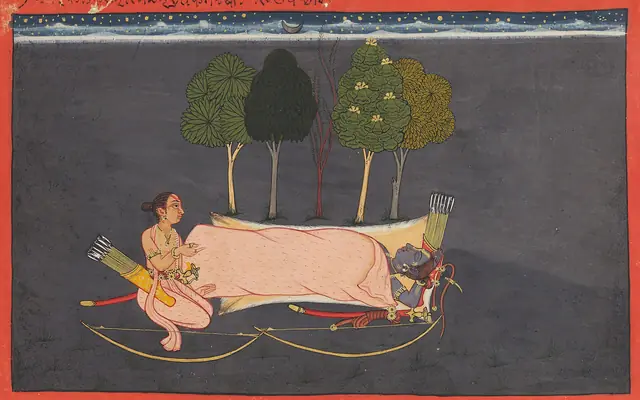 लक्ष्मणःLakshmanaRama’s younger brother and shadow
Son of Sumitra, twin of Shatrughna, and from childhood never more than a step from Rama. Valmiki calls him Rama’s second life breathing outside his body. He left his wife Urmila to serve his brother for fourteen years, built every hut, kept watch every night, and in the end killed Indrajit. Quick to anger, quick to obey. Tradition sees him as Shesha, the serpent on whom Vishnu rests, come down to serve him again.
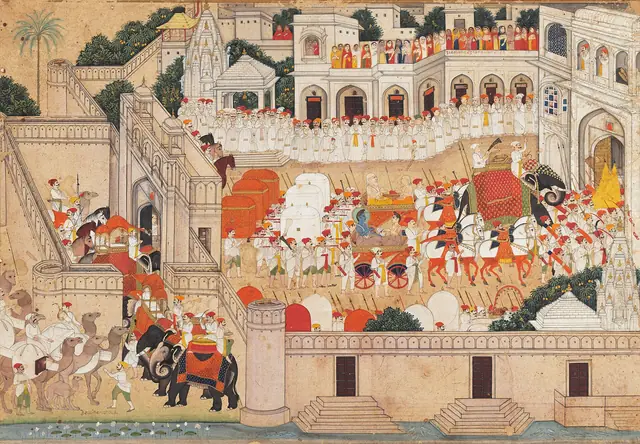 भरतःBharataThe brother who refused the throne
Son of Kaikeyi, for whom the throne was won by a trick he never wanted. He came home from Kekaya to a dead father and an exiled brother, turned on his own mother, and walked to Chitrakoot to bring Rama back. When Rama would not come he carried Rama’s sandals on his head to Ayodhya, set them on the throne, and lived fourteen years at Nandigram in bark and matted hair, ruling as their servant. “A brother like Bharata” is the highest praise a Hindu family gives.
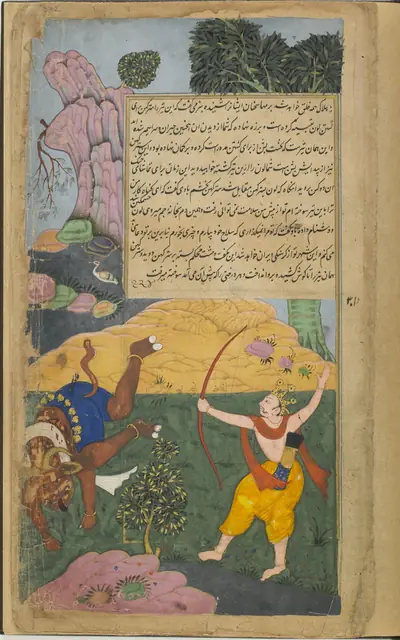 शत्रुघ्नःShatrughnaYoungest brother, slayer of Lavana
Lakshmana’s twin, as close to Bharata as Lakshmana was to Rama. He went with Bharata to Kekaya, and on their return it was he who dragged Manthara across the floor until Bharata told him to let her go. In the Uttara Kanda Rama sends him against the rakshasa Lavana of Madhuvana; he kills Lavana and founds the city of Madhupura on the Yamuna, which tradition holds to be Mathura. He married Shrutakirti, daughter of Kushadhvaja.
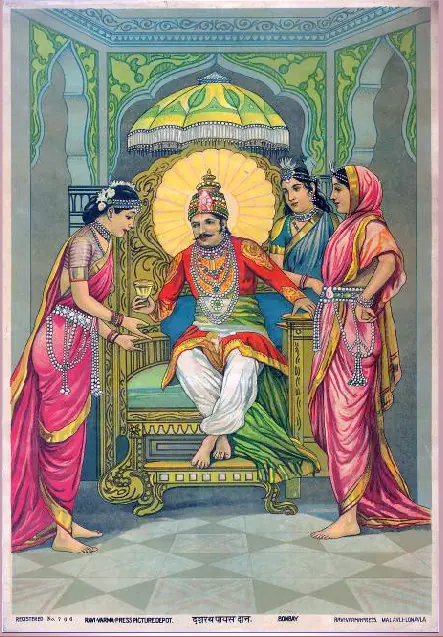 दशरथःDasharathaKing of Ayodhya, Rama’s father
King of Kosala of the Ikshvaku line, a great charioteer who had fought beside the devas. He had three chief queens and no son until Rishyashringa performed the putrakameshti yajna for him. His love for Rama was his whole life, and his promise to Kaikeyi was his ruin: bound by truth, he could neither break his word nor bear to keep it. He died on the sixth night of Rama’s exile, as the curse of a blind ascetic had foretold, calling Rama’s name.
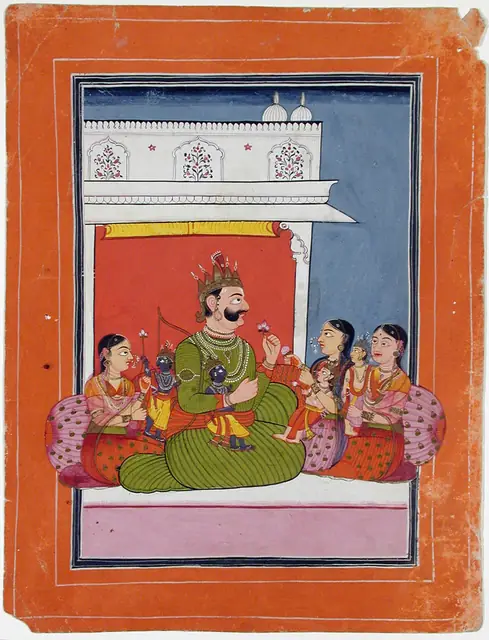 कौसल्याKausalyaEldest queen, Rama’s mother
Dasharatha’s eldest queen, who received half the payasa and bore Rama. Valmiki shows her at prayer, offering to the fire for her son’s coronation, when Rama comes to tell her he is leaving. She falls to the ground, begs to go with him, and then blesses him for the forest with a long svastyayana, calling on every deva and every season to guard him. In the years of exile she cared for the broken king to the end.
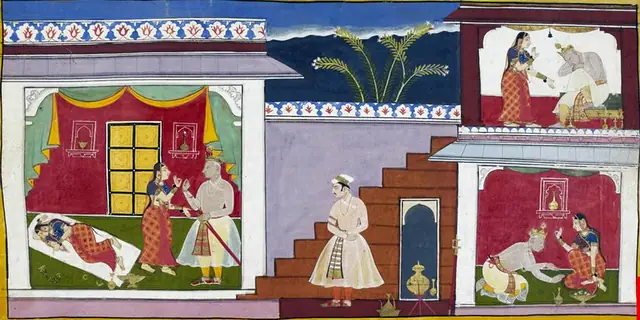 कैकेयीKaikeyiQueen who claimed the two boons
Princess of Kekaya and Dasharatha’s favourite queen, brave enough to drive his chariot in the war against Shambara and save his life. Valmiki is careful with her: her first response to Rama’s coronation is joy, and she loves Rama. Only Manthara’s fear, worked on her through an evening, turns her. Her two boons sent Rama to the forest and killed her husband, and her own son never forgave her. When Rama returns he greets her with the same respect as his own mother.
सुमित्राSumitraMother of Lakshmana and ShatrughnaThe third queen, who received two shares of the payasa and bore twins. She asked for nothing in the palace quarrels. When Lakshmana came to take leave she gave him the most quoted blessing in the Ramayana: think of Rama as your father, of Sita as me, of the forest as Ayodhya. She comforted Kausalya through the long years that followed, telling her Rama would come back shining like the moon.
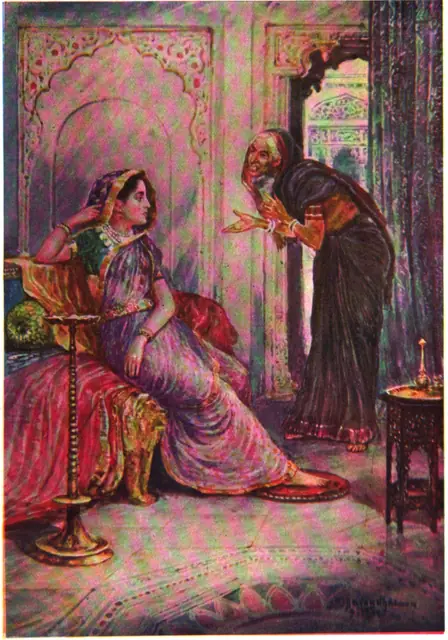 मन्थराMantharaKaikeyi’s maid who turned her
The hunchbacked maid who had come with Kaikeyi from her father’s house. From the palace roof she saw Ayodhya decorated and asked why, and her anger was immediate. She told Kaikeyi that Rama’s mother would be queen mother and she a servant, that Bharata would be sent away or killed, and she reminded her of the two forgotten boons. Her name became the Hindi word for one who poisons a household with whispers.
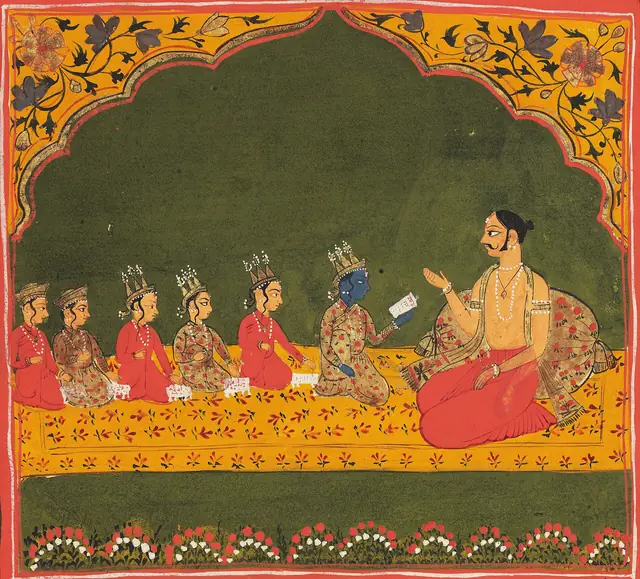 वसिष्ठःMaharshi VasishthaKulaguru of the Ikshvakus
Son of Brahma, one of the Saptarishis, and family priest of the Ikshvaku kings for generations. He named the four princes and taught them. It was his counsel that made Dasharatha send Rama with Vishvamitra, and he fixed the hour of both coronations, the one undone and the one fulfilled. When Kaikeyi gave Sita bark to wear he rebuked her before the court. The Yoga Vasishtha is his teaching to the young Rama.
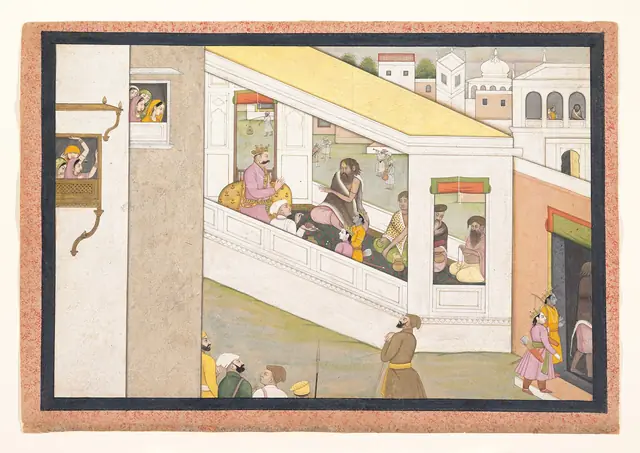 विश्वामित्रःMaharshi VishvamitraKing turned brahmarshi, Rama’s teacher
Once King Kaushika, he tried to take Vasishtha’s wish-granting cow Shabala, lost to the power of tapas, and spent thousands of years in austerity until Vasishtha himself called him brahmarshi. He is the rishi of the Gayatri mantra in the Rigveda. In the Bala Kanda he takes the boy Rama to guard his yajna, gives him the divine astras, tells him the kathas of the land as they walk, and leads him to Mithila and Sita.
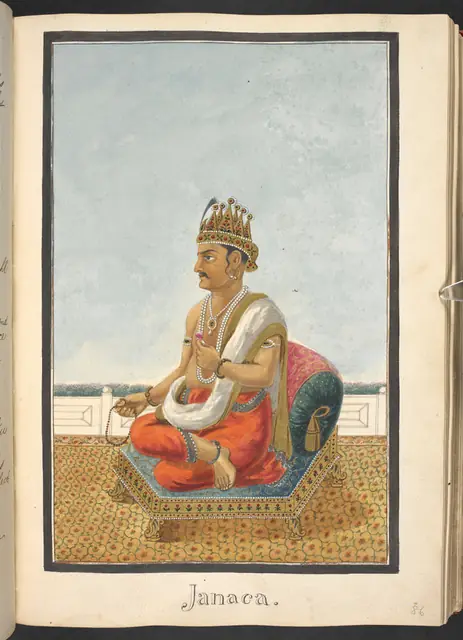 जनकःKing JanakaKing of Videha, Sita’s father
Seeradhvaja Janaka of Mithila in Videha, a rajarshi, a king who lived like a sage. He kept Shiva’s bow in trust from his ancestor Devarata, found Sita while ploughing the yajna ground, and promised her only to the man who could string it. When Rama broke it he sent at once for Dasharatha and gave four daughters of his house to the four brothers. The Upanishads honour a Janaka of this line as a knower of Brahman.
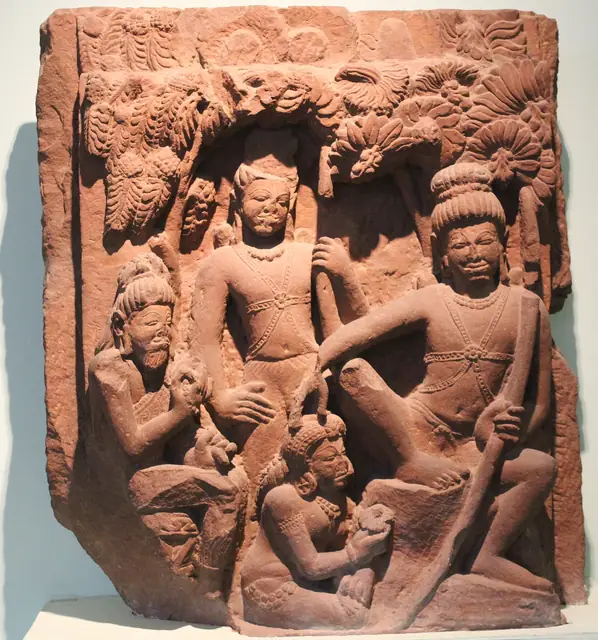 अहल्याAhalyaGautama’s wife, freed by Rama
Wife of Maharshi Gautama, to whom Indra came in her husband’s form. Gautama cursed her to live for ages in the ashrama unseen by any being, fasting on air, lying on ashes, until Rama should come. In Valmiki she is never a stone; the image of the stone that comes alive at Rama’s touch belongs to later tellings. When Rama arrived she shone out like a flame through smoke, and the princes touched her feet. She is counted among the panchakanya.
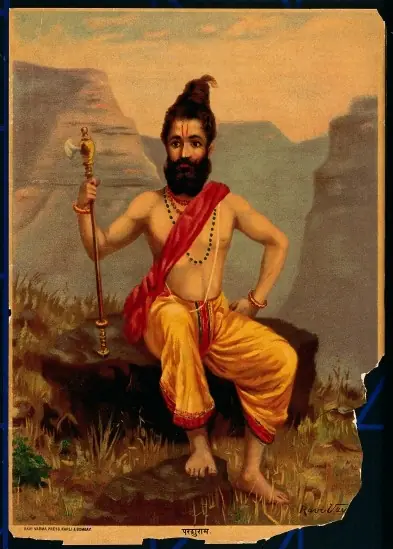 परशुरामःParashuramaSixth avatar, who yielded to Rama
Son of the rishi Jamadagni, the axe-bearing avatar of Vishnu who had cleared the earth of arrogant kshatriyas twenty-one times and given it to Kashyapa. In Valmiki he meets the wedding party on the road home from Mithila, furious that Shiva’s bow is broken, and offers Rama the bow of Vishnu as a challenge. Rama strings it, and Parashurama knows who stands before him. He gives up his worlds of merit and returns to his tapas on Mahendra.
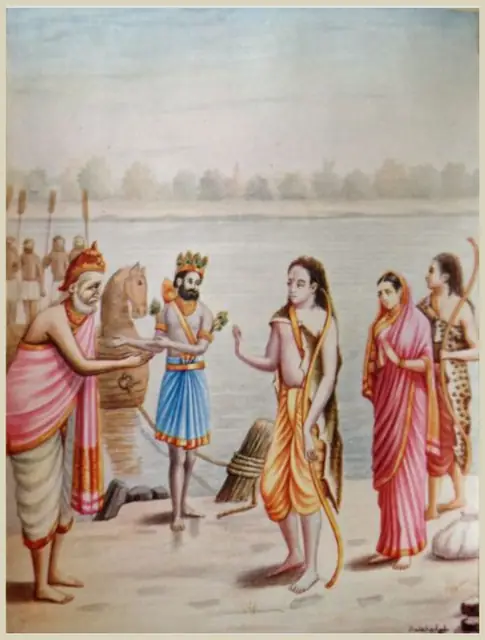 गुहःGuhaNishada king, Rama’s friend
King of the Nishadas at Shringaverapura on the Ganga, whom Valmiki calls Rama’s friend, dear as his own life. He came out with food and offered Rama his whole kingdom; Rama accepted only fodder for the horses. Guha kept watch all night with Lakshmana while Rama and Sita slept on the ground, and his boats took them across. Later he stood ready to stop Bharata’s army at the river, then wept and guided him when he learned why Bharata had come.
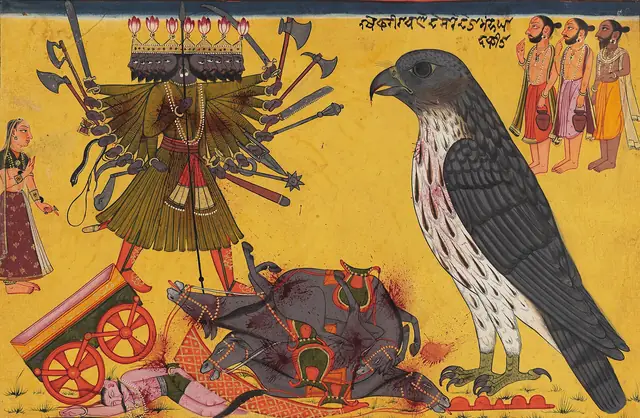 जटायुःJatayuVulture king who died for Sita
Son of Aruna, the charioteer of the sun, and old friend of Dasharatha. At Panchavati he promised to guard Sita, and when Ravana carried her off he fought him alone, sixty thousand years old against a young warrior in a chariot. He broke the chariot and killed its beasts before Ravana cut off his wings. He lived only long enough to tell Rama which way Ravana had gone. Rama performed his last rites with his own hands, as a son for a father.
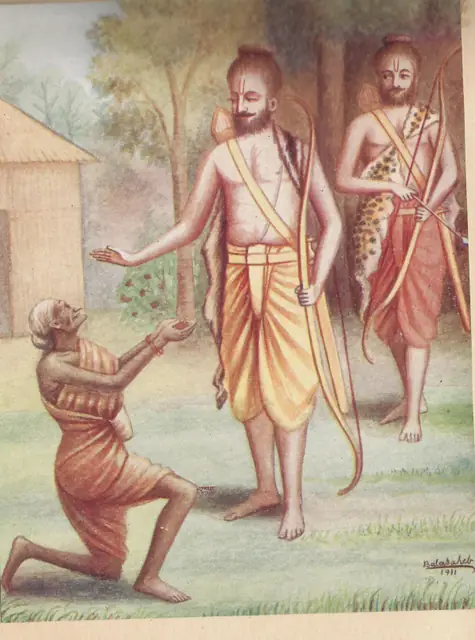 शबरीShabariAscetic woman who waited for Rama
A woman of the Shabara people and disciple of Maharshi Matanga at Pampa. When her gurus left the body they told her to wait, for Rama would come. She waited for years, gathering forest fruits. Valmiki has Rama call her a siddha, an ascetic perfected; she shows him her gurus’ ashrama, gives him the fruits, and enters the fire to join them. The berries she tasted one by one so only the sweetest reached him come from later devotional tradition.
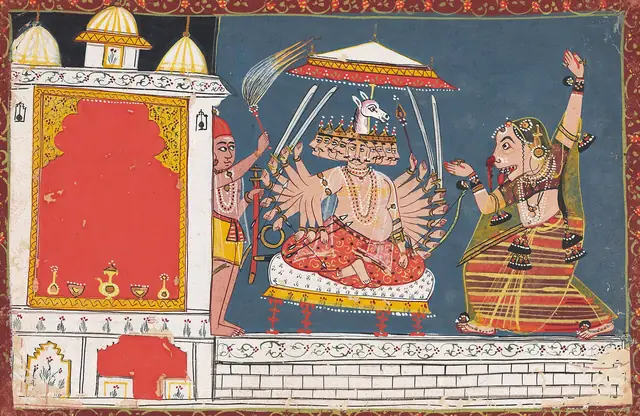 शूर्पणखाShurpanakhaRavana’s sister, cause of the war
Ravana’s sister, whose name means one with nails like winnowing fans. At Panchavati she wanted Rama, was turned away, and rushed at Sita to devour her; Lakshmana cut off her nose and ears. She ran first to her brother Khara, whose whole army Rama destroyed, and then to Ravana in Lanka. There she shamed him for not knowing what was happening in his own lands and described Sita’s beauty until he set out for Maricha’s hermitage.
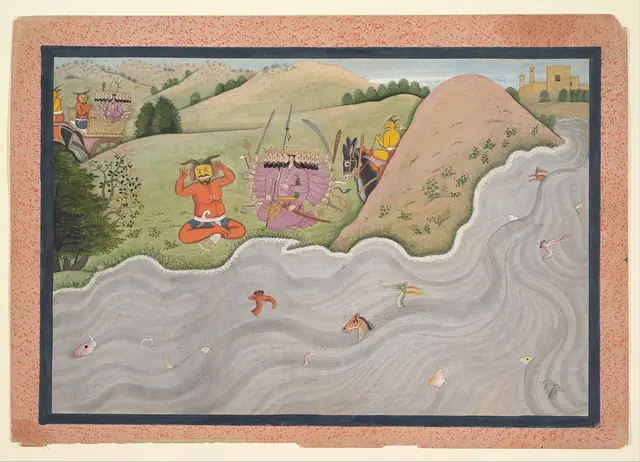 मारीचःMarichaRakshasa who became the golden deer
Son of Tataka. As a young rakshasa he attacked Vishvamitra’s yajna and was flung a hundred yojanas into the sea by Rama’s Manava astra. He never forgot it. He became an ascetic, and when Ravana came to him he begged him not to touch Rama, “dharma in a body”. Threatened with death, he took the shape of a golden deer, led Rama far from the hut, and with his last breath cried out in Rama’s voice for Sita and Lakshmana.
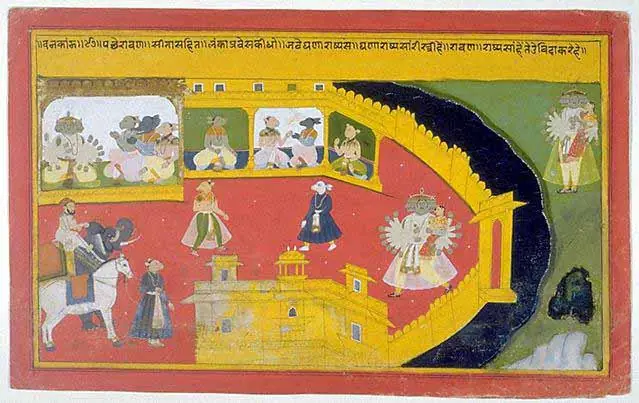 रावणःRavanaTen-headed king of Lanka
Son of the rishi Vishrava and the rakshasi Kaikasi, grandson of Pulastya, half-brother of Kubera, from whom he took Lanka and the Pushpaka. By long tapas he won from Brahma safety from devas, asuras and every other being, and scorned to ask it against men. Valmiki grants him learning, courage and splendour, and shows how desire and pride undid them: he carried off another man’s wife, would hear no counsel, and lost his sons, his brothers and his city before he fell to Rama’s arrow.
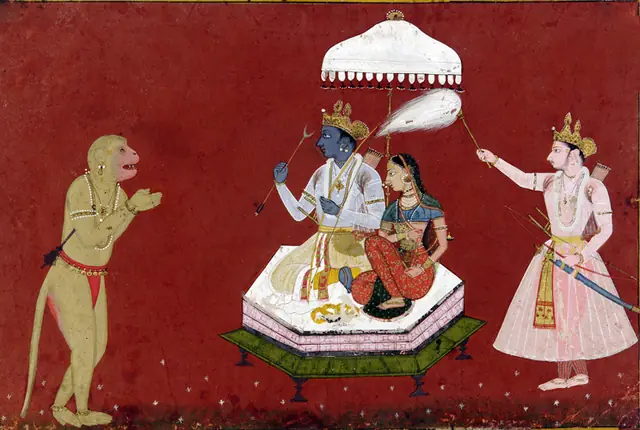 हनूमान्HanumanSon of Vayu, Rama’s messenger and devotee
Son of Vayu and Anjana, Kesari’s wife, counsellor of Sugriva. As a child he leapt at the sun and was struck by Indra’s vajra on the jaw, the hanu, and the devas gave him boons. He leapt a hundred yojanas to Lanka, found Sita, burned the city, carried the mountain of herbs, and asked as reward only to live as long as Rama’s katha is heard on earth. Hindus hold him chiranjivi, ever-living, and wherever the Ramayana is read a seat is left for him.
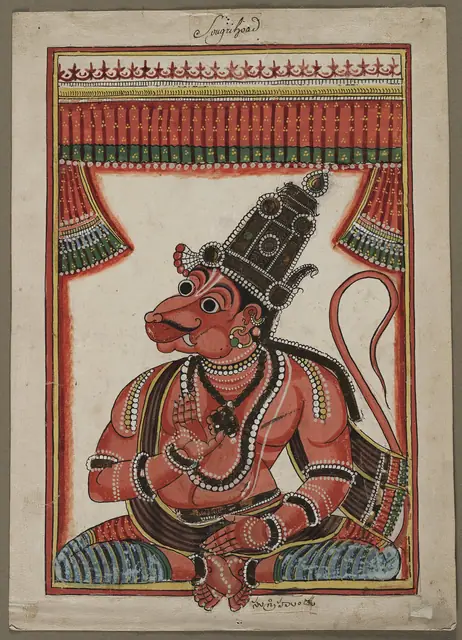 सुग्रीवःSugrivaVanara king, Rama’s ally
Son of Surya and younger brother of Vali. Driven out of Kishkindha and robbed of his wife, he hid on Rishyamuka, the one hill Vali could not climb. He swore friendship with Rama around a fire; Rama killed Vali for him and he was crowned. He forgot his promise through the monsoon, was brought back to it by Lakshmana’s anger, and then sent the vanara armies to every corner of the earth. In the war he fought Kumbhakarna and stayed at Rama’s side to the end.
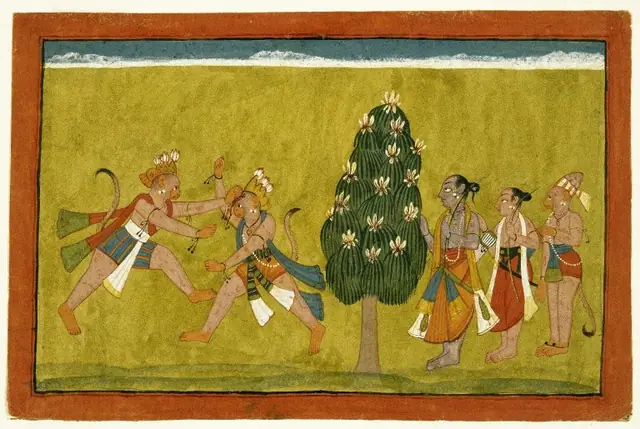 वालीValiMighty vanara king of Kishkindha
Son of Indra and king of Kishkindha, strong enough to have held Ravana under his arm. He killed the asura Dundubhi and the asura Mayavi, and when he wrongly believed Sugriva had sealed him in a cave to steal his throne, he drove his brother out and kept his wife. Rama killed him with one arrow from behind a tree. Dying, Vali argued with Rama, heard his answer, accepted it, and gave his son Angada into Rama’s care. Tara mourned him.
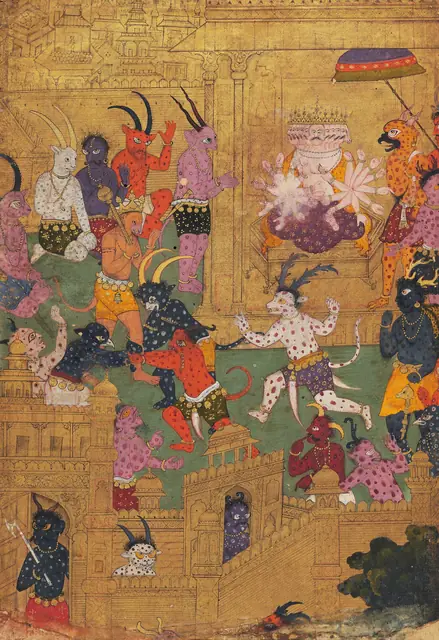 अङ्गदःAngadaVali’s son, envoy to Ravana
Son of Vali and Tara, made yuvaraja by Sugriva at Rama’s wish. He led the southern search party and, when the month ran out, would rather fast to death than face Sugriva empty-handed. Before the battle Rama sent him as envoy to Ravana’s court. In Valmiki the rakshasas seize him and he leaps up with them, breaks the top of the palace, and returns. The scene of Angada planting a foot that no one in the court can move is the Ramcharitmanas’s.
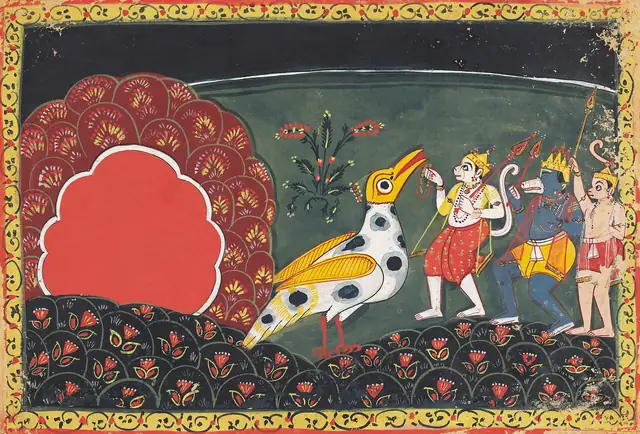 जाम्बवान्JambavanOld king of the bears
King of the rikshas, the bears, son of Brahma by Valmiki’s account, so old he had circled the earth when Vishnu took his three strides as Vamana. Too old now to leap the sea himself, he sat beside the silent Hanuman on the southern shore and reminded him of his birth and his strength until Hanuman rose. In the war it was Jambavan who, when Indrajit’s astra had felled the army, sent Hanuman to the Himalaya for the healing herbs.
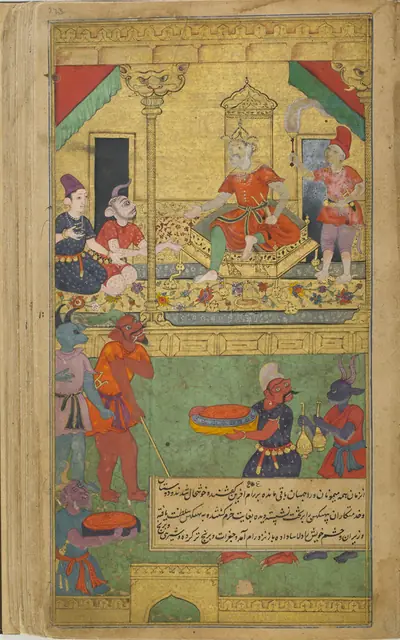 विभीषणःVibhishanaRavana’s brother who took refuge in Rama
Ravana’s youngest brother, who asked Brahma only that his mind stay on dharma. He told Ravana in open court to return Sita, was answered with insults, and rose and flew with four companions across the sea to Rama. Sugriva wanted him killed as a spy; Rama gave his vow that he never refuses anyone who comes to him even once for refuge. Vibhishana guided the war, was crowned king of Lanka, and is counted among the chiranjivis.
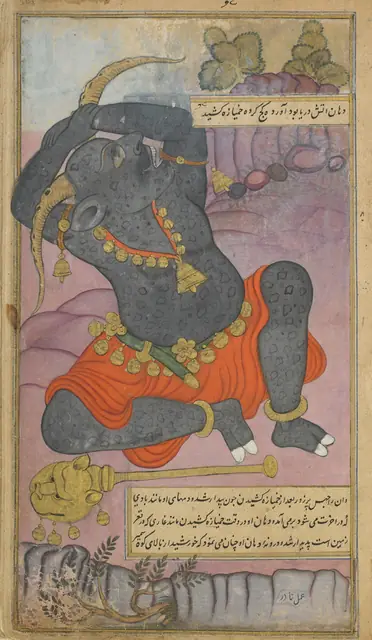 कुम्भकर्णःKumbhakarnaRavana’s giant sleeping brother
Ravana’s middle brother, a giant whose hunger frightened the devas. When he went to ask Brahma for a boon, Saraswati sat on his tongue at the devas’ request and he asked for sleep. He slept for months at a stretch. Woken with drums, elephants and mountains of food, he told Ravana plainly that he had done wrong, and then went out to fight for him anyway. He crushed thousands of vanaras and carried off Sugriva before Rama’s arrows cut him down.
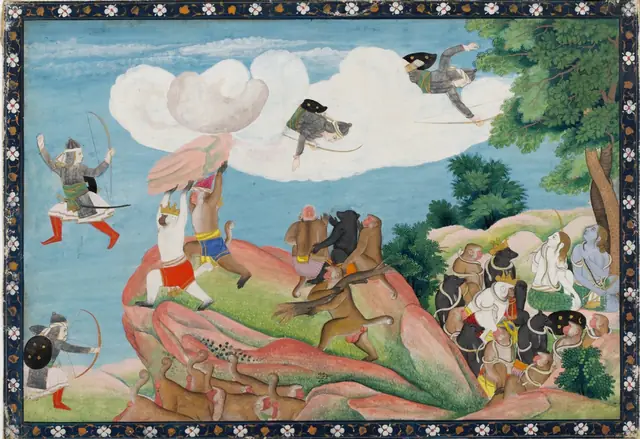 इन्द्रजित्Indrajit (Meghanada)Ravana’s son, conqueror of Indra
Ravana’s eldest son by Mandodari, born Meghanada, who won the name Indrajit by defeating Indra and carrying him captive to Lanka. A master of illusion, he fought unseen from the clouds, bound Rama and Lakshmana with serpent arrows, felled the vanara army with the Brahmastra, and killed a Maya Sita before the vanaras’ eyes. Vibhishana led Lakshmana to the Nikumbhila grove to break his yajna before it was complete, and there Lakshmana killed him.
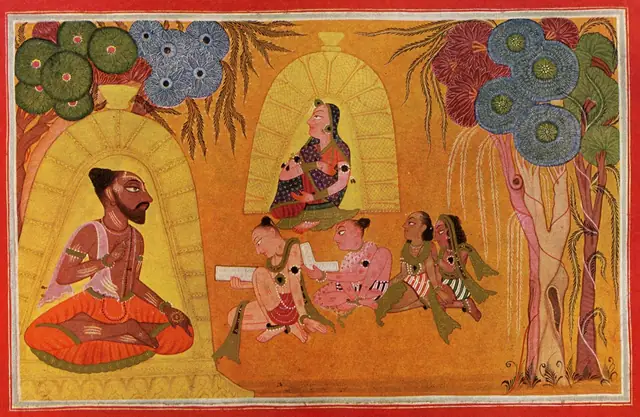 लवकुशौLava and KushaRama’s twin sons, first singers of the Ramayana
Twin sons of Rama and Sita, born in Valmiki’s ashrama after Sita was sent away. Valmiki named them for the kusha grass and its lower part, lava, with which their protection rites were done, and taught them his poem. At Rama’s Ashvamedha they sang it before the assembly, and Rama listened to his own life from his sons without yet knowing them. Kusha later ruled at Kushavati and Lava at Shravasti.