
01Dasharatha’s old friend
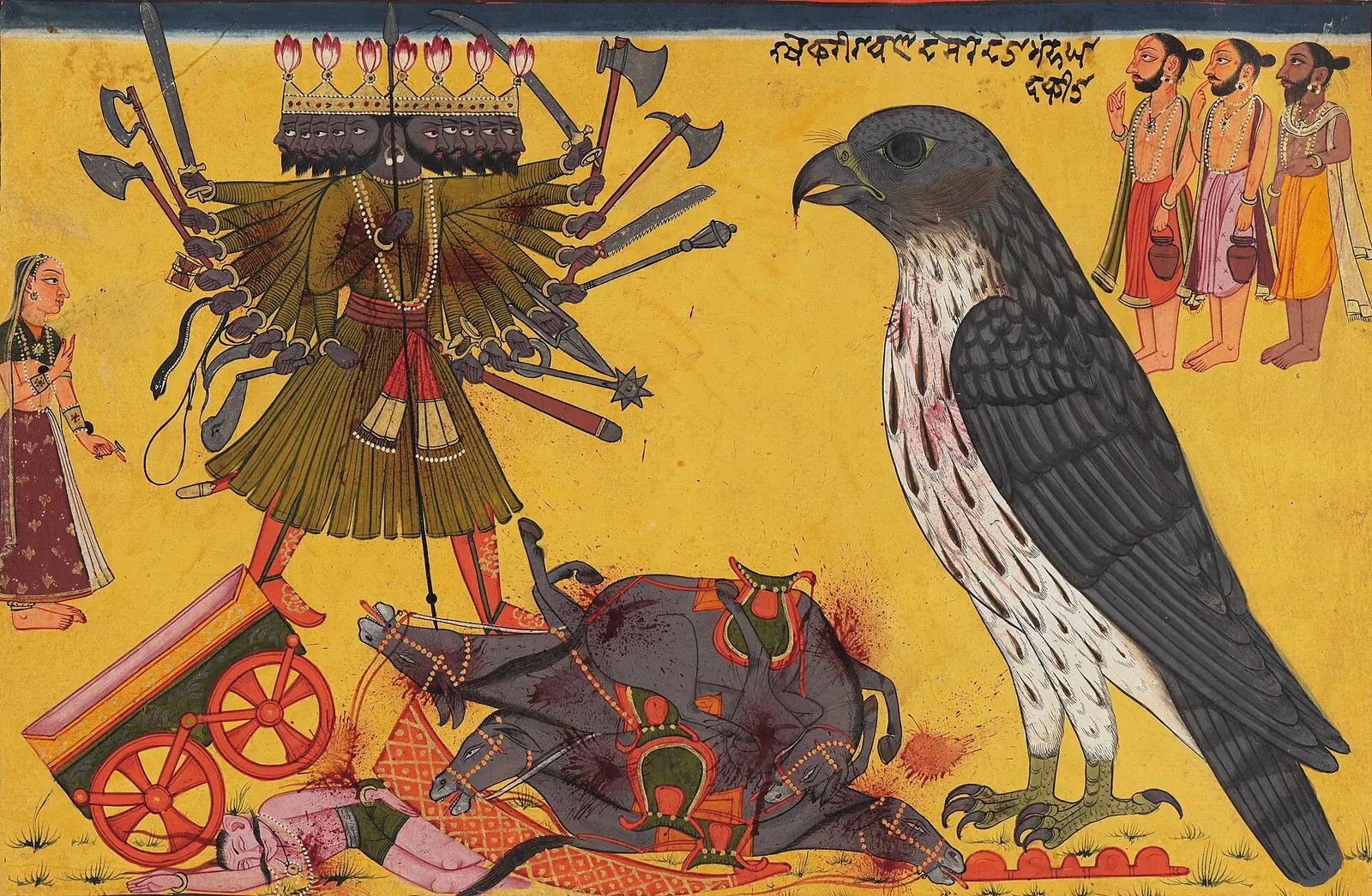
On the road to Panchavati the exiles met a vulture of enormous size, and Rama took him at first for a rakshasa. The bird answered with his whole descent, from the Prajapatis through Kashyapa to Aruna, charioteer of the sun, who was his father; Sampati was his elder brother. He had been Dasharatha’s friend. When Rama and Lakshmana go out into the forest, he told them, I will guard Sita. Rama embraced him and bowed, and Jatayu went with them to Panchavati and lived nearby.
02Alone against Ravana
Jatayu was asleep in a tree when Sita’s cries woke him. He saw Ravana’s chariot and spoke first, as an elder: let her go; I am sixty thousand years old and you are young, armed and on a chariot, but you will not take her while I live. Then he attacked. He broke Ravana’s bow, killed the goblin-faced asses that drew the chariot and its driver, and smashed the chariot so that Ravana fell to the ground with Sita in his arms. Old and exhausted, he could not last. Ravana drew his sword and cut off his wings and feet, and he fell.
03Rites from Rama’s hands
Searching for Sita, Rama found him in his own blood and in his first grief took him for the rakshasa who had eaten her. Jatayu told him that Ravana had carried her south, and that he had taken her at the hour called Vinda, when what is lost is found again by its owner. Then he died. Rama built the pyre himself and performed his rites as a son for a father. Later his brother Sampati heard of his death from Angada’s search party.
Lepakshi in Andhra takes its name, local tradition says, from Rama’s words to the fallen bird: le, pakshi, rise, O bird.