
01Born in Valmiki’s ashrama
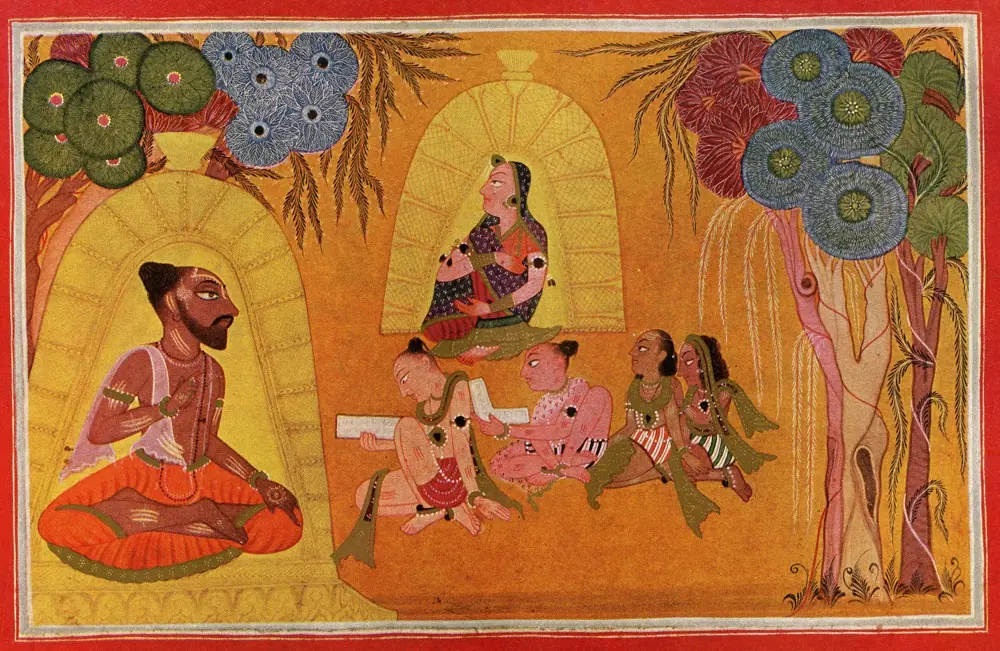
Sita gave birth to twins in Valmiki’s ashrama on the bank of the Ganga, on the night Shatrughna was staying there on his way to fight Lavana. The rishi performed the rites of protection himself. The elder child was wiped with the tops of a handful of kusha grass and so was named Kusha; the younger with its lower ends, the lava, and was named Lava. They grew up among the ascetics, learned the Vedas from Valmiki, and learned his poem, all of the Ramayana, by heart.
02Singing before their father
Bala Kanda says the boys sang the poem in the assemblies of rishis, who wept and blessed them and gave them gifts, a water pot, a deerskin, a sacred thread. At Rama’s Ashvamedha in the Naimisha forest, Valmiki sent them to sing twenty sargas a day in the streets and before the king, and to eat only forest fruit. Rama listened day after day with his brothers and the assembly. He offered them gold, and they refused it: what use is gold to those who live on roots in the forest? From the katha itself Rama understood that they were Sita’s sons, and sent for her.
03Kushavati and Shravasti
Before Rama left the earth he divided Kosala between his sons: Kusha was crowned at Kushavati, a city built for him at the foot of the Vindhyas, and Lava at Shravasti in the north. Kalidasa’s Raghuvamsha takes up the line from Kusha and tells how the goddess of deserted Ayodhya came to him in a dream and he brought his court home.
The twins capturing Rama’s sacrificial horse and defeating his army, Lakshmana and Hanuman included, is a katha of later tellings such as the Padma Purana and Jaimini’s Ashvamedha. It is loved in Ramlilas but is not in Valmiki.