Cite
MLA
“Meenakshi of Madurai.” Hindu History, 2026, https://www.hinduhistory.in/devata/meenakshi/. Accessed .
APA
Hindu History. (2026). Meenakshi of Madurai. Retrieved , from https://www.hinduhistory.in/devata/meenakshi/
A slender standing Devi, dark green in colour, with a parrot perched on her raised right hand and the left hand hanging loose; her eyes long like a fish. In the sanctum she is in black stone, crowned and covered in jewels.
01The child from the fire
The Tiruvilaiyadal Puranam, the Tamil account of Shiva’s sixty-four sacred sports at Madurai, opens her katha with a childless king. Malayadhvaja Pandya and his queen Kanchanamalai performed a yajna for a son. Out of the fire stepped a girl of three, and she had three breasts. The king was dismayed, but a voice from the sky told him to raise her as a son, and said the third breast would vanish the moment she set eyes on the man she was to marry. She was named Thadathagai, and her eyes were long and bright like a fish, so the people called her Meenakshi. The fish was also the emblem on the Pandya flag.
02A queen at Kailash
Trained in arms and statecraft, she was crowned queen of Madurai after her father. Then she set out to conquer the directions, defeating king after king and even the devas, until her army reached Kailash. Shiva came out to meet her in battle. At the sight of him the third breast vanished, and she lowered her eyes, knowing who he was. He promised to come to Madurai, and there, as Sundareswarar, the beautiful lord, he married her, with Bhagwan Vishnu giving the bride away as her brother, a scene carved on the pillars of the temple. Adi Shankaracharya’s Meenakshi Pancharatnam and the hymns of Neelakantha Dikshitar sing of her as the Devi of Madurai.
03The wedding every Chithirai
Every year in the Tamil month of Chithirai, April to May, Madurai holds the wedding again. The festival opens with flag-hoisting at the temple; Meenakshi is crowned queen on one night, the pattabhishekam, and married to Sundareswarar a couple of days later, the thirukalyanam, after which the great temple cars are drawn through the streets. Then comes Kallazhagar, Vishnu of Alagar Kovil in the hills to the north, riding a golden horse to see his sister married. He arrives too late; the wedding is over. On Chitra Pournami he steps into the Vaigai river and turns back. More than a million people come for the fortnight, and the town keeps both temples’ festivals as one.
04The temple that rose twice
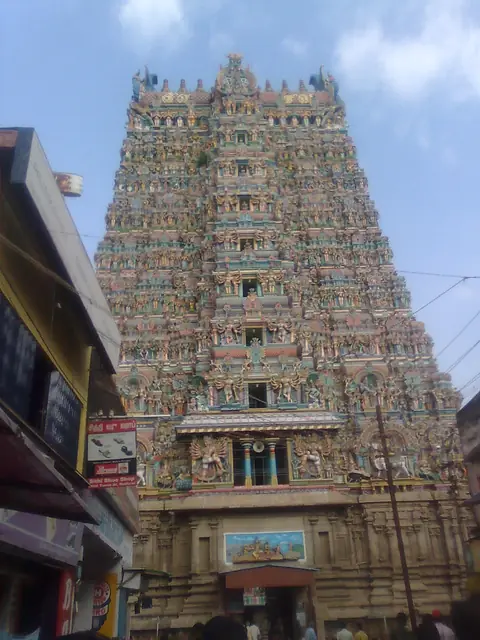
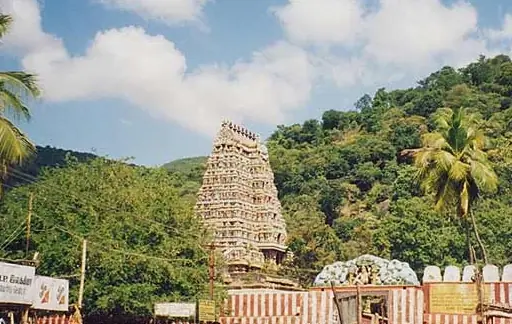
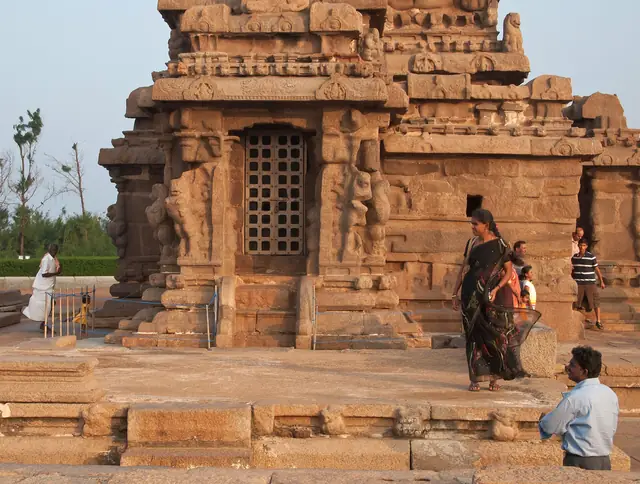
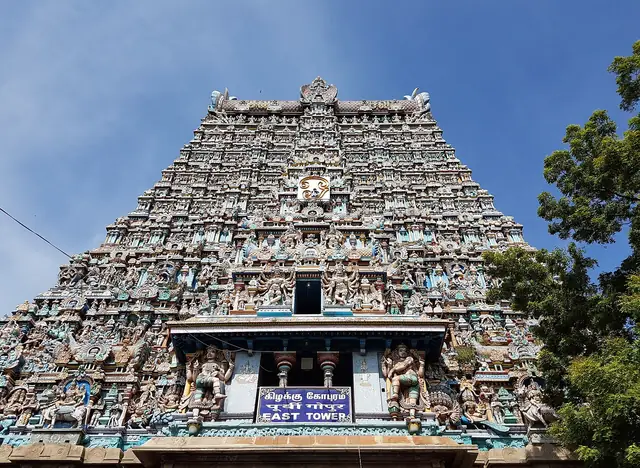
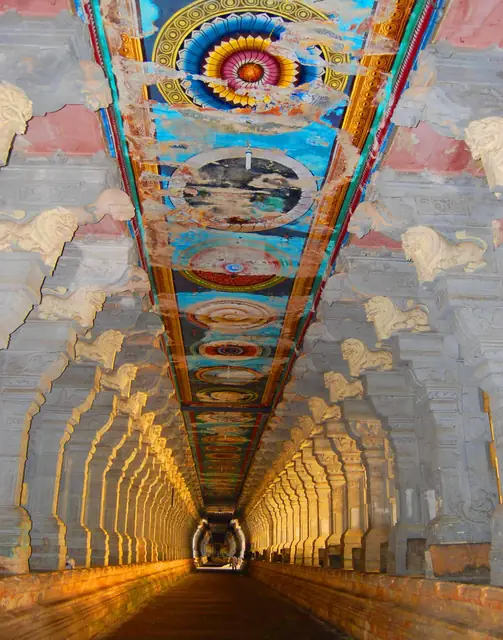
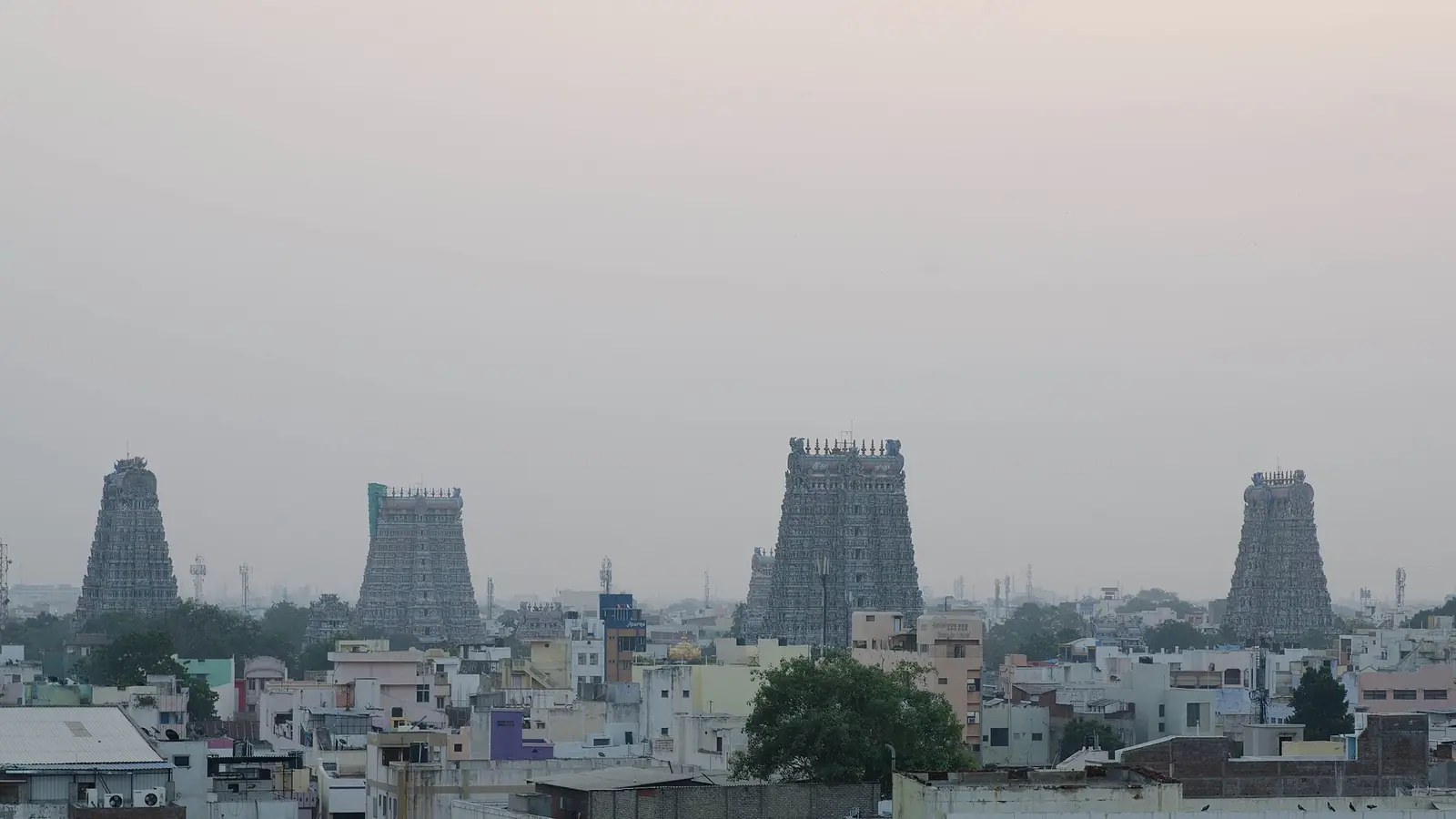
The Pandyas built much of the temple in the eleventh and twelfth centuries. In 1311 the armies of the Delhi Sultanate under Malik Kafur plundered Madurai, and the temple was left largely in ruins through the short rule of the Madurai Sultanate that followed. After Vijayanagara won back the south in the later fourteenth century, worship was restored, and from the sixteenth century the Nayaks of Madurai rebuilt and enlarged it into the city of fourteen gopurams we see now, with its Golden Lotus tank and its hall of a thousand pillars. The sanctum of Meenakshi lies to the left of Sundareswarar’s, and by custom pilgrims take her darshan first.
In the texts
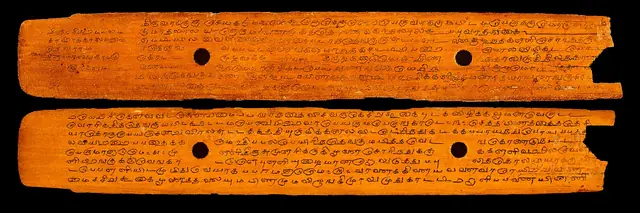
- Tiruvilaiyadal Puranam (Tamil)
- Halasya Mahatmya (Sanskrit)
- Meenakshi Pancharatnam of Adi Shankaracharya