Cite
MLA
“Bangladesh: Dhakeshwari, Kantajew and Chandranath.” Hindu History, 2026, https://www.hinduhistory.in/world/bangladesh-hindu-heritage/. Accessed .
APA
Hindu History. (2026). Bangladesh: Dhakeshwari, Kantajew and Chandranath. Retrieved , from https://www.hinduhistory.in/world/bangladesh-hindu-heritage/
01Dhakeshwari, the goddess of Dhaka
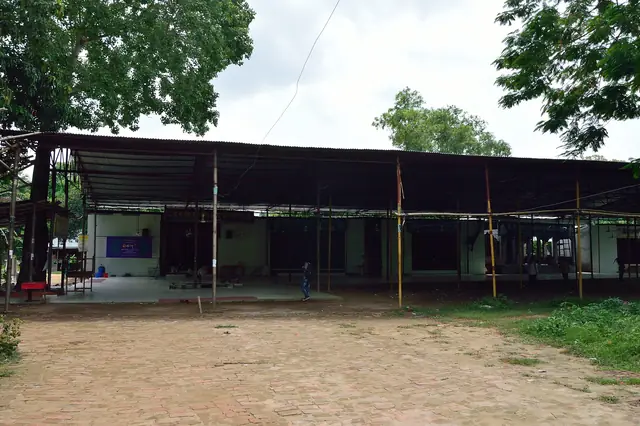
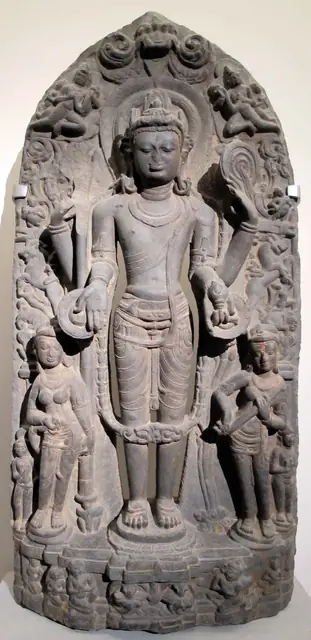
Dhakeshwari means the goddess of Dhaka, and the city is held to be named for her. Tradition ascribes the first temple to Ballal Sen, the Sena king, in the 12th century; the buildings in Old Dhaka today are much later, repaired and rebuilt many times. It is counted among the Shakti Peethas, where the jewel of Sati’s crown fell. The ancient image, a ten-armed Durga as Katyayani Mahishasuramardini on her lion, with Lakshmi, Saraswati, Kartikeya and Ganesha beside her, was taken to Calcutta at Partition, and by 1950 the merchant Debendranath Chaudhury had built her a temple at Kumartuli, where the family of priests from Azamgarh that had served her in Dhaka serves her still. The Dhaka temple, now state-owned and called the National Temple, worships a replica, and is the centre of Durga Puja in the capital.
02Chandranath above Sitakunda
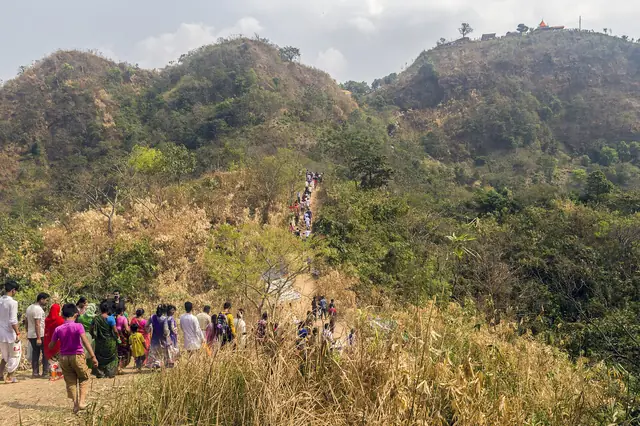
North of Chittagong, at Sitakunda, a long stair climbs Chandranath hill to a small Shiva temple at the top, about 310 metres above the sea. The hill is counted a Shakti Peetha, where the right arm of Sati fell, and the temple is believed to go back to the 11th century. The Rajmala, the chronicle of the kings of Tripura, says that about eight hundred years ago a raja descended from Adisur of Gaur tried to reach Chandranath by sea, and that by the time of Dhanya Manikya of Tripura the shrine had rich endowments; Dhanya Manikya tried to carry the image of Shiva away to his own kingdom and could not. The Nigamakalpataru says the poet Jayadeva lived here for a time. The great gathering is at Shivachaturdashi, when pilgrims climb through the night.
03Kantajew: Krishna in terracotta
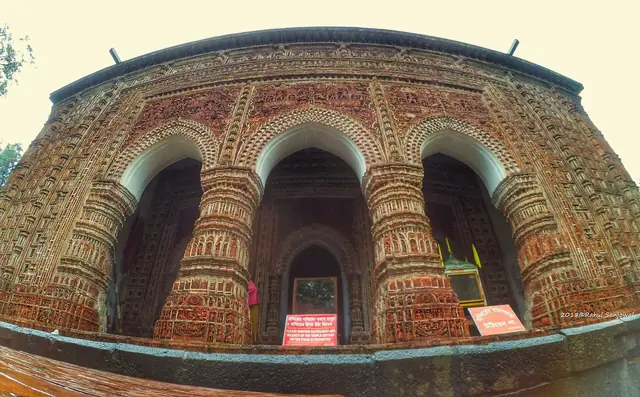
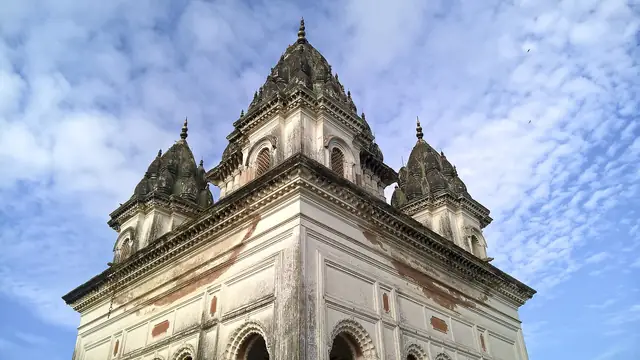
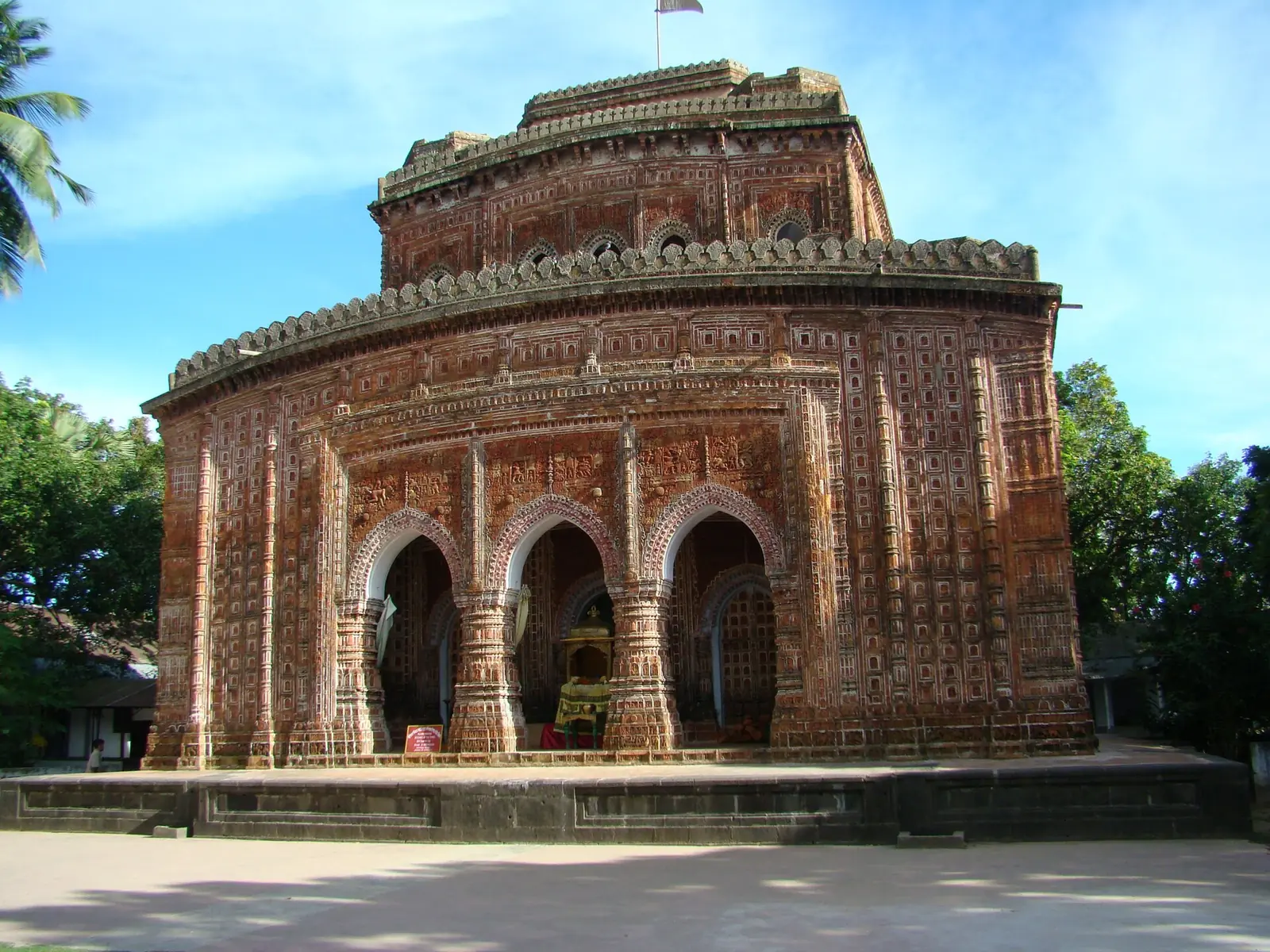
At Kantanagar, near Dinajpur in the north, Maharaja Pran Nath began a temple to Kanta, Krishna, with Rukmini, in 1704, and his son Raja Ramnath finished it in 1752. It was built in the navaratna style, with nine spires, and every surface of its brick walls was covered in fired-clay panels, thousands of them: Krishna’s lilas, scenes of the Ramayana and the Mahabharata, the hunts and processions and boats of 18th-century Bengal. The earthquake of 1897 brought down all nine spires, and the temple stands now as a three-storeyed block, its terracotta still almost whole. It is among the finest brick temples of Bengal on either side of the border. The Nayabad mosque nearby is said to have been built by the same craftsmen for their own prayers while they worked on the temple.
041947 to 1965
In 1901 Hindus were a third of the people of the land that is now Bangladesh, and in 1941 about 28 per cent. Within a month of Partition the Janmashtami procession in Dhaka was attacked. In December 1949 the police and Ansars attacked Kalshira and neighbouring Hindu villages in Khulna, and in February 1950 riots in Dhaka, Barisal and across East Pakistan killed thousands of Hindus and drove lakhs into India; the Nehru–Liaquat pact of April 1950 tried to stem the flight. By 1951 Hindus were 22 per cent. In 1964, after the theft of a relic from the Hazratbal shrine in Kashmir, mobs attacked Hindus in Dhaka and elsewhere, and new waves of refugees reached West Bengal, Assam and Tripura, some to be settled as far as Dandakaranya. After the war of 1965 the Enemy Property Order let the state seize the land of those who had left for India.
051971: Jagannath Hall and Ramna Kali
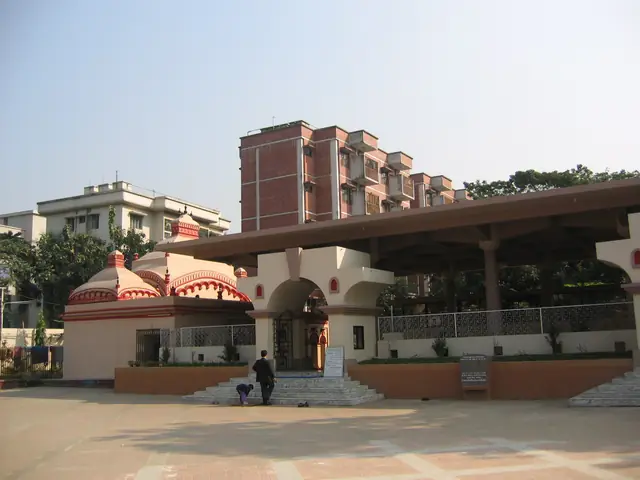
On the night of 25 March 1971 the Pakistan Army began Operation Searchlight in Dhaka. Among its first targets was Jagannath Hall, the hostel of the non-Muslim students of Dhaka University, and the Hindu quarters of Old Dhaka. On 27 March soldiers entered the Ramna Kali temple, one of the oldest in the city, killed more than a hundred people who had sheltered there, Muslims among them, and destroyed the temple. Most of those killed in the nine months that followed were Bengali Muslims, but the International Commission of Jurists and the reports of the time found that Hindus were singled out. On 13 June the Pakistani journalist Anthony Mascarenhas wrote in The Sunday Times of Hindus ‘hunted from village to village and door to door’. Of the eight to ten million people who fled to India, the great majority were Hindus. The war ended with the surrender at Dhaka on 16 December 1971.
06After liberation
Independent Bangladesh renamed the Enemy Property law the Vested Property Act in 1974, and much Hindu land stayed in other hands. Hindus were 13.5 per cent in 1974 and 7.95 per cent, about 1.31 crore, in the census of 2022. The Dhaka economist Abul Barkat estimated that about 1.13 crore Hindus left the country between 1964 and 2013. Violence has come in waves: in 2013, after war-crimes verdicts against leaders of the Jamaat-e-Islami; from 13 to 19 October 2021, when a rumour from a Durga Puja mandap at Comilla set off attacks on more than fifty temples and puja venues and at least eight people were killed; and in August 2024, after Sheikh Hasina resigned on the 5th, when the Bangladesh Hindu Buddhist Christian Unity Council counted 2,010 incidents against minorities in sixteen days, sixty-nine of them on temples. The rebuilt Ramna Kali temple was inaugurated by India’s President Ram Nath Kovind on 17 December 2021.
The 2022 census counted about 1.31 crore Hindus in Bangladesh, 7.95 per cent of the people, the largest share in Sylhet division at 13.5 per cent. Durga Puja is still the great festival of the year in every district, Dhakeshwari is the National Temple, and pilgrims climb Chandranath every Shivachaturdashi.