01A navaratna of baked clay
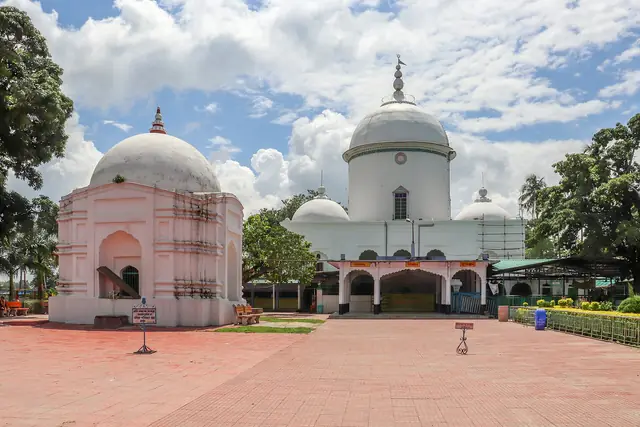
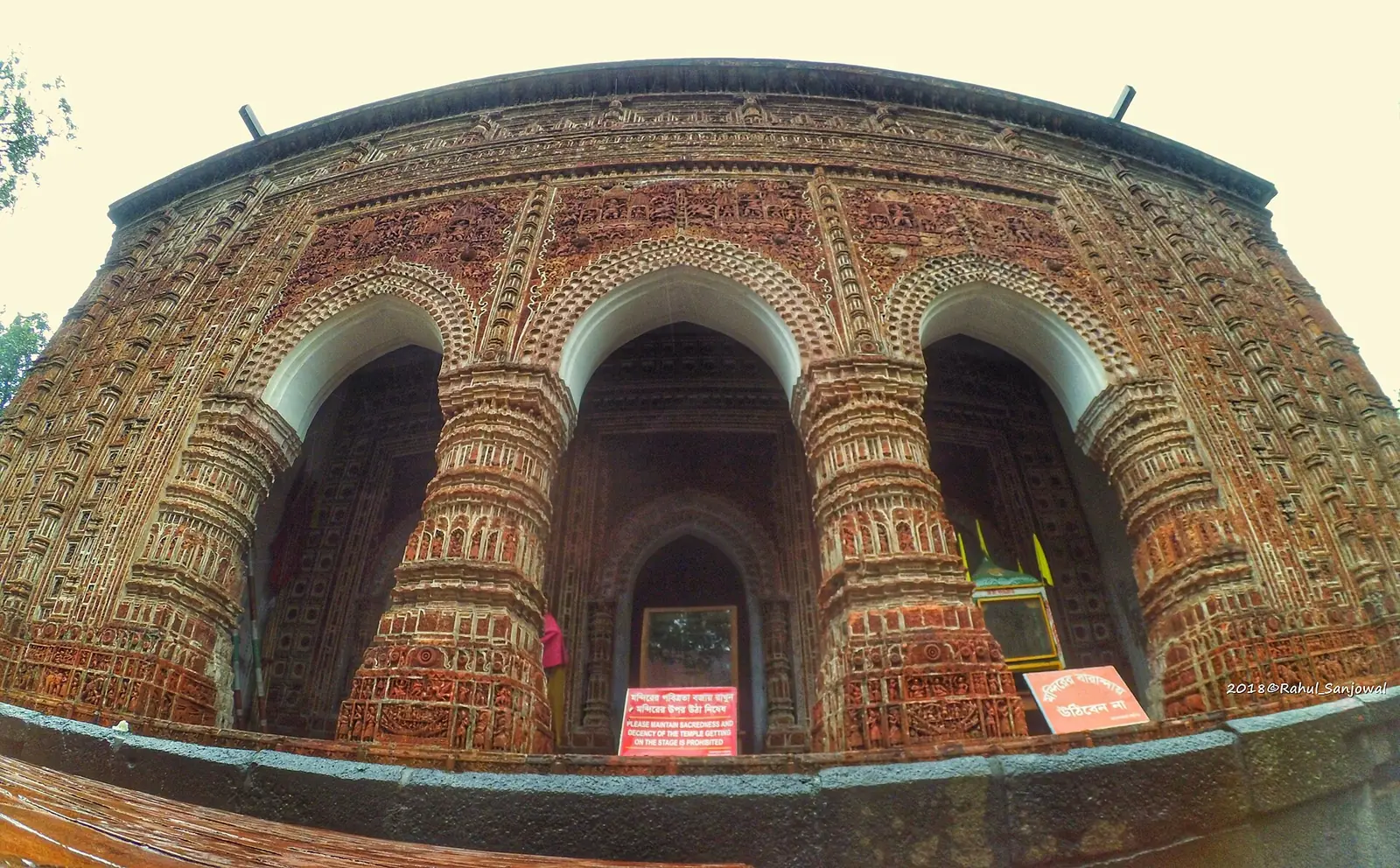
Maharaja Pran Nath began the temple in 1704 to house an image of Krishna as Kantaji, and his son Ramnath finished it in 1752. It stands on a stone plinth in three storeys of diminishing size, a navaratna with four corner towers on each of the two lower storeys and one at the top. Each storey opens through cusped arches on all four sides, so the image can be seen from every direction. Every outer surface, from plinth to cornice, is faced with terracotta plaques: Rama’s war with Ravana, the Kurukshetra battle, Krishna lifting Govardhan, and between them hunting scenes, river boats, and the dress and pastimes of 18th-century Bengal.
02After the earthquake
The great Assam earthquake of 12 June 1897 threw down all nine towers. Maharaja Girija Nath of Dinajpur repaired the body of the temple in the early 20th century but did not rebuild the spires, so it stands today as a flat-topped block of three storeys, with the terracotta walls intact. Worship continues; the image of Kantaji goes each year to the Dinajpur Rajbari, and returns to Kantanagar for the fair held at Rash Purnima, when Hindus from across northern Bangladesh gather here.
The life of this place
- 1704Maharaja Pran Nath begins the temple.
- 1752Raja Ramnath completes it.
- 12 June 1897The Assam earthquake brings down all nine towers.
Kantanagar is about 20 km north of Dinajpur town on the Dhepa river. The Rash mela falls in Kartik (October–November).