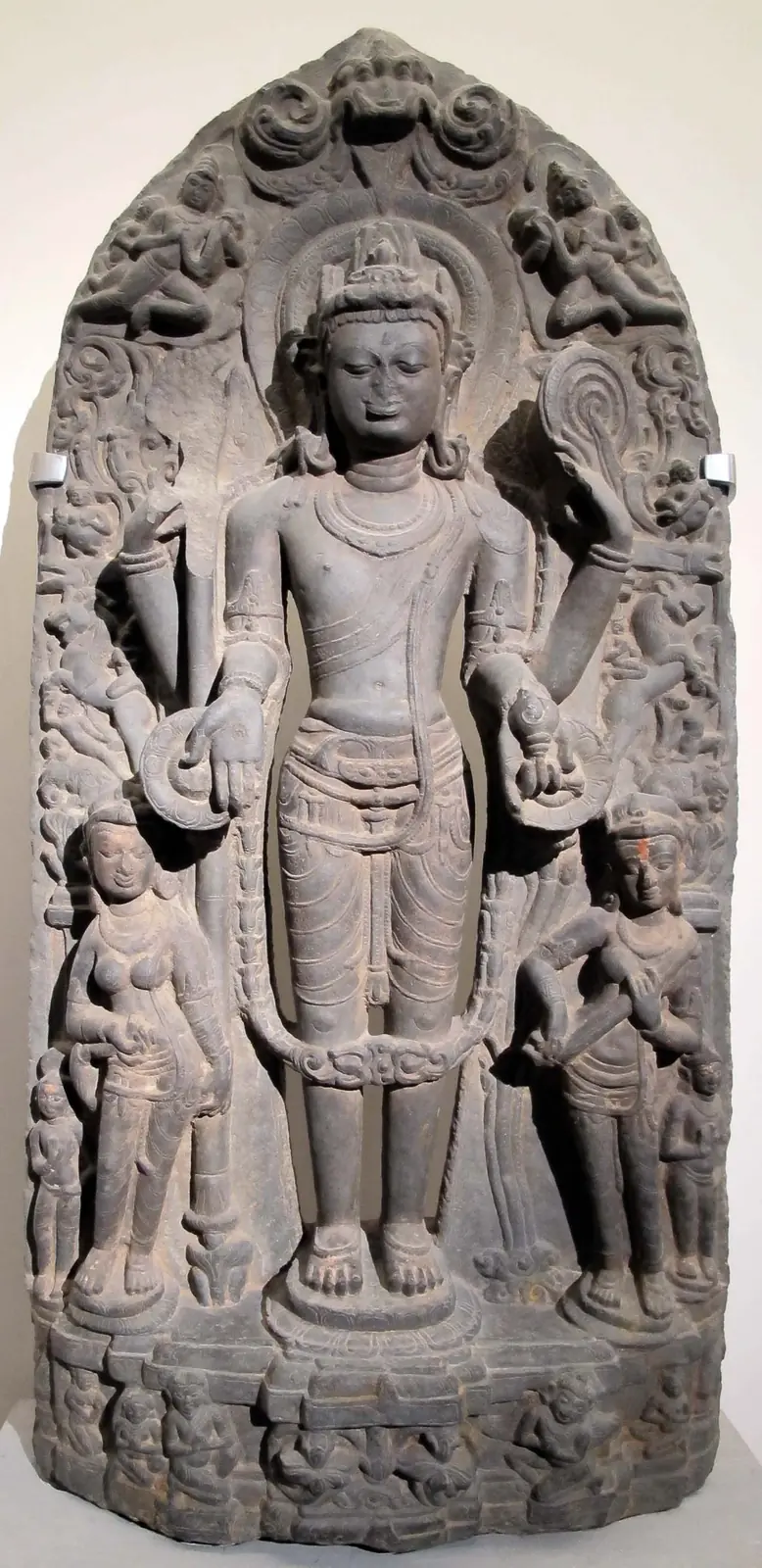
01From Karnata to Bengal
The Senas called themselves Brahma-Kshatriyas of Karnata. Samantasena, the first of the line, ended his days in an ashram on the Ganga in Radha. His grandson Vijayasena took the chance of the Pala decline, beat Madanapala and made himself master of Bengal. The Deopara prashasti, composed for him by the poet Umapatidhara, records the great Pradyumneshvara temple of Shiva that he built. His son Ballalasena was a scholar king, author of the Danasagara on gifts and of the Adbhutasagara on omens, which his son completed.
02Lakshmanasena’s court
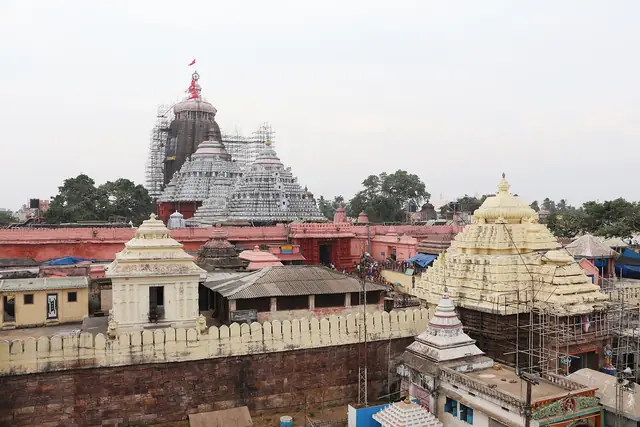
Lakshmanasena gathered the finest Sanskrit poets of the east. Jayadeva, who wrote the Gita Govinda, the songs of Radha and Krishna still sung at the Jagannath temple in Puri, was among them, with Dhoyi, author of the Pavanaduta, Umapatidhara, Sharana and Govardhana. Halayudha, his chief judge, wrote the Brahmanasarvasva. The king himself styled himself Parama-Vaishnava, and his copper plates open with praise of Narayana.

03The raid on Nadia
Minhaj-i-Siraj, writing in Delhi around 1260, tells how Bakhtiyar Khalji rode ahead of his army with a small band of horsemen and reached the palace at Nadia unchallenged, posing as horse traders. The aged Lakshmanasena, at his meal, slipped away by the back and went by boat to east Bengal. Gauda and the west were lost. Lakshmanasena and his sons Vishvarupasena and Keshavasena went on ruling from Vikramapura, near Dhaka, for another generation, and their plates still claim victories over the Turks.
The rulers
- 1SamantasenaFounder of the line in Radha11th c.
- 2Hemantasenalate 11th c.
- 3VijayasenaTook Bengal from the Palas; Deopara prashastic. 1096–1159
- 4BallalasenaWrote the Danasagarac. 1159–1179
- 5LakshmanasenaJayadeva at his court; Nadia raided c. 1204c. 1179–1206
- 6Vishvarupasenac. 1206–1225
- 7KeshavasenaLast known king, at Vikramapurac. 1225–1230
What they left
- Gita Govinda of Jayadeva
- Deopara prashasti of Vijayasena
- Danasagara and Adbhutasagara of Ballalasena
- Pavanaduta of Dhoyi