Cite
MLA
“Dantidurga (Dantivarman II).” Hindu History, 2026, https://www.hinduhistory.in/people/dantidurga/. Accessed .
APA
Hindu History. (2026). Dantidurga (Dantivarman II). Retrieved , from https://www.hinduhistory.in/people/dantidurga/
Life in moments
- 01
Son of Indra II; his mother Bhavanaga was a Chalukya princess (Samangad plates).
- 02739
Fought on the Chalukya side when the Arabs were defeated at Navsari around 739.
- 03753
Defeated Kirtivarman II around 753 and took the titles Rajadhiraja and Parameshvara.
- 04
Married his daughter to the Pallava king Nandivarman II.
- 05
His inscription is in the Dashavatara cave (Cave 15) at Ellora.
01A feudatory at Navsari
Dantidurga was the son of Indra II of a Rashtrakuta family settled in the Deccan as vassals of the Chalukyas of Badami. The Samangad copper plates, found in today’s Kolhapur district, say his mother Bhavanaga was a Chalukya princess from Gujarat. Around 739 the Arab armies of Sindh, having raided the kingdoms of Kutch, Saurashtra and Gujarat, were broken at Navsari by the Chalukya viceroy Avanijanashraya Pulakeshi, whose grant records the victory; the Rashtrakuta prince fought on the Chalukya side. In the following years Dantidurga brought much of Malwa, southern Gujarat and the lands of the Narmada under his hand, still in name a feudatory.
02Breaking the Karnataka army
Around 753 he turned on his overlord, the Chalukya emperor Kirtivarman II. The Samangad plates boast that with a small band he defeated ‘the infinite and invincible Karnataka army’ of the Chalukyas, and his Ellora record says he took the titles Rajadhiraja and Parameshvara, king of kings and supreme lord. The victory was not complete: an inscription of 757 at Vakkaleri shows Kirtivarman still ruling his southern provinces. Dantidurga married his daughter to the Pallava king Nandivarman II of Kanchi and helped him against the Chalukyas, so that the old enemy was pressed from two sides. The plates also name victories over Lata, Malwa, Tanka, Kalinga and the Shesha Nagas of central India, and they say he performed many sacrifices. He made his base in the Ellora and Kalaburagi country.
03The inscription in the Dashavatara cave
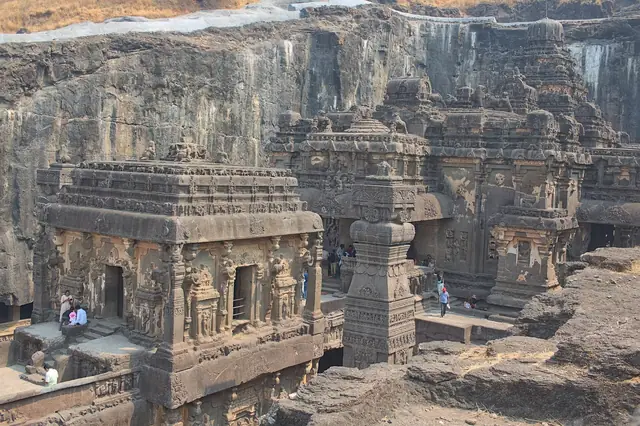
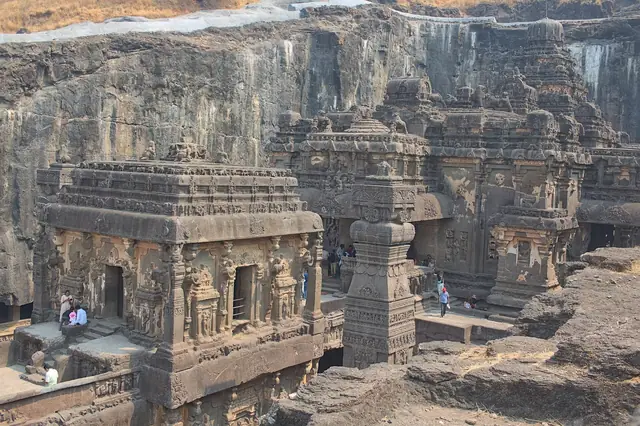
At Ellora, beside the hill that would become the Kailasa temple, a two-storeyed cave first cut for Buddhist monks was turned into a shrine of Shiva and Vishnu, and is now called the Dashavatara cave, Cave 15. On its walls are some of the finest reliefs of the Deccan: Narasimha tearing Hiranyakashipu, Shiva rising from the linga, Vishnu as Varaha. An inscription of Dantidurga is carved in its front mandapa, which ties the cave to the first Rashtrakuta king. Art historians see the same hands at work here and in the earliest parts of the Kailasa next door, and Hermann Goetz argued that work on the Kailasa itself began under Dantidurga. He died around 756 without a son to follow him, and his uncle Krishna I took the throne.