Cite
MLA
“Tigalari (Tulu-Tigalari).” Hindu History, 2026, https://www.hinduhistory.in/lipi/tigalari-script/. Accessed .
APA
Hindu History. (2026). Tigalari (Tulu-Tigalari). Retrieved , from https://www.hinduhistory.in/lipi/tigalari-script/
01A sister of Malayalam
Tigalari grew from Grantha, as Malayalam did, and the two look alike at first glance. Its earliest dated record is a stone inscription of 1159 CE at the Veeranarayana temple at Kulashekara near Mangaluru, written in Tulu. Between the Western Ghats and the sea, from Kasaragod to Udupi and Kundapura, it became the script of temple accounts, Tulu poetry and above all Sanskrit learning.
02Pothis of Udupi
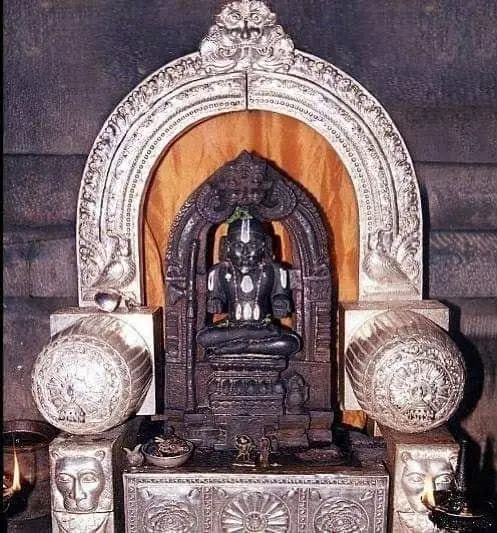
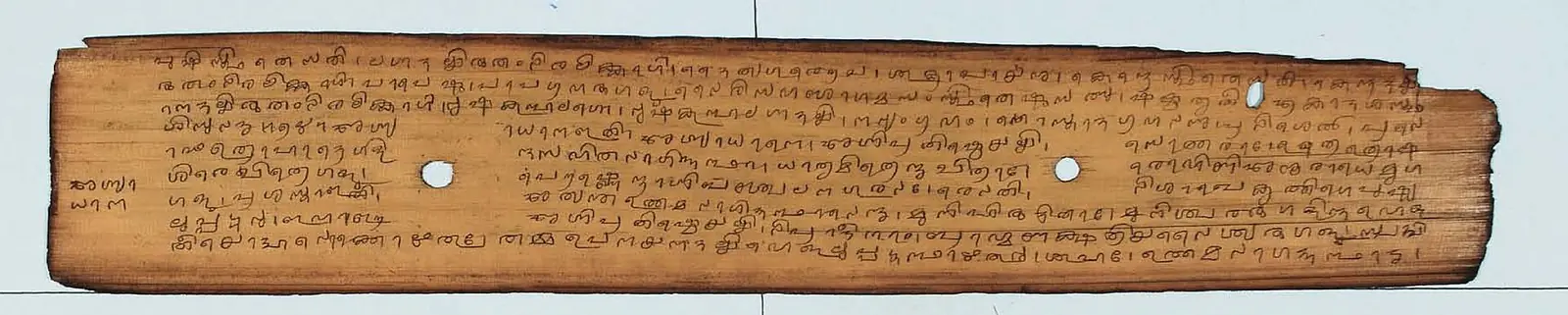
Shivalli and Havyaka Brahmin families wrote their Vedic texts, ritual manuals and jyotisha works in Tigalari. The ashta mathas of Udupi, founded by Madhvacharya, kept the writings of the Dvaita tradition on palm leaf in this script for centuries. Large collections survive in the mathas, in private homes and at the Oriental Research Institute in Mysuru, and many have never been catalogued.
03Back on the keyboard
Printing in the 19th century put Tulu into the Kannada script and Sanskrit into Devanagari, and Tigalari fell out of daily use. Scholars and Tulu groups pressed for its encoding, and Tulu-Tigalari entered the Unicode standard in 2024. Young readers are now learning it to open the old manuscripts, and digitisation projects in Udupi and Mangaluru are photographing bundles of palm leaf before insects and damp destroy them.