
01Jaya, Bharata, Mahabharata
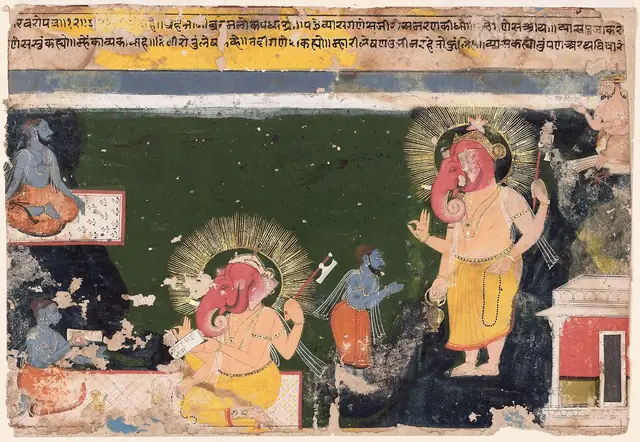
The text calls itself by three names. Jaya, victory, is the itihasa that should be heard by one who seeks to win. Bharata is the account of Bharata’s line; the Adi Parva says Vyasa first made a Bharata of 24,000 shlokas without the side-stories. Mahabharata is the whole, which Vyasa, rising early every day, composed over three years. The tradition adds that Vyasa asked Shri Ganesh to be his scribe, and Ganesh agreed on condition that the dictation never stop; Vyasa answered that Ganesh must understand each verse before writing it. The BORI Critical Edition keeps this katha in its apparatus.
02Told three times over
Nobody in the Mahabharata simply tells it. Vyasa taught it to his disciple Vaishampayana. Vaishampayana recited it to King Janamejaya, great-grandson of Arjuna, during his sarpa-satra, the snake sacrifice held to avenge his father Parikshit. Ugrashravas, the son of Lomaharshana, heard it there and carried it to Naimisharanya, where Shaunaka and the rishis sat in a twelve-year satra, and the book opens with him arriving among them. So the reader hears a bard repeating a disciple repeating a seer. Inside that frame are more tellers: Sanjaya narrates the war to blind Dhritarashtra, and Bhishma teaches from his bed of arrows.
03History, at the end of an age
Itihasa means iti ha asa, thus it was. The Mahabharata is told as what happened. By the traditional reckoning the war was fought at Kurukshetra about 3138 BCE, in the last years of the Dvapara Yuga. Yudhishthira ruled thirty-six years after it. When Shri Krishna left the world, in 3102 BCE, the Kali Yuga began, and the Pandavas set out on their last walk to the Himalaya. Modern scholars have proposed other dates from astronomy and archaeology; Hindu practice keeps the traditional one. The places still stand in the land: Hastinapura on the old Ganga, Kurukshetra’s tanks, Dwarka on the western sea.
04What is here is everywhere
The Adi Parva makes a large claim: on dharma, artha, kama and moksha, what is here is found elsewhere, and what is not here is found nowhere. The book carries whole scriptures inside the katha. The Bhagavad Gita is in the Bhishma Parva, adhyayas 23 to 40 of the Critical Edition (25 to 42 in the vulgate). The Vishnu Sahasranama is in the Anushasana Parva. The Vidura Niti and the Sanatsujatiya are in the Udyoga, the Yaksha’s questions in the Aranyaka, the Anugita in the Ashvamedhika. The upakhyanas of Shakuntala, Nala and Damayanti, Savitri, and Shri Rama himself are told along the way. Tradition names the whole the fifth Veda.
05The Harivamsha, its khila
The Mahabharata tells of Shri Krishna as the Pandavas knew him, from Draupadi’s svayamvara to the last day at Prabhasa. His birth in Mathura, his childhood in Gokula and Vrindavan, the slaying of Kamsa and the founding of Dwaraka are told in the Harivamsha, which the Adi Parva’s own list of contents names as the khila, the supplement, of the Mahabharata. With it the count of shlokas reaches the traditional one lakh. Manuscripts often copy the Harivamsha after the Svargarohana Parva, and the BORI published its own critical edition of it in 1969 and 1971.
06How it is read today
Most Hindi homes know it through the Gita Press edition, Sanskrit with a Hindi translation, and through katha: a pandit reading a parva over many evenings, as Ugrashravas did. The Bhandarkar Oriental Research Institute in Pune compared hundreds of manuscripts from across Bharat and published the Critical Edition between 1933 and 1966; scholars cite it by parva, adhyaya and verse. The katha lives in Pandavani in Chhattisgarh, Kathakali in Kerala, Terukkuttu in Tamil Nadu and Yakshagana in Karnataka, and in the B. R. Chopra television serial, which emptied the streets on Sunday mornings from 1988 to 1990.
Read it part by part
- 1Adi Parva आदिपर्व
The Book of Beginnings. It opens in the Naimisha forest with the frame of the whole recitation, then gives the Kuru line from Shantanu to the births of the Pandavas and Kauravas, the lac house, Draupadi’s svayamvara and the founding of Indraprastha.
225 adhyayas, about 6,960 verses in the BORI Critical Edition - 2Sabha Parva सभापर्व
The Book of the Assembly Hall. Yudhishthira performs the Rajasuya in Maya’s hall at Indraprastha, and then loses everything at dice in the hall at Hastinapura, where Draupadi is dragged before the elders.
72 adhyayas, about 2,390 verses in the BORI Critical Edition - 3Aranyaka (Vana) Parva आरण्यकपर्व
The Book of the Forest, longest of the eighteen in the BORI CE. Twelve years pass in Kamyaka and Dvaitavana, at the tirthas and in the Himalaya, while rishis tell the Pandavas the kathas of Nala, Savitri and Shri Rama, and Arjuna wins the Pashupata from Bhagwan Shiva.
299 adhyayas, about 10,240 verses in the BORI Critical Edition - 4Virata Parva विराटपर्व
The Book of Virata. The Pandavas and Draupadi spend the thirteenth year in disguise at the court of King Virata of Matsya. Bhima kills Kichaka, and when the Kauravas raid Matsya’s cattle, Arjuna takes his bow from the shami tree and turns back the whole Kuru host.
67 adhyayas, about 1,820 verses in the BORI Critical Edition - 5Udyoga Parva उद्योगपर्व
The Book of the Effort. Envoys pass between Upaplavya and Hastinapura, Shri Krishna himself goes to plead for peace, and Duryodhana refuses even five villages. By its end seven akshauhinis and eleven face each other at Kurukshetra.
197 adhyayas, about 6,060 verses in the BORI Critical Edition - 6Bhishma Parva भीष्मपर्व
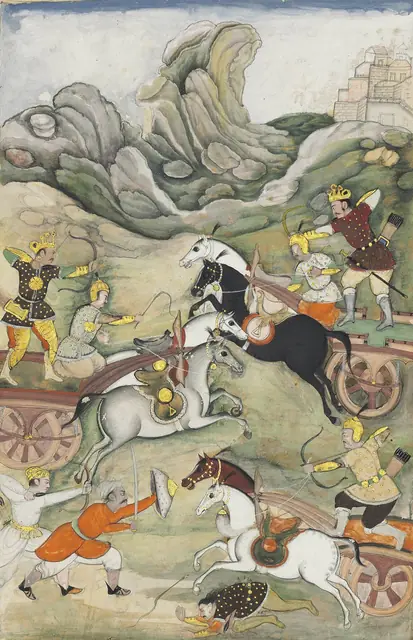
The Book of Bhishma, the first ten days of the war at Kurukshetra, at the close of the Dvapara Yuga. Between the two armies Shri Krishna speaks the Bhagavad Gita to Arjuna, and on the tenth day Bhishma falls onto a bed of arrows to wait for Uttarayana.
117 adhyayas, about 5,410 verses in the BORI Critical Edition - 7Drona Parva द्रोणपर्व
Five days of war under Acharya Drona, from the eleventh to the fifteenth. Abhimanyu falls in the chakravyuha, Arjuna keeps his vow against Jayadratha, Ghatotkacha dies by Karna’s Shakti, and Drona himself lays down his bow when he hears that Ashvatthama is dead.
173 adhyayas, about 8,150 verses in the BORI Critical Edition - 8Karna Parva कर्णपर्व
Karna leads the Kauravas on the sixteenth and seventeenth days, with King Shalya of Madra as his unwilling charioteer. Bhima fulfils his terrible vow against Duhshasana, and Karna falls to Arjuna when his chariot wheel sinks into the earth.
69 adhyayas, about 3,870 verses in the BORI Critical Edition - 9Shalya Parva शल्यपर्व
The eighteenth and last day. Shalya leads and falls to Yudhishthira, Sahadeva slays Shakuni, and Duryodhana hides in a lake until he is called out to a mace duel with Bhima. Balarama, back from his pilgrimage along the Sarasvati, watches the duel and leaves in anger.
64 adhyayas, about 3,320 verses in the BORI Critical Edition - 10Sauptika Parva सौप्तिकपर्व
The book of the sleepers. On the night after the war Ashvatthama, with Kripa and Kritavarma, enters the Pandava camp and slays the sleeping Panchalas and Draupadi’s five sons. When the Pandavas pursue him he looses the Brahmashira astra, turns it on the unborn child of Uttara, and is cursed by Shri Krishna.
18 adhyayas, about 773 verses in the BORI Critical Edition - 11Stri Parva स्त्रीपर्व
The book of the women. Vidura and Vyasa console the blind king, Dhritarashtra crushes an iron image of Bhima, and Gandhari, seeing the battlefield with divine sight, mourns her hundred sons and lays her curse on Shri Krishna. The book ends with the water-offerings at the Ganga and Kunti’s secret.
27 adhyayas, about 730 verses in the BORI Critical Edition - 12Shanti Parva शान्तिपर्व
The book of peace, the longest of the eighteen. Yudhishthira, sick with grief, wants to leave the throne for the forest; he is crowned at Hastinapura and then taken by Shri Krishna to Bhishma, who from his bed of arrows teaches him Rajadharma, Apaddharma and Mokshadharma.
353 adhyayas, about 12,810 verses in the BORI Critical Edition - 13Anushasana Parva अनुशासनपर्व
Bhishma, still on his bed of arrows at Kurukshetra, goes on teaching Yudhishthira: the rules of giving, the duties of every station of life, the worth of cows, land and learning, and in the end the thousand names of Vishnu. When the sun turns north in the month of Magha, he gives up his body.
154 adhyayas, about 6,540 verses in the BORI Critical Edition - 14Ashvamedhika Parva आश्वमेधिकपर्व
To wash away the sorrow of the war, Yudhishthira performs the ashvamedha on Vyasa’s counsel, paid for with the gold King Marutta left in the Himalaya. Shri Krishna speaks the Anugita, brings the stillborn Parikshit back to life, and Arjuna follows the sacrificial horse across Bharat.
96 adhyayas, about 2,740 verses in the BORI Critical Edition - 15Ashramavasika Parva आश्रमवासिकपर्व
After fifteen years in Yudhishthira’s care, Dhritarashtra goes to the forest with Gandhari, Kunti, Vidura and Sanjaya. Vidura passes into Yudhishthira by yoga, Vyasa calls the fallen warriors up from the Ganga for one night, and a forest fire takes the old king and the two queens.
47 adhyayas, about 1,060 verses in the BORI Critical Edition - 16Mausala Parva मौसलपर्व
In the thirty-sixth year after the war, Gandhari’s word comes true: the Yadavas destroy one another at Prabhasa with clubs of eraka grass, Balarama leaves his body as a great serpent, and Shri Krishna departs from the world. Arjuna leads the women out of Dwaraka before the sea takes the city.
9 adhyayas, about 273 verses in the BORI Critical Edition - 17Mahaprasthanika Parva महाप्रस्थानिकपर्व
The shortest parva. The Pandavas crown Parikshit, set out with Draupadi on the great departure, and walk round Bharat and up into the Himalaya. One by one they fall; Yudhishthira walks on with only a dog, and refuses to enter heaven without it.
3 adhyayas, about 106 verses in the BORI Critical Edition - 18Svargarohana Parva स्वर्गारोहणपर्व
In svarga Yudhishthira finds Duryodhana enthroned and his own brothers missing. He chooses to stay with them in a place of torment, the illusion lifts, and he leaves his human body in the heavenly Ganga. Each hero returns to the deva he came from, and Vyasa’s Itihasa closes with the Bharata Savitri.
5 adhyayas, about 194 verses in the BORI Critical Edition
Famous verses
नारायणं नमस्कृत्य नरं चैव नरोत्तमम् । देवीं सरस्वतीं चैव ततो जयमुदीरयेत् ॥
Bowing to Narayana, and to Nara, best of men, and to the devi Sarasvati, one should then recite the Jaya.Mahabharata 1.1.0 (BORI CE), the opening invocation
यथा समुद्रो भगवान्यथा च हिमवान्गिरिः । ख्यातावुभौ रत्ननिधी तथा भारतमुच्यते ॥
As the holy ocean and as the Himalaya mountain are both famed as treasuries of jewels, so is the Bharata spoken of.Mahabharata 18.5.52 (BORI CE)
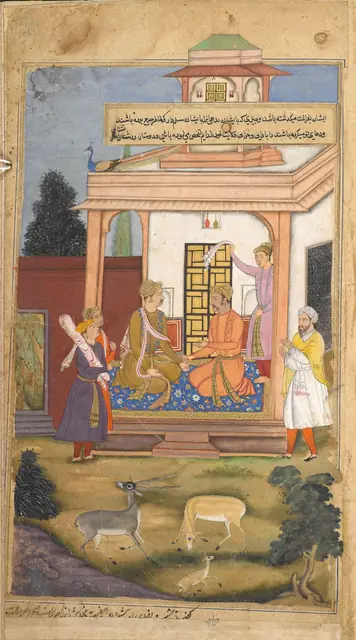
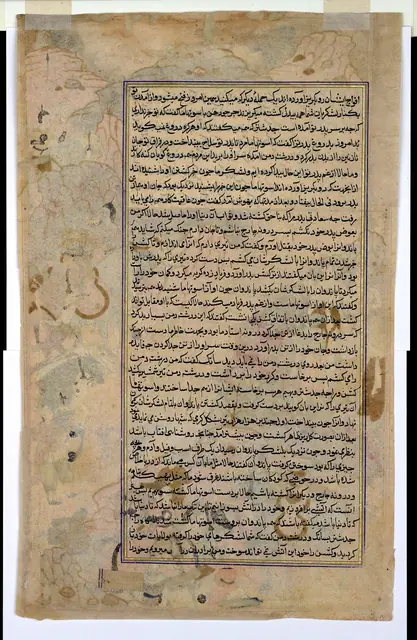
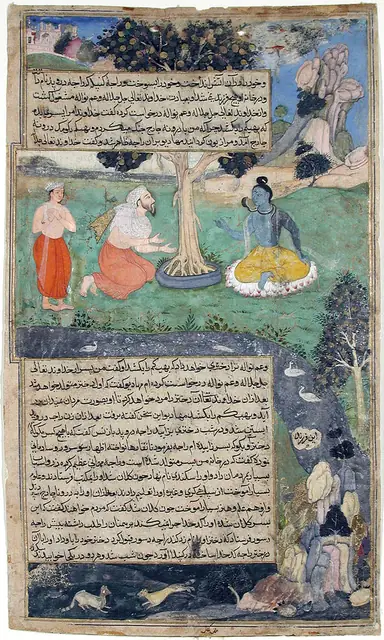
Kalidasa’s Abhijnanashakuntalam, Bharavi’s Kiratarjuniya and Magha’s Shishupalavadha all grow from its episodes; Pampa retold it in Kannada (941 CE), Nannaya began it in Telugu in the 11th century, and Akbar’s court translated it into Persian as the Razmnama (1580s). It crossed the sea too: the Old Javanese Kakawin Bharatayuddha (1157) and the wayang plays of Java and Bali still draw on it.
Characters
 व्यासःMaharshi VyasaSeer and author of the Mahabharata
Krishna Dvaipayana, born on an island in the Yamuna to Satyavati and the sage Parashara, dark-skinned, divided the one Veda into four and so is called Vyasa. He is grandfather to both sides of the war: by niyoga at Satyavati’s request he fathered Dhritarashtra, Pandu and Vidura. He walks in and out of his own book, counselling the Pandavas in exile, giving Sanjaya divine sight, calling the dead from the Ganga, and telling Arjuna at the end that time has turned.
 कृष्णःShri KrishnaBhagwan, Arjuna’s friend and charioteer
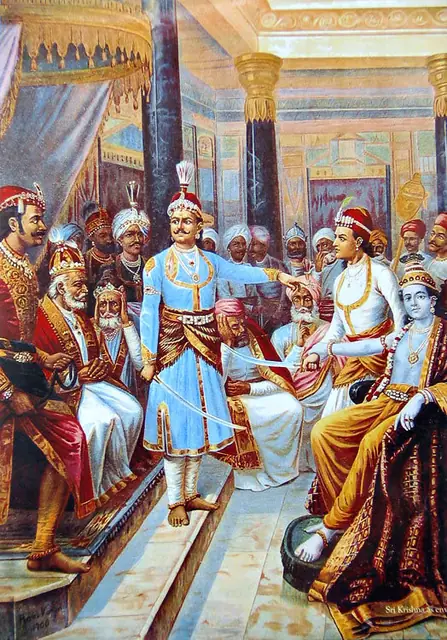
Vasudeva, son of Devaki and Vasudeva, lord of Dwaraka, cousin to the Pandavas through Kunti. He saves Draupadi’s honour in the dice hall, goes to Hastinapura to beg five villages for peace, and takes no weapon in the war, only the reins of Arjuna’s chariot. Between the two armies he speaks the Bhagavad Gita and shows the universal form. He accepts Gandhari’s curse, revives the stillborn Parikshit, and leaves the world at Prabhasa, struck in the foot by the hunter Jara’s arrow.
 बलरामःBalaramaKrishna’s elder brother, master of the mace
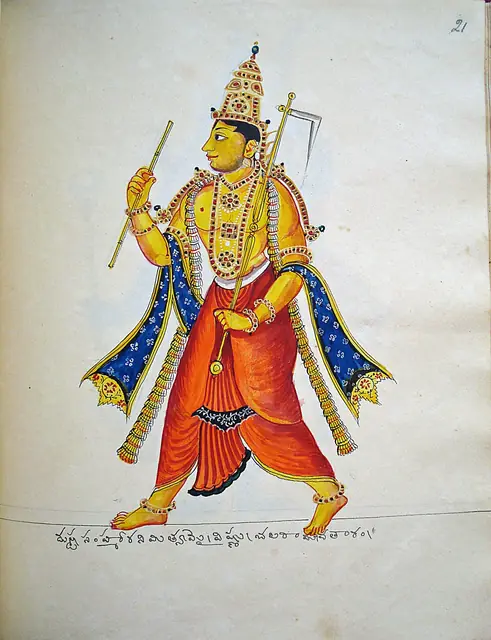
Rohini’s son, fair as Krishna is dark, bearer of the plough. He taught the mace to both Bhima and Duryodhana and loved them both, so he would not fight at Kurukshetra and went on pilgrimage along the Sarasvati instead. He came back in time to see the last duel, and when Bhima struck Duryodhana below the navel he raised his plough in anger until Krishna calmed him. At Prabhasa he left his body as a white serpent of a thousand heads, Ananta, going into the sea.
 भीष्मःBhishmaGrandsire of the Kurus, son of Ganga
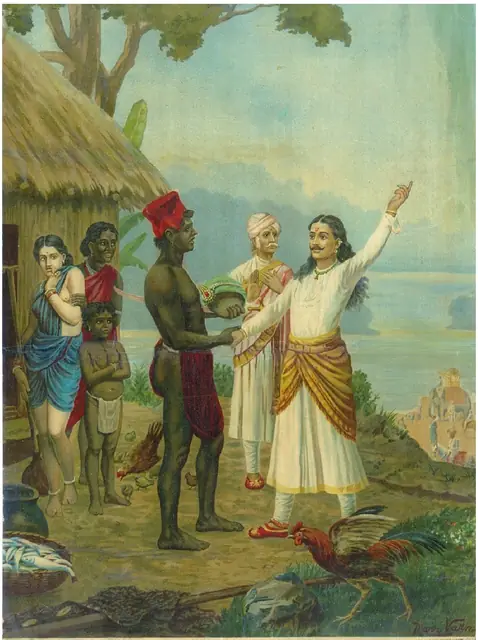
Born Devavrata, the eighth son of Shantanu and Ganga, an incarnation of one of the Vasus. To win Satyavati for his father he swore never to marry and never to claim the throne, and the terrible vow gave him his name. His father granted him death only at a time of his choosing. He served the throne of Hastinapura all his life, led the Kaurava army for ten days, and fell to Arjuna’s arrows with Shikhandi before him, then lay on the bed of arrows teaching dharma until Uttarayana.
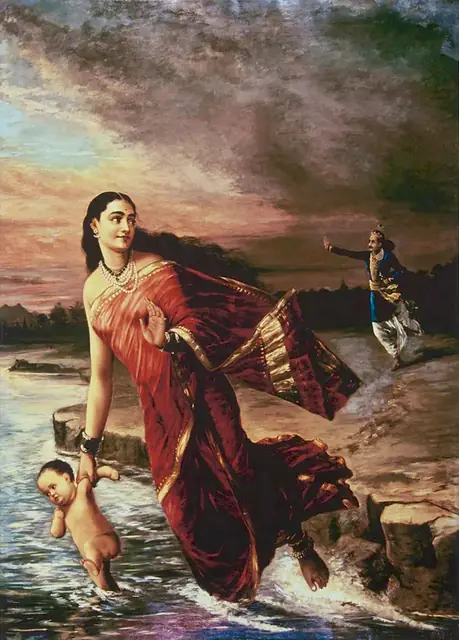 शान्तनुःShantanuKuru king, father of Bhishma
King of Hastinapura in the line of Kuru. Ganga became his wife on the condition that he never question her; she drowned seven newborn sons, freeing the cursed Vasus, and when he stopped her at the eighth she left, returning the boy grown as Devavrata. Later Shantanu fell in love with Satyavati, the fisher-chief’s daughter, and pined until his son made his vow. From Shantanu and Satyavati came Chitrangada and Vichitravirya, through whom, by Vyasa, the Kuru line continued.
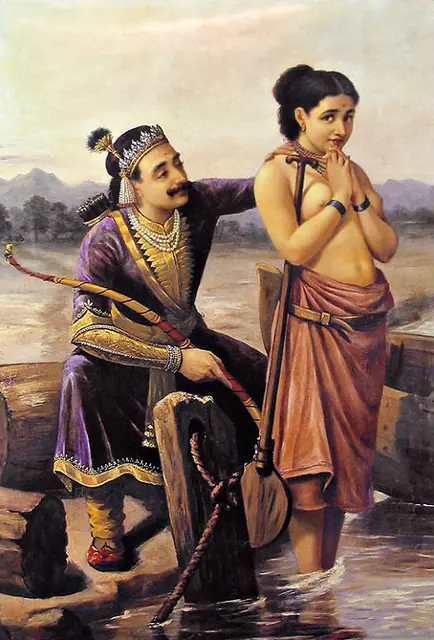 सत्यवतीSatyavatiQueen mother of the Kurus
Raised by the chief of the fishermen and called Matsyagandha, she ferried boats on the Yamuna. The sage Parashara blessed her with fragrance, and their son was Vyasa, born on an island and gone at once to tapas. She married Shantanu after Bhishma’s vow. When both her sons died without heirs, she called Vyasa to give sons to the widowed queens Ambika and Ambalika. After Pandu’s death Vyasa warned her of dark days ahead, and she went to the forest with her daughters-in-law.
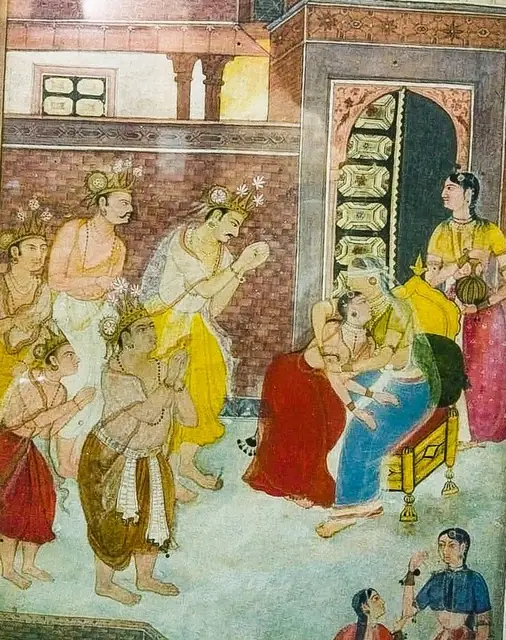
 धृतराष्ट्रःDhritarashtraBlind king, father of the hundred Kauravas
Eldest son of Ambika by Vyasa, born blind because his mother shut her eyes, and so passed over for the throne in favour of Pandu. He ruled after Pandu’s death and could never refuse Duryodhana, though Vidura warned him again and again. Through the war he sat in Hastinapura hearing it from Sanjaya. Afterwards he crushed the iron image of Bhima in his embrace, lived fifteen years under Yudhishthira, and died in yoga in a forest fire near Gangadvara.
 गान्धारीGandhariQueen of Hastinapura, the blindfolded mother
Princess of Gandhara, sister of Shakuni. When she learned her husband was blind she bound her own eyes and kept them bound for life. She bore a hundred sons and a daughter, Duhshala. She told Duryodhana plainly that where dharma is, there is victory, and he did not listen. On the battlefield after the war her grief broke out as a curse on Shri Krishna, that his own clan would perish in the thirty-sixth year. She went to the forest with Dhritarashtra and Kunti and died with them.
 पाण्डुःPanduKing of Hastinapura, father of the Pandavas
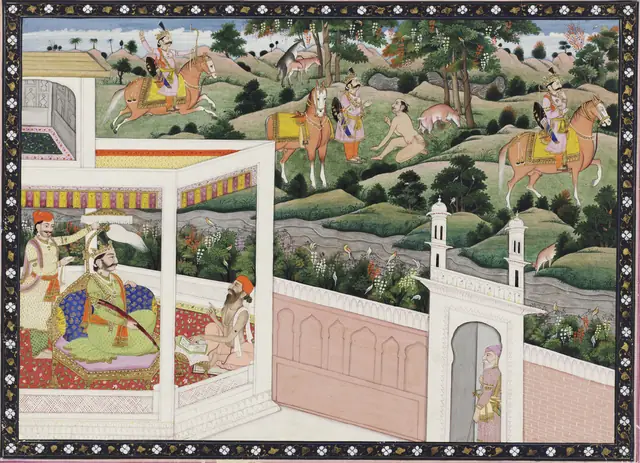
Son of Ambalika by Vyasa, born pale because his mother turned pale at the sight of the sage. He became king and won wide conquests, then while hunting shot the rishi Kindama, who was with his wife in the form of a deer, and was cursed to die if he ever came to his wives in love. He gave up the throne and went to the forest with Kunti and Madri, where his five sons were born through the devas. In spring he forgot the curse with Madri and died.
 कुन्तीKuntiMother of Karna and three Pandavas
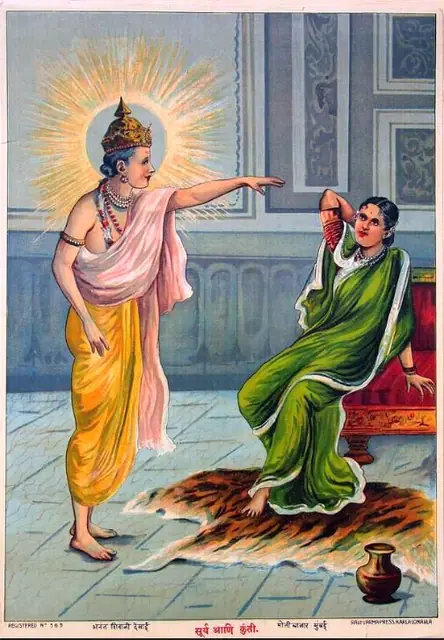
Born Pritha, sister of Krishna’s father Vasudeva, given in childhood to King Kuntibhoja. For serving Durvasa she received a mantra to call any deva; trying it as a girl, she bore Karna to Surya and set him afloat on the river. Married to Pandu, she bore Yudhishthira, Bhima and Arjuna to Dharma, Vayu and Indra, and gave the mantra to Madri. She went to Karna before the war, revealed herself, and later told her sons the truth. She ended her life in the forest beside Gandhari.
 विदुरःViduraMinister of the Kurus, dharma in human form
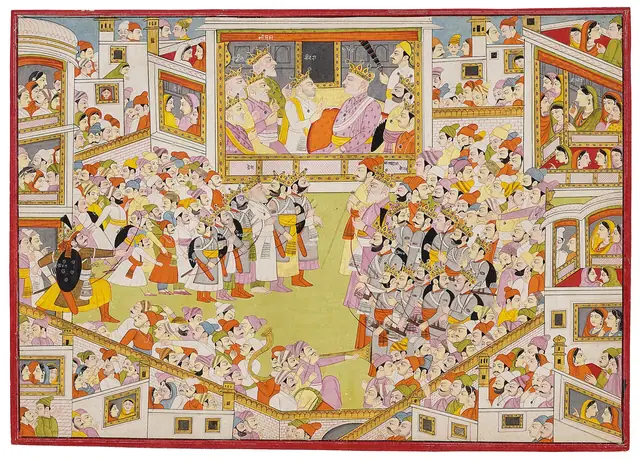
Son of Vyasa by a maid of Ambika’s household, Dharma himself born as a man under the curse of the sage Animandavya. Too low-born for the throne, he became the wisest counsellor in Hastinapura. He warned the Pandavas of the lac house in a riddling tongue, called the dice game the root of strife, and gave Dhritarashtra a whole night of teaching, the Vidura Niti. He went to the forest with his brother and at the end passed into Yudhishthira by the power of yoga.
 युधिष्ठिरःYudhishthiraEldest Pandava, the Dharmaraja
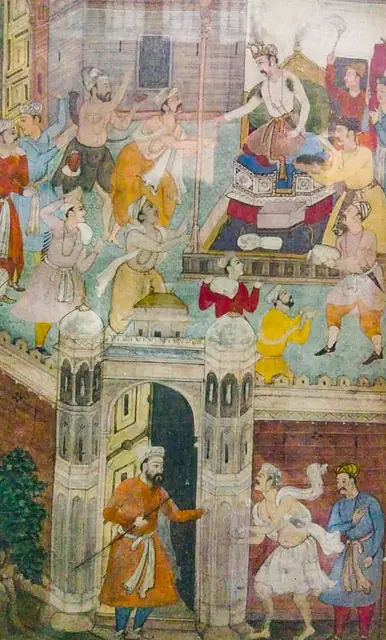
Son of Kunti by Dharma, the eldest of the five, known for never lying. He staked and lost everything at dice, his brothers, himself and Draupadi, and bore the thirteen years of exile without breaking his word. He answered the Yaksha’s questions at the lake and won his brothers back. In the war he spoke one half-truth, about Ashvatthama, and his chariot touched the earth. He ruled thirty-six years, walked to the Himalaya, and would not enter svarga without the dog that followed him.
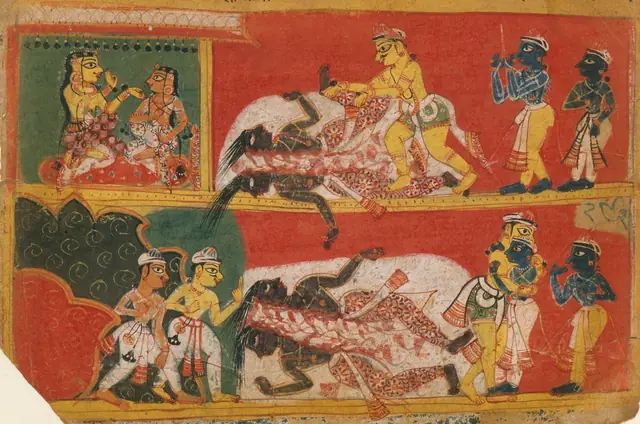 भीमःBhimaSecond Pandava, son of Vayu
Bhimasena, Vrikodara, son of Kunti by Vayu, the strongest man of his age and a great eater. Duryodhana poisoned him as a boy and threw him in the Ganga, and the nagas gave him strength. He carried his family out of the burning lac house, killed Hidimba, Baka, Jarasandha and Kichaka, and met his half-brother Hanuman on the road to the Saugandhika flowers. In the war he kept both his vows: he drank Duhshasana’s blood and broke Duryodhana’s thigh.
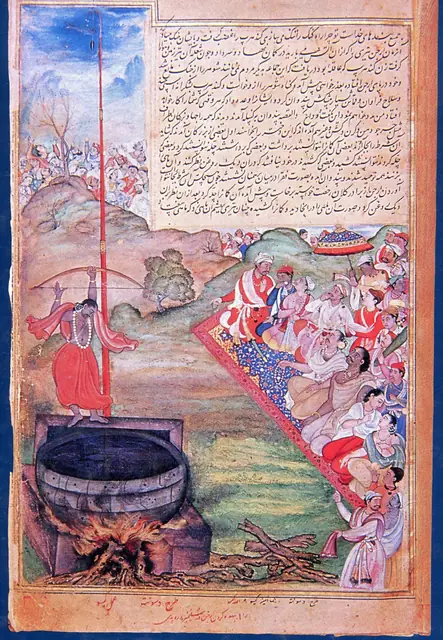 अर्जुनःArjunaThird Pandava, bearer of the Gandiva
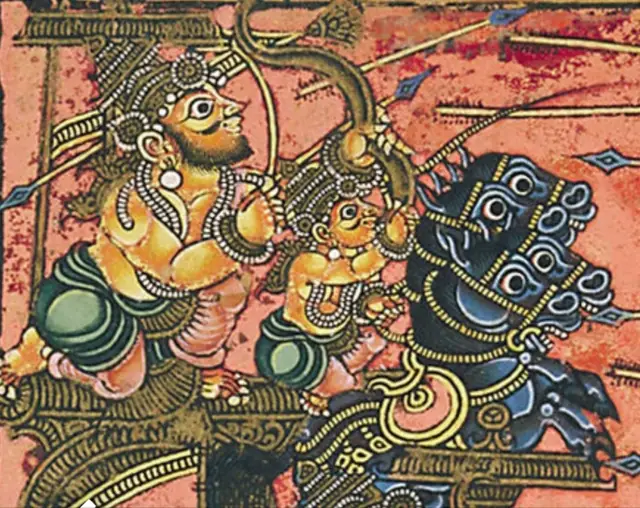
Son of Kunti by Indra, Drona’s best pupil, called Partha, Dhananjaya, Savyasachi for shooting with either hand. He won Draupadi by hitting the target at her svayamvara, burned the Khandava forest with Krishna to feed Agni, and received the Gandiva bow. In exile he won the Pashupata astra from Mahadev, who came to him as a Kirata. On the field of Kurukshetra his despair drew from Krishna the Bhagavad Gita. He brought down Bhishma, killed Jayadratha before sunset as he had sworn, killed Karna, and at the end fell on the Himalayan road.
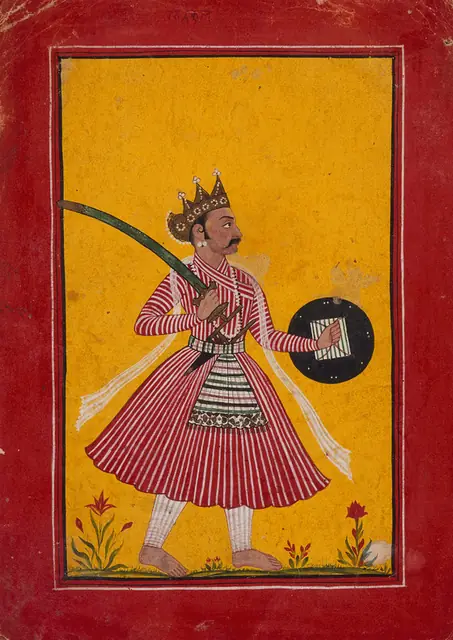 नकुलःNakulaFourth Pandava, master of horses
Elder of the twins born to Madri by the Ashvins, and the handsomest of the brothers. When Madri followed Pandu onto the pyre, Kunti raised the twins as her own. In the year in disguise at Virata’s court he was Granthika, keeper of the horses. At the lake of the Yaksha, given one brother back, Yudhishthira chose Nakula, so that each mother would keep a son. He fought through the war, and fell on the road to the Himalaya, proud of his beauty.
सहदेवःSahadevaYoungest Pandava, the wise oneYounger of Madri’s twins, the most learned of the five and silent by nature. At Virata’s court he kept the cattle as Tantipala. In the dice hall he vowed to kill Shakuni, and on the eighteenth day he did, after killing Shakuni’s son Uluka. At the Rajasuya it was Sahadeva who first offered the honour of the arghya to Krishna, on Bhishma’s word. He fell first among the brothers on the last road, because he had thought no one his equal in wisdom.
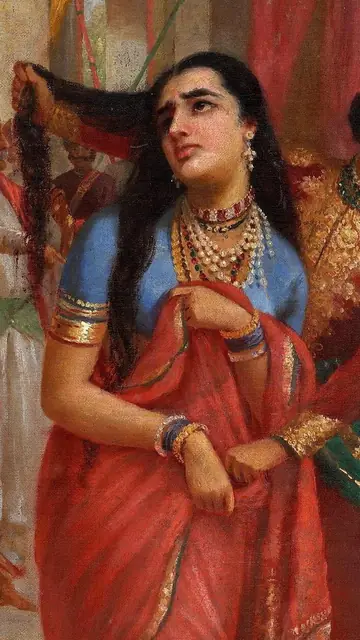 द्रौपदीDraupadiQueen of the Pandavas, born of fire
Krishnaa, Panchali, Yajnaseni, born from the fire of King Drupada’s yajna, dark and lovely, wife of all five Pandavas. Dragged into the Kuru assembly after the dice, she asked the elders a question none could answer: had Yudhishthira lost her before or after he lost himself? Krishna protected her honour. She bore the forest years, Jayadratha’s attempt, Kichaka’s insult at Virata’s court, and lost all five of her sons in Ashvatthama’s night raid. Indra told Yudhishthira in svarga that she was Shri herself.
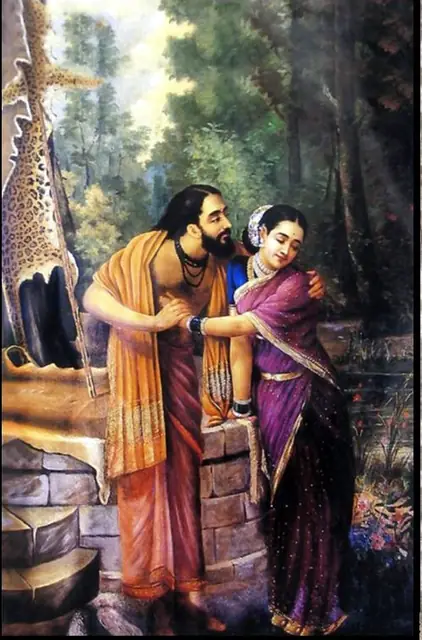 सुभद्राSubhadraKrishna’s sister, Arjuna’s wife
Daughter of Vasudeva, sister of Krishna and Balarama. Arjuna saw her at a festival on Mount Raivataka during his years away from Indraprastha, and on Krishna’s advice carried her off in his chariot, as kshatriyas might; Balarama’s anger was calmed and the marriage made. Draupadi received her as a sister. Her son was Abhimanyu, killed in the chakravyuha, and she wept for him on the field of the dead. Before the Pandavas left the world, Yudhishthira asked her to watch over Vajra, the last of the Yadus.
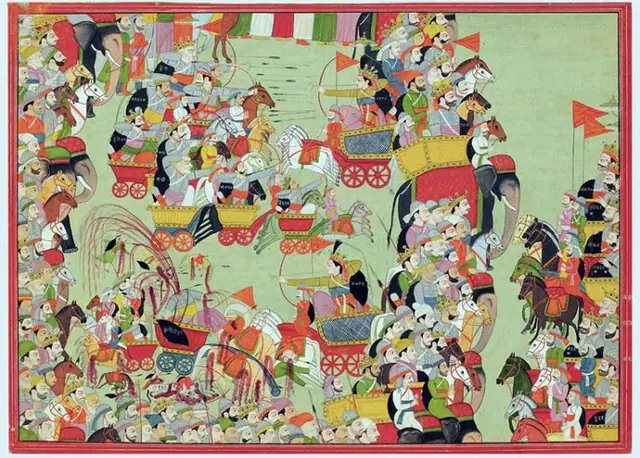 अभिमन्युःAbhimanyuSon of Arjuna and Subhadra
Raised in Dwaraka among his mother’s people, trained in arms by his father, married to Uttara, daughter of King Virata, after the year in disguise. On the thirteenth day, with Arjuna drawn away by the Samshaptakas, he broke into Drona’s chakravyuha, knowing how to enter but not how to come out. Jayadratha held the others back at the gate. Surrounded by Drona, Karna, Kripa, Ashvatthama and others, he fought on with a chariot wheel when his weapons were gone, and fell. His son Parikshit carried on the Kuru line.
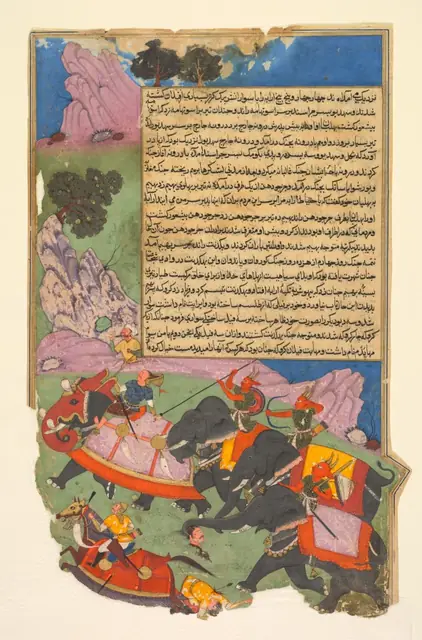 घटोत्कचःGhatotkachaSon of Bhima and Hidimba
Born to Bhima and the rakshasi Hidimba in the forest after the lac house, grown to full strength at once, bald as a pot, which gave him his name. He promised to come whenever his father called, and he carried the Pandavas and Draupadi through the mountains in their exile. On the fourteenth night of the war he fought by torchlight with the powers of a rakshasa, until Karna, to save the army, threw at him the Shakti given by Indra that he had kept for Arjuna.
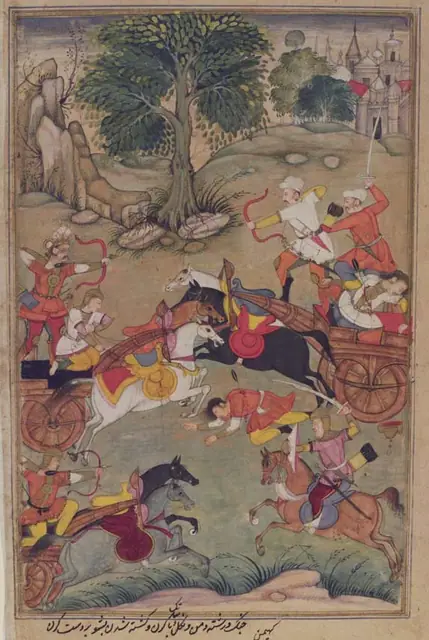 कर्णःKarnaSon of Surya and Kunti, Kaurava champion
Born to Kunti before her marriage, with earrings and armour fused to his body, set adrift and raised by the charioteer Adhiratha and his wife Radha. Shut out of the tournament for his birth, he was made king of Anga by Duryodhana and stayed loyal to him unto death. He gave away his armour to Indra, who came begging as a brahmin. Kunti told him who he was; he promised her she would keep five sons. He led the Kauravas for two days and fell to Arjuna when his chariot wheel sank.
 दुर्योधनःDuryodhanaEldest Kaurava, claimant to Hastinapura
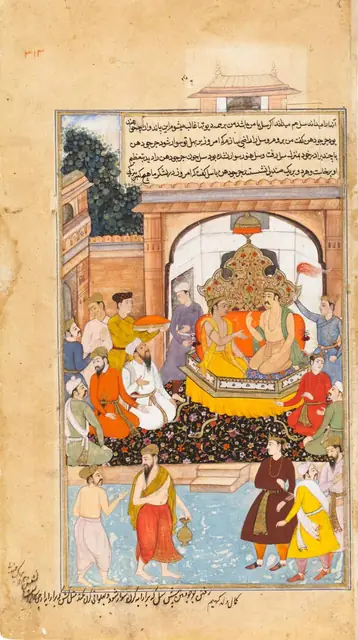
Eldest of Gandhari’s hundred sons, also called Suyodhana. He could not bear the Pandavas’ rise: he poisoned Bhima, built the lac house, and with Shakuni’s dice took their kingdom. Mocked in Maya’s hall at Indraprastha, he never forgot it. He refused Krishna’s offer of five villages and would not give a needle-point of land. When his army was gone he hid in the lake Dvaipayana, came out to fight Bhima with the mace, and had his thigh broken. The Svargarohana Parva finds him in svarga, a kshatriya who never flinched.
 दुःशासनःDuhshasanaSecond Kaurava, who dragged Draupadi
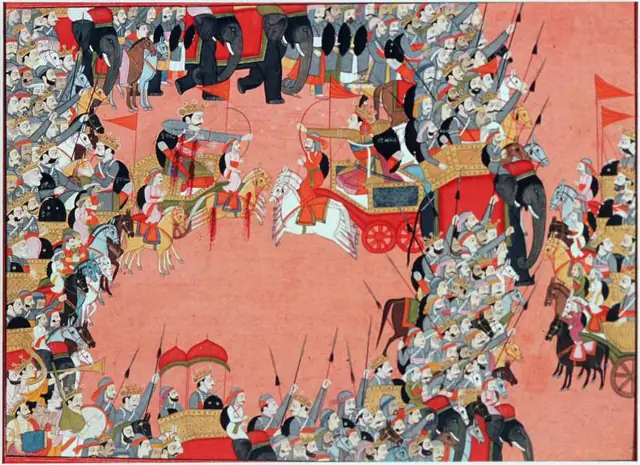
Next after Duryodhana among the hundred and always at his side. When the dice were done he dragged Draupadi by her hair into the assembly and tried to strip her before the elders. Bhima stood up then and swore that he would tear open Duhshasana’s chest in battle and drink his blood. On the seventeenth day, with Karna in command, Bhima found him on the field, threw him down, and kept the vow in front of both armies. Draupadi had left her hair unbound until that day.
 शकुनिःShakuniPrince of Gandhara, master of dice
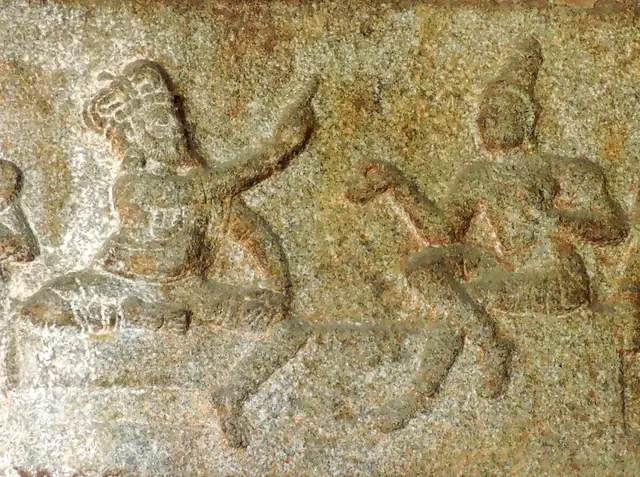
Son of King Subala, brother of Gandhari, who lived at Hastinapura as Duryodhana’s closest adviser. It was his idea to win the Pandavas’ kingdom with dice rather than war, and his hand that threw them for Duryodhana against Yudhishthira. Sahadeva swore in the assembly to kill him. On the eighteenth day, after the death of Shalya, Sahadeva cut down first his son Uluka and then Shakuni himself, as the last of the Kaurava host was breaking.
 द्रोणःDronacharyaGuru of the Kuru princes
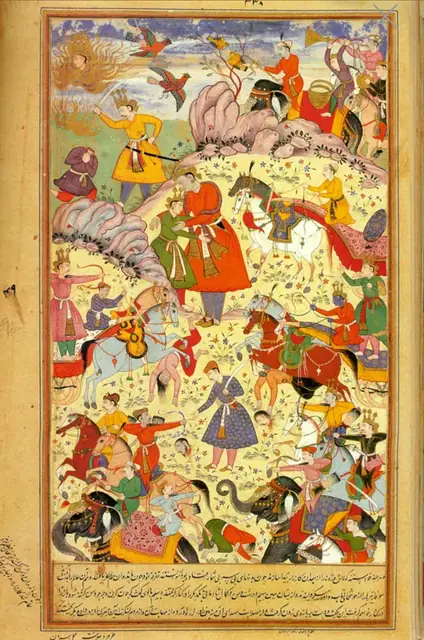
Son of the sage Bharadvaja, born from a vessel, master of every astra, pupil of Parashurama. Spurned by his boyhood friend Drupada, he came to Hastinapura, taught the Kauravas and Pandavas, and took half of Panchala as his fee through Arjuna. He asked Ekalavya for his thumb. He led the Kauravas for five days after Bhishma, arrayed the chakravyuha, and laid down his weapons when Yudhishthira said Ashvatthama was dead. Dhrishtadyumna, born to kill him, took his head.
 अश्वत्थामाAshvatthamaDrona’s son, a Chiranjivi
Born with a jewel on his brow, named for the horse-like cry he gave at birth, a portion of Rudra. He fought for the Kauravas all eighteen days and unleashed the Narayanastra after his father’s death. When the war was lost he was made commander by the dying Duryodhana, and that night, with Kripa and Kritavarma, he slaughtered the sleeping Panchalas and the sons of Draupadi. He turned the Brahmashira on Uttara’s womb. Krishna cursed him to wander three thousand years, and Bhima took the jewel from his head.
 कृपःKripacharyaFirst teacher of the princes, a Chiranjivi
Son of the sage Sharadvan, found with his twin sister Kripi in a clump of reeds and raised by Shantanu out of compassion, which gave them their names. Kripi married Drona and was Ashvatthama’s mother. Kripa taught the Kuru princes before Drona came and stayed at Hastinapura as family preceptor. He fought for the Kauravas, survived the war, joined Ashvatthama’s night raid, and afterwards became the teacher of Parikshit. He is counted among the Chiranjivis.
 द्रुपदःDrupadaKing of Panchala, father of Draupadi
Called Yajnasena, king of Panchala, once Drona’s friend in the ashrama of Bharadvaja. As king he told Drona that a king and a poor brahmin cannot be friends, and paid for it when Arjuna captured him for his guru and Drona took the northern half of his realm. Drupada then performed a yajna for a son to kill Drona; from the fire rose Dhrishtadyumna and Draupadi. Shikhandi too was his child. He fought for the Pandavas and was killed by Drona on the fifteenth day.
 धृष्टद्युम्नःDhrishtadyumnaCommander of the Pandava army
Born in armour from the fire of Drupada’s yajna, with a voice from the sky declaring he would slay Drona. Drona, knowing it, still taught him arms. He announced his sister Draupadi’s svayamvara, and on Arjuna’s word was made supreme commander of the seven Pandava akshauhinis for all eighteen days. On the fifteenth day, when Drona sat down in yoga on his chariot, Dhrishtadyumna cut off his head. Ashvatthama killed him in his sleep on the night after the war, trampling him to death.
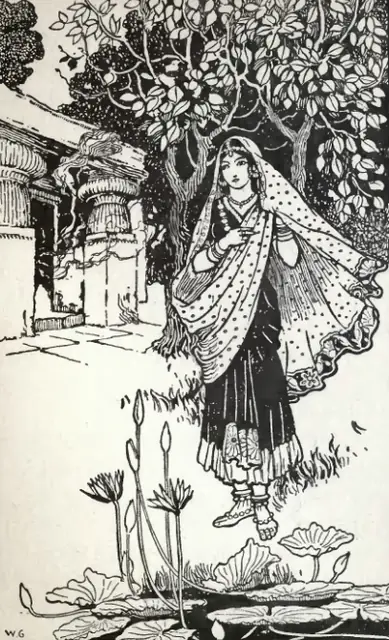 शिखण्डीShikhandiDrupada’s child, Amba reborn
In an earlier life Amba, princess of Kashi, carried off by Bhishma for his brother and then rejected by the king she loved, did tapas to bring about Bhishma’s death. Reborn to Drupada as a daughter, Shikhandini was raised as a son and later became a man through an exchange with a yaksha. Bhishma would not raise his bow against one he knew had been born a woman. On the tenth day Arjuna shot from behind Shikhandi, and Bhishma fell. Ashvatthama killed Shikhandi in the night raid.
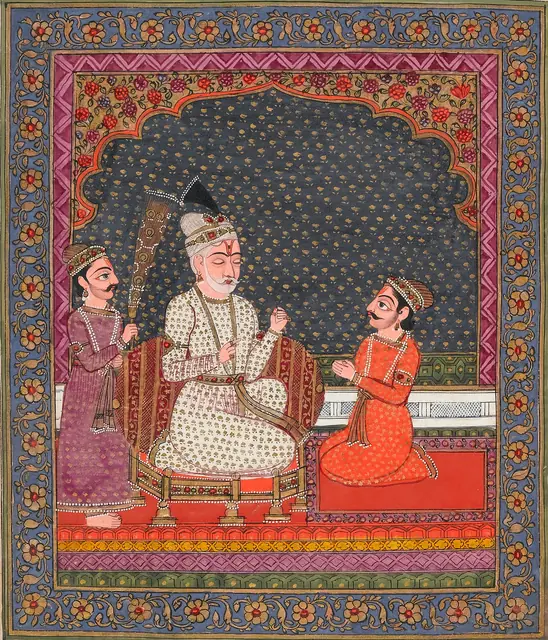 संजयःSanjayaCharioteer who narrated the war
Son of the suta Gavalgana, Dhritarashtra’s charioteer and trusted minister. Before the war he carried the king’s message to the Pandavas at Upaplavya. Vyasa gave him divine sight, so that sitting beside the blind king he saw everything on the field, by day and night, even men’s thoughts. Through his words the Bhagavad Gita reaches Dhritarashtra and the reader; the Gita begins with the king’s question to him. He went to the forest with his master, escaped the fire, and went on to the Himalaya.
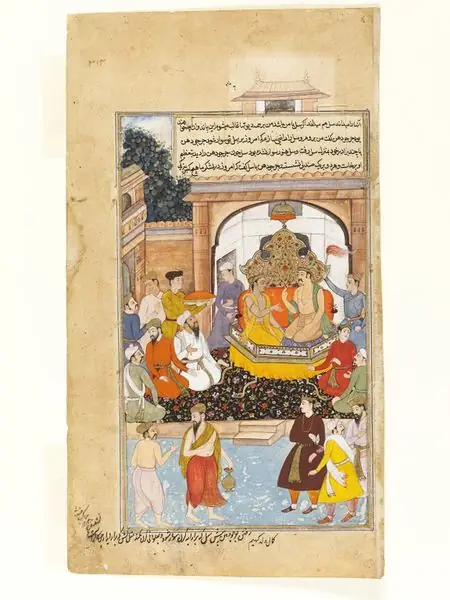 शल्यःShalyaKing of Madra, Karna’s charioteer
King of Madra, brother of Madri and so uncle to Nakula and Sahadeva. Marching to join the Pandavas, he accepted lavish hospitality on the road that turned out to be Duryodhana’s, and was bound by courtesy to fight for him. He promised Yudhishthira he would weaken Karna’s spirit, and as Karna’s charioteer he praised Arjuna and mocked Karna all the way. On the eighteenth day he led the Kaurava army himself, and Yudhishthira killed him with a spear.
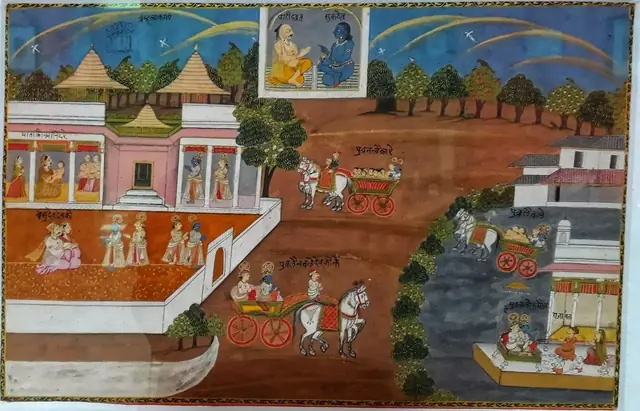 परिक्षित्ParikshitAbhimanyu’s son, king after the Pandavas
Son of Abhimanyu and Uttara, struck in the womb by Ashvatthama’s Brahmashira and born lifeless, then revived by Shri Krishna on the strength of his truth. He was named for being born when the Kuru line had dwindled. Kripa taught him, and the Pandavas crowned him at Hastinapura before they set out on the great departure. He died of the bite of the naga Takshaka, after a sage’s son cursed him for an insult. His son Janamejaya held the snake sacrifice at which the Mahabharata was first recited.
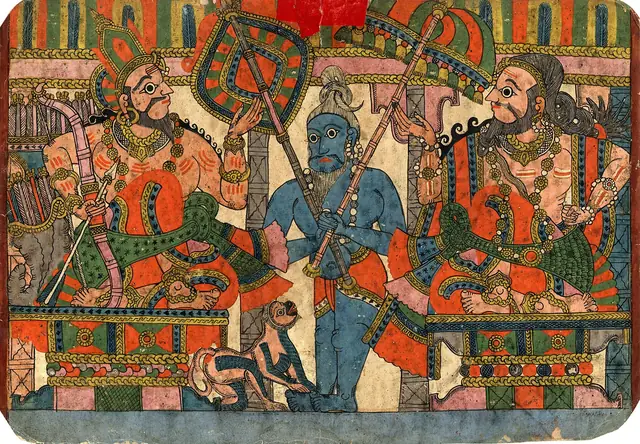 जनमेजयःJanamejayaKuru king who first heard the Mahabharata
Son of Parikshit, great-grandson of Arjuna, king at Hastinapura. Learning from the sage Uttanka how Takshaka had killed his father, he held a great sarpa-satra in which serpents fell by the thousand into the fire, until the young sage Astika, nephew of the naga king Vasuki, asked for the sacrifice to be stopped. Vyasa came to the yajna, and at the king’s request had Vaishampayana recite the whole history of his ancestors. Janamejaya’s questions shape the telling from the first parva to the last.