
01The owl and the crows
The three survivors went south into a forest and lay down under a great banyan tree. Kripa and Kritavarma slept. Ashvatthama could not. In the branches above thousands of crows were roosting. In the dark an owl came down on silent wings and killed them one by one as they slept, tearing off wings and heads, until the ground under the tree was covered. Ashvatthama watched it and took it as a lesson given to him. The Pandavas could not be beaten in open fight. Asleep, they could.
02Kripa’s counsel
He woke the other two and told them his plan. Kripa, his uncle, begged him to wait for morning, to go first to Dhritarashtra, Gandhari and Vidura and ask their counsel, for no good comes of killing sleeping men. Ashvatthama answered that the Pandavas had broken every rule already: his father had been killed with his weapons laid down, Duryodhana struck below the navel. He would not sleep until Dhrishtadyumna was dead. He yoked his chariot and set out, and the other two, ashamed to leave him, followed.
03The guardian at the gate
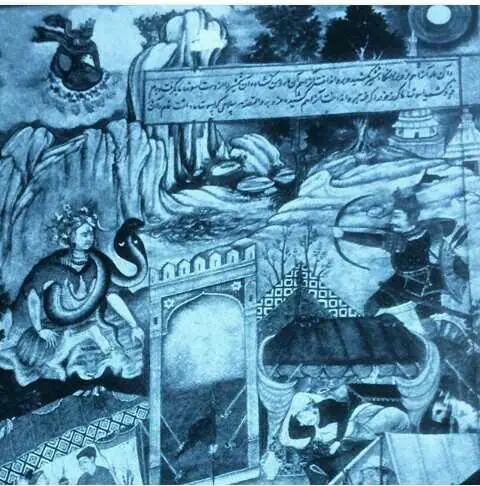
At the gate of the Pandava camp stood a being vast and blazing, wearing a tiger skin, with a serpent for a sacred thread. Every weapon Ashvatthama hurled at it was swallowed. He understood he was facing Mahadev. He made an altar, lit a fire and sang the praises of Shiva, and offered his own body into the flame. Mahadev appeared, said he had guarded the Panchalas for Krishna’s sake, but their time had come. He gave Ashvatthama a sword and entered his body.
04The slaughter of the sleepers
Ashvatthama went in alone while Kripa and Kritavarma held the gate and cut down all who ran out. He found Dhrishtadyumna asleep on his bed and woke him with a kick. Dhrishtadyumna begged to die by a weapon; Ashvatthama refused him even that and trampled and choked him to death like a beast of sacrifice. Then he went through the tents. Shikhandi died, and Draupadi’s five sons, and Uttamaujas and Yudhamanyu, and the Panchala warriors in their thousands. The camp was set on fire. The five brothers and Satyaki were not there; Krishna had taken them away for the night.
05Draupadi’s demand
At dawn the three went back to Duryodhana and told him. He said that what Bhishma, Drona and Karna could not do, Ashvatthama had done, and he died content. In the Pandava camp Dhrishtadyumna’s charioteer, who had escaped, brought the news. Yudhishthira fell to the ground. Draupadi came from Upaplavya and sat down to fast unto death unless Ashvatthama was killed and the jewel he was born with, on his forehead, was brought to her. Bhima took up his bow and drove out after him, with Nakula as charioteer.
06The Brahmashira and the curse
Krishna warned that Ashvatthama held the Brahmashira astra and followed with Arjuna and Yudhishthira. They found him on the bank of the Ganga, sitting among the rishis near Vyasa. Seeing them, he picked up a blade of grass, charged it as the Brahmashira, and loosed it to rid the world of Pandavas. Arjuna loosed his own to quench it. The rishis Vyasa and Narada stood between the two fires. Arjuna drew his astra back. Ashvatthama could not, and turned it on the wombs of the Pandava women. Krishna declared that Uttara’s child would be born dead and that he would give it life, and he cursed Ashvatthama to wander the earth for three thousand years, alone, unspoken to, reeking of pus and blood. Ashvatthama gave up the jewel, and Bhima carried it to Draupadi.
Famous verses
उपदेशः कृतोऽनेन पक्षिणा मम संयुगे । शत्रूणां क्षपणे युक्तः प्राप्तकालश्च मे मतः ॥
This bird has given me a lesson for the battle, fit for destroying my enemies; and the time for it, I think, has come.Mahabharata 10.1.44 (BORI CE)