01Siha to Jodha
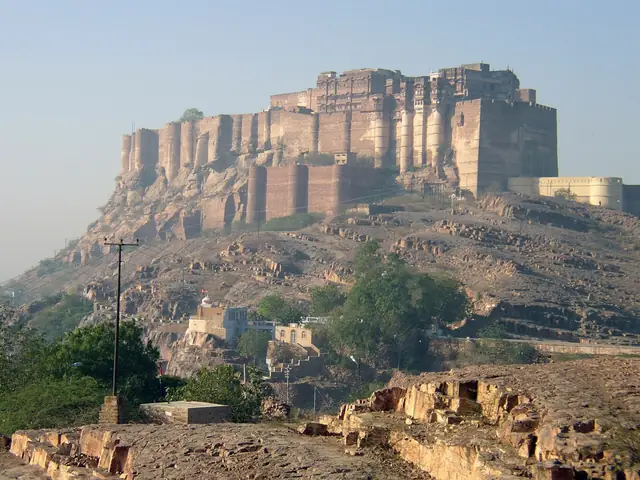
A memorial stone at Bithu near Pali records the death of Rao Siha in 1273. His descendants spread over the sandy country, and Rao Chunda took the old fort of Mandore around 1394. Rao Jodha moved to a rocky ridge a few miles south and in 1459 laid the foundation of Mehrangarh; the city of Jodhpur grew below it. One of his sons, Rao Bika, went north and founded Bikaner in 1488.
02Maldeo and the Mughals
Rao Maldeo made Marwar the strongest Rajput state of the 1530s. In 1544 Sher Shah Suri faced his army at Sammel (Giri-Sumel); the Rathore chiefs Jaita and Kumpa fought to the death, and Sher Shah won only narrowly. After Maldeo, Udai Singh accepted Mughal service in 1583, and Rathore princes served as Mughal generals for a century. Jaswant Singh, the most powerful of them, died at Jamrud in the Khyber in 1678.
03Durgadas and the thirty years’ war
Jaswant Singh left no living son, and Aurangzeb took Marwar under direct rule. Two posthumous sons were born; one, Ajit Singh, was smuggled out of Delhi in 1679 by Durgadas Rathore and his men, who cut their way through the Mughal guards. Durgadas hid the boy, allied with Mewar, and kept the war going in the desert for decades. In 1707, on Aurangzeb’s death, Ajit Singh entered Jodhpur. The Rathores ruled Marwar until it joined India in 1949.
The rulers
- 1Rao SihaFounder of the Marwar Rathoresd. 1273
- 2Rao ChundaTook Mandorec. 1394–1423
- 3Rao JodhaFounded Jodhpur and Mehrangarh, 14591438–1489
- 4Rao Ganga1515–1532
- 5Rao MaldeoFought Sher Shah at Sammel, 15441532–1562
- 6Rao ChandrasenHeld out against Akbar1562–1581
- 7Udai Singh (Mota Raja)1583–1595
- 8Jaswant Singh IDied at Jamrud1638–1678
- 9Ajit SinghSaved by Durgadas; entered Jodhpur 17071679–1724
- 10Abhay Singh1724–1749
- 11Vijay Singh1752–1793
- 12Man SinghPatron of the Nath yogis; Mahamandir1803–1843
- 13Umaid SinghBuilt Umaid Bhawan palace1918–1947
- 14Hanwant SinghMarwar joined India1947–1949
What they left
- Mehrangarh fort, Jodhpur (1459)
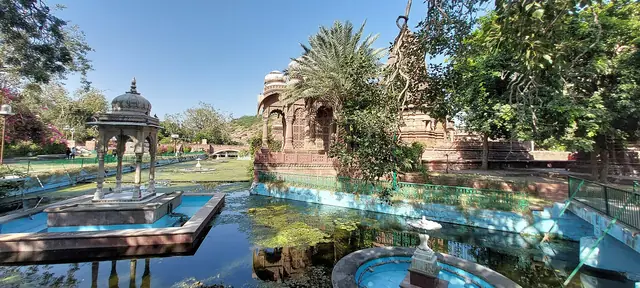
- The cenotaphs and temples of Mandore
- Jaswant Thada and Umaid Bhawan
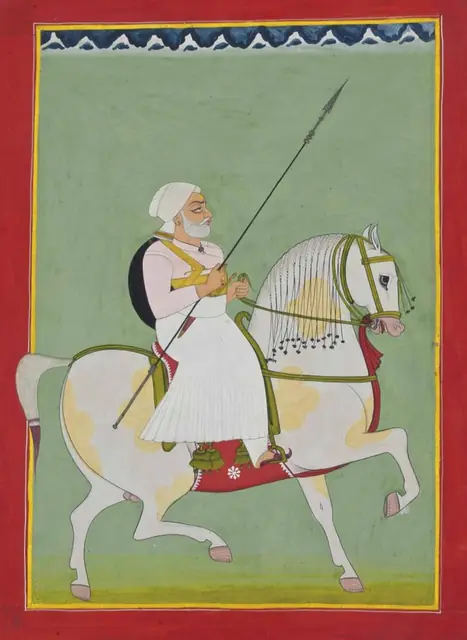
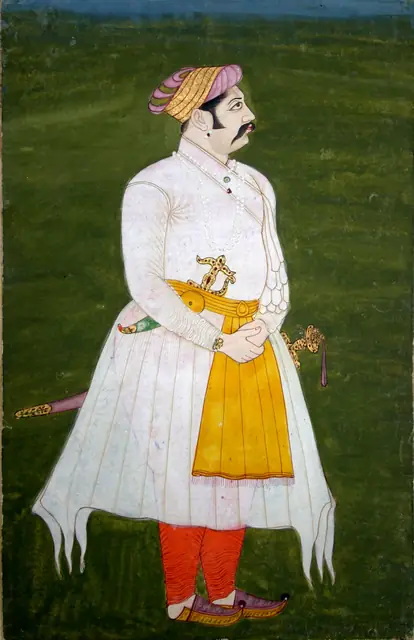
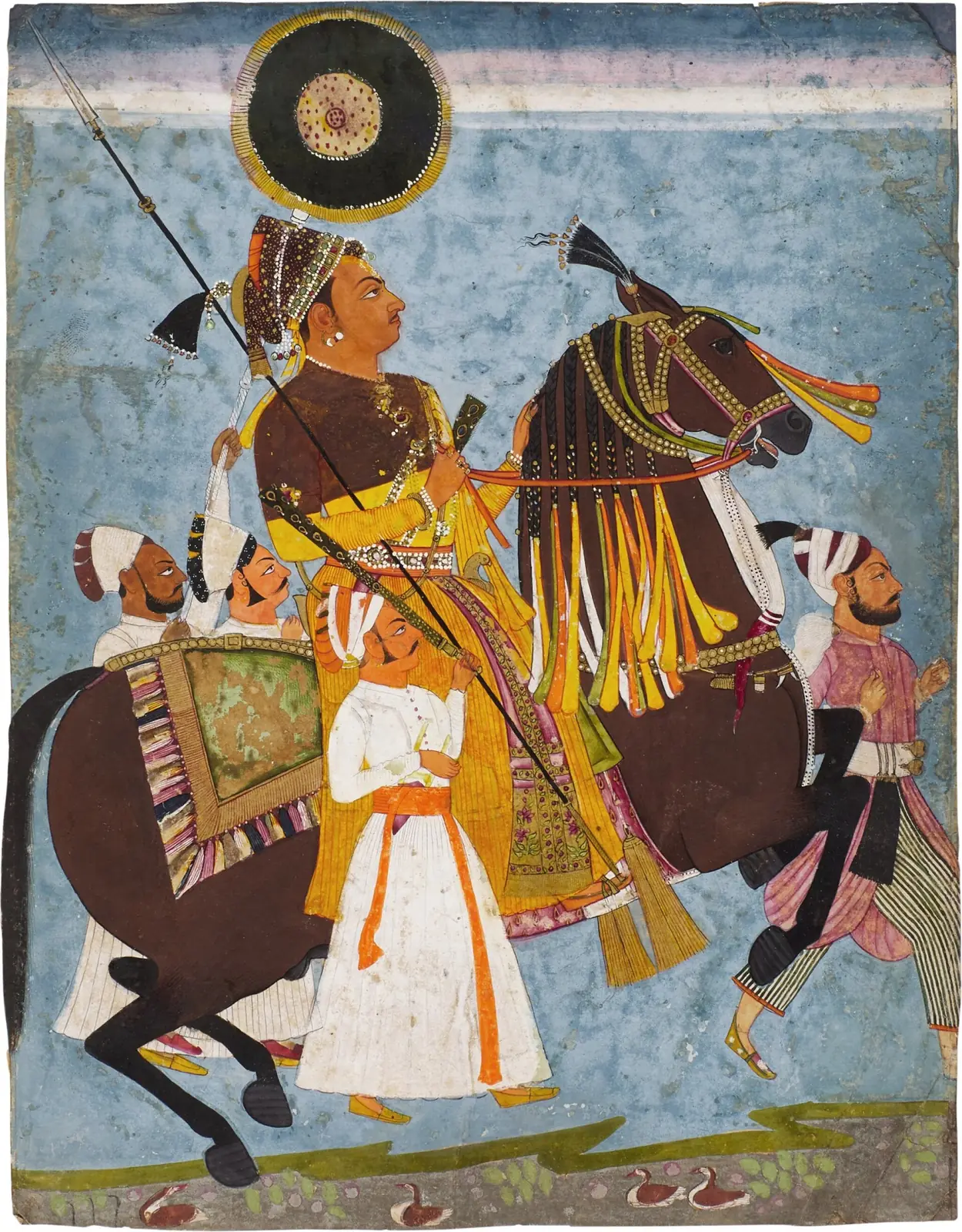
- Marwari painting of the Jodhpur court