Cite
MLA
“Kubera.” Hindu History, 2026, https://www.hinduhistory.in/devata/kubera/. Accessed .
APA
Hindu History. (2026). Kubera. Retrieved , from https://www.hinduhistory.in/devata/kubera/
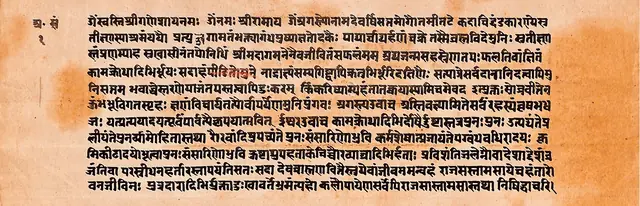
राजाधिराजाय प्रसह्यसाहिने। नमो वयं वैश्रवणाय कुर्महे।
स मे कामान्कामकामाय मह्यम्। कामेश्वरो वैश्रवणो ददातु।
कुबेराय वैश्रवणाय। महाराजाय नमः॥
rājādhirājāya prasahyasāhine | namo vayaṃ vaiśravaṇāya kurmahe |
sa me kāmān kāmakāmāya mahyam | kāmeśvaro vaiśravaṇo dadātu |
kuberāya vaiśravaṇāya | mahārājāya namaḥ ||
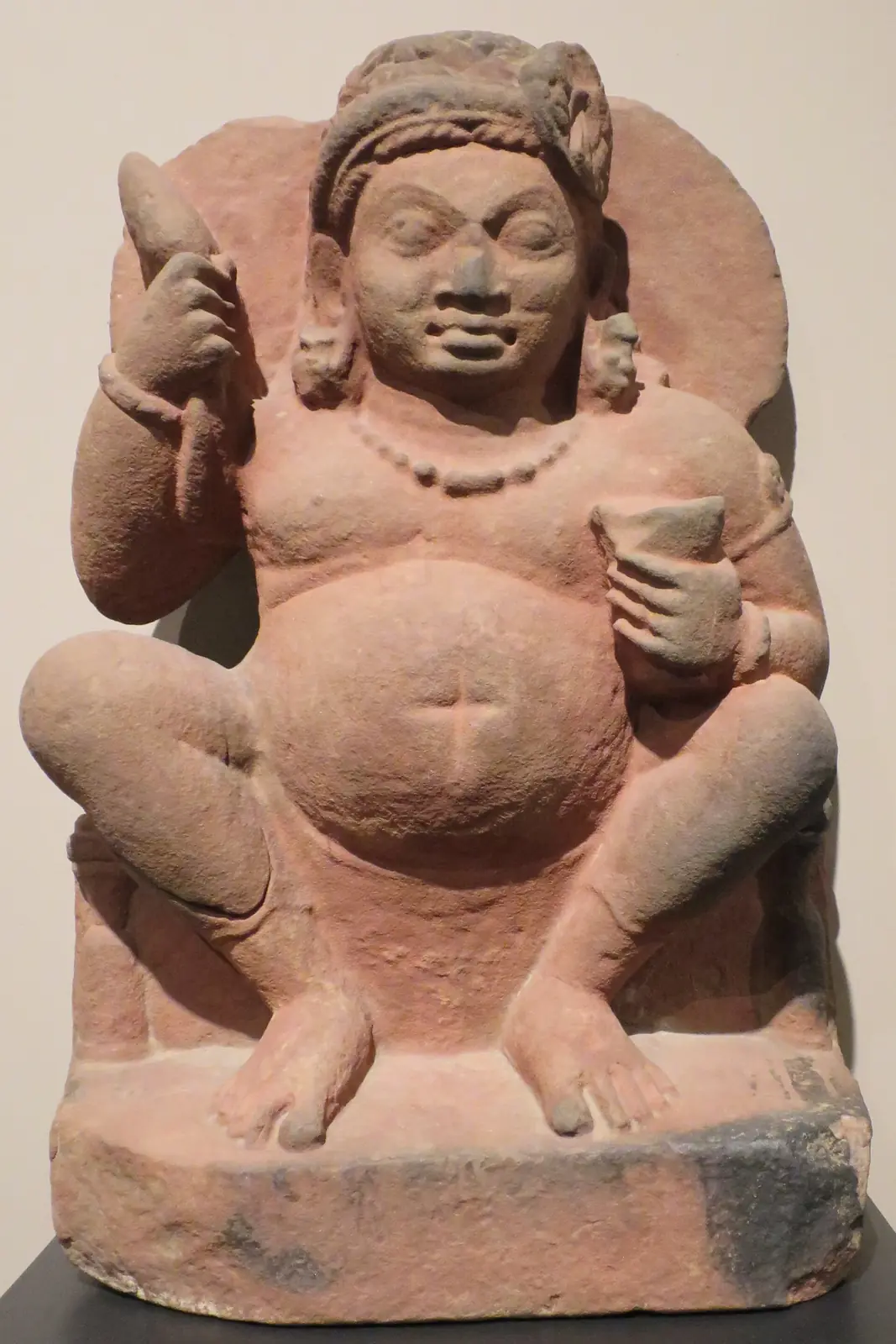
Pot-bellied, jewelled, seated at ease, holding a money-bag or a pot of treasure and often a club; sometimes a mongoose sits in his hand. His mount is a man, which gives him the name Naravahana. The yaksha sculptors of Mathura made him in the first centuries CE as a stout, cheerful figure with a cup, and later texts describe him with three legs, eight teeth and one eye.
01From Lanka to Alaka
Kubera’s name is already in the Atharvaveda and the Shatapatha Brahmana, as king of the hidden beings who move in the dark. The Uttara Kanda of the Valmiki Ramayana tells his story: he was the son of Maharshi Vishrava, grandson of Pulastya, and for his tapas Brahma made him lord of wealth, a guardian of the world, and gave him the Pushpaka vimana. He ruled from golden Lanka. Then Vishrava’s sons by the rakshasi Kaikesi grew up, Ravana, Kumbhakarna and Vibhishana among them, and Ravana drove his half-brother out and took both Lanka and the Pushpaka. Kubera settled at Alaka on Gandhamadana near Kailash. After Ravana fell, the Pushpaka went back to its first owner.
02Keeper of the treasure
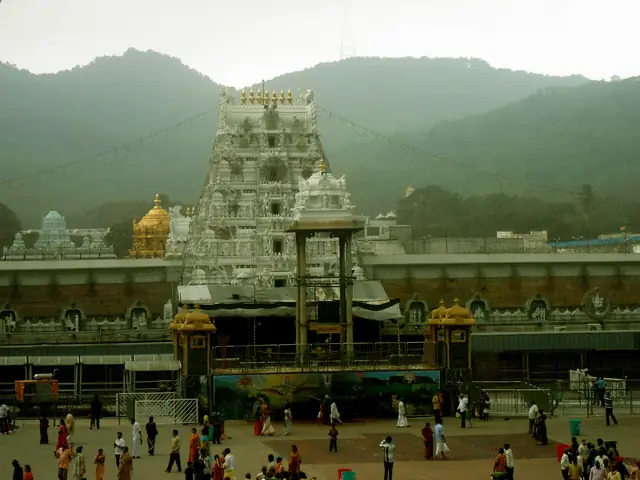
As dikpala he guards the north, and the nidhis, the great treasures of the world, are in his keeping. He is the friend of Shiva, his neighbour on Kailash. The Mantrapushpam sung at the close of puja in many south Indian temples and homes takes a verse from the Taittiriya Aranyaka (1.31.6) in his praise: rājādhirājāya prasahya sāhine, to the king of kings, the conqueror, we bow, to Vaishravana. At Tirumala the tradition is that Bhagwan Venkateswara borrowed from Kubera to pay for his wedding to Padmavati, and the offerings in the hundi help repay that debt. In daily worship Shri Ganesh and Lakshmi have taken over much of his place.
03Kubera in stone, and beyond Bharat
Few devatas were carved as often in early Bharat. The Government Museum at Mathura holds a row of Kuberas from the 1st to the 7th century CE, some seated with a wine-cup among companions, from mounds at Pali Khera, Kankali and Maholi. A 4th-century sandstone Kubera from Uttar Pradesh is in the Norton Simon Museum, and Chola sculptors carved him at the Airavatesvara temple, Darasuram. His worship travelled with the Dharmic traditions. Buddhists know him as Vaishravana, one of the Four Great Kings who guard the world, and as Jambhala; in Japan he became Bishamon. For Jains he is Sarvanubhuti, the attendant yaksha of the nineteenth Tirthankara, Mallinath.
In the texts
- Valmiki Ramayana, Uttara Kanda
- Taittiriya Aranyaka 1.31.6 (Mantrapushpam)
- Mahabharata, Sabha Parva (the sabha of Kubera)