Cite
MLA
“Maratha–Mysore War (1785–87).” Hindu History, 2026, https://www.hinduhistory.in/battles/maratha-mysore-war-1785/. Accessed .
APA
Hindu History. (2026). Maratha–Mysore War (1785–87). Retrieved , from https://www.hinduhistory.in/battles/maratha-mysore-war-1785/
By the Treaty of Gajendragad (1787) Tipu gave up Badami, Nargund, Kittur and Adoni and agreed to pay tribute, keeping his other conquests.
01Nargund and Kittur
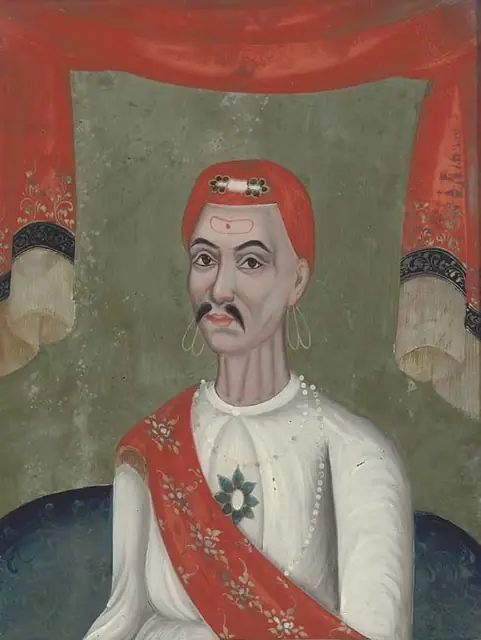
Haidar Ali had taken the Maratha districts south of the Krishna in 1776–79. When Tipu raised the tribute of Nargund, its chief Venkatrao Bhave turned to Pune, and Tipu besieged Nargund in February 1785; it surrendered in July. He also seized Kittur, whose Desai family looked to the Marathas. Nana Phadnavis, freed from the British war by Salbai, allied with the Nizam, and in 1786 their combined armies under Haripant Phadke moved into the Doab and took Badami after a siege.
02Adoni, Savanur and the peace
Tipu struck back. He besieged Adoni, held for the Nizam, and though the allies relieved its garrison he took the fort after they withdrew. He crossed the Tungabhadra in the rains and beat the Marathas near Savanur in October 1786, and the Nawab of Savanur, the Marathas’ ally, lost his lands. Neither side could finish the other. In April 1787 the Treaty of Gajendragad gave the Marathas Badami, Nargund and Kittur and the Nizam Adoni, while Tipu paid tribute and kept the rest.
The war restored part of the Maratha frontier on the Krishna, and its bitterness led the Marathas and the Nizam to join the British against Tipu in 1790.