01Shakambhari of the forest
The Devi Mahatmya tells that when drought had lasted a hundred years, the Devi appeared with countless eyes, wept for the suffering world, and fed it from her own body with vegetables and herbs: she is Shakambhari. At Cholachagudda, among the forest of the Tilakaranya, she is Banashankari, Shankari of the forest. The Chalukyas of Badami took her as their family goddess in the 7th century. The black-stone murti sits on a lion, trampling a demon, with eight arms. The present temple, with its walled court and tall lamp-towers, was rebuilt in the 17th century.
02Haridra Tirtha and the jatra
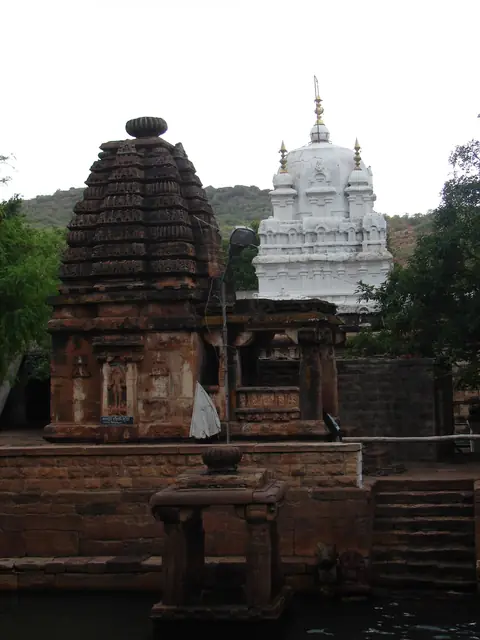
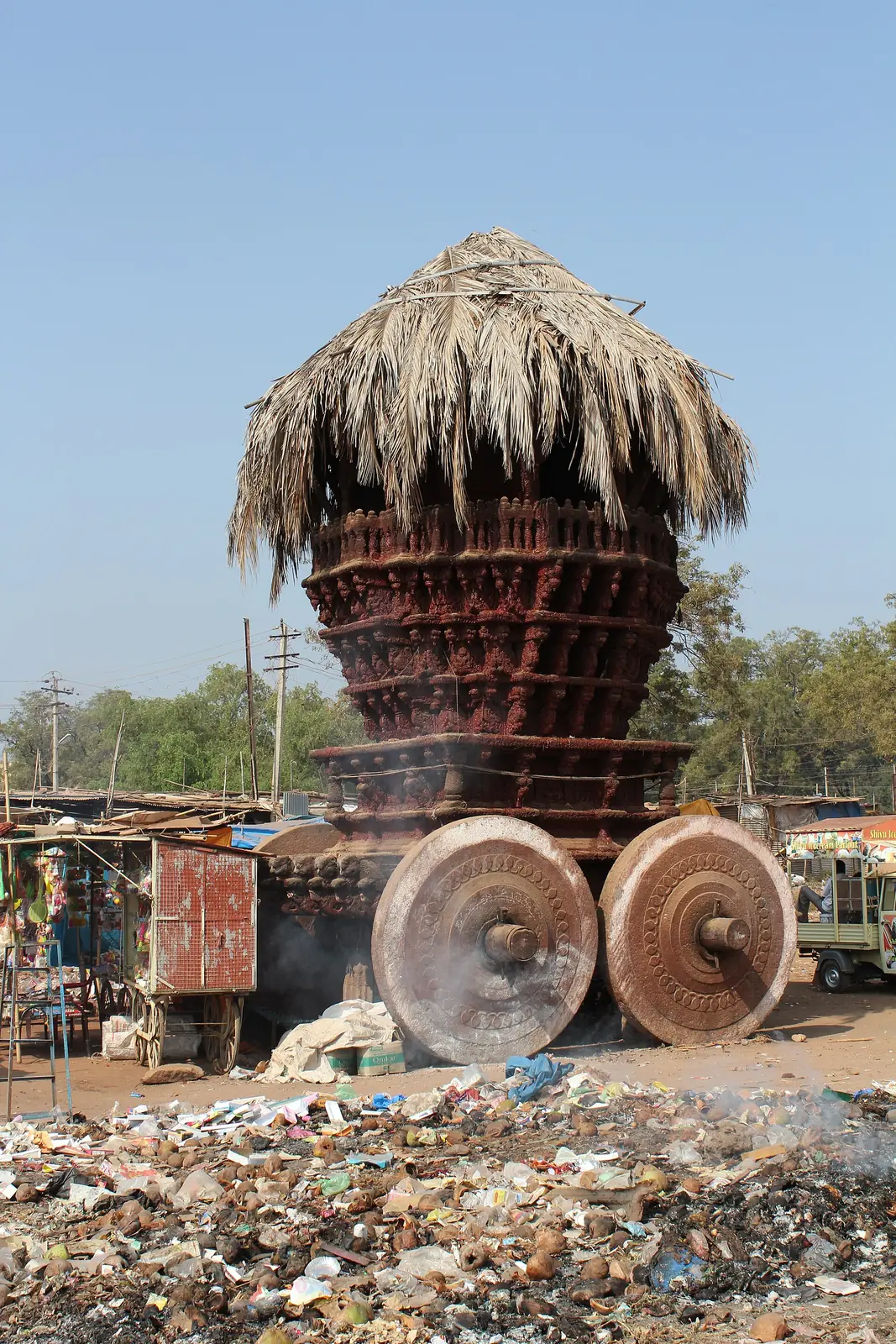
Before the temple lies Haridra Tirtha, a large square tank with stone colonnades on three sides. The Banashankari jatra begins in Pausha, around January, and lasts weeks, with a chariot procession, cattle fairs and theatre. One day of it is the Palleda Habba, the vegetable festival, when the Devi is offered a hundred and eight kinds of vegetables, in memory of Shakambhari. Weavers’ communities of north Karnataka and Maharashtra hold her as kuladevi.
The life of this place
- 7th centuryThe Chalukyas of Badami worship Banashankari as their kuladevi.
- 17th centuryThe present temple is rebuilt.
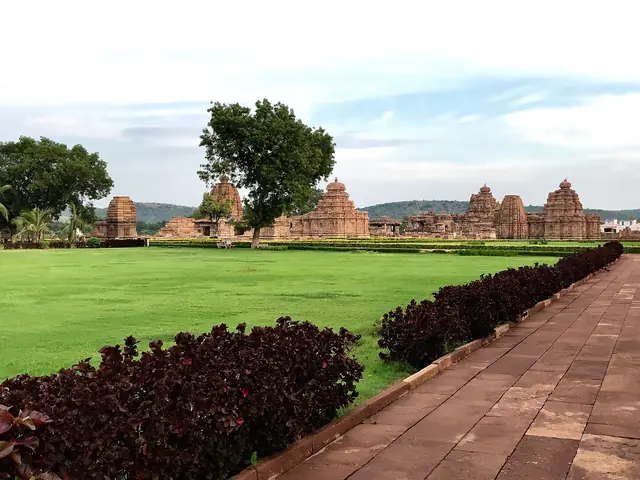
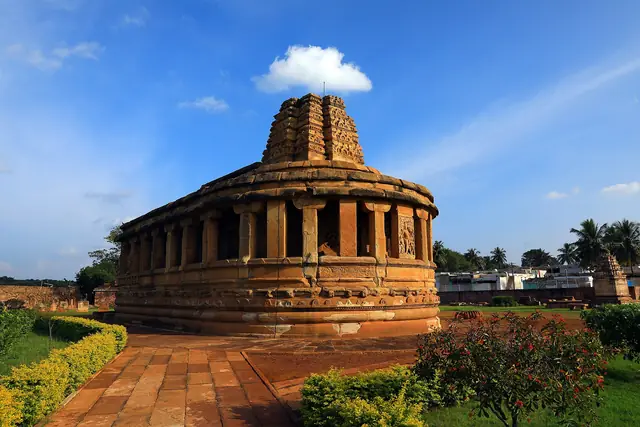
About 5 km from Badami; combine with the Badami caves, Pattadakal and Mahakuta.