Cite
MLA
“King Chandra’s campaigns in Vanga and against the Vahlikas.” Hindu History, 2026, https://www.hinduhistory.in/battles/chandra-vanga-vahlika-campaigns/. Accessed .
APA
Hindu History. (2026). King Chandra’s campaigns in Vanga and against the Vahlikas. Retrieved , from https://www.hinduhistory.in/battles/chandra-vanga-vahlika-campaigns/
The inscription says Chandra broke the enemies who had gathered against him in Vanga and conquered the Vahlikas across the Sindhu.
01What the pillar says
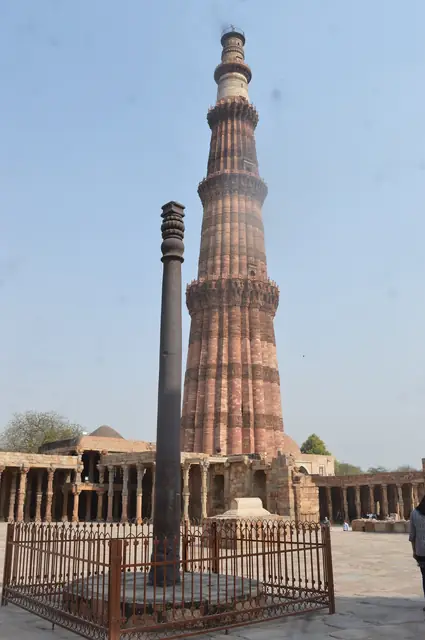
The verse opens with Vanga. When the enemies united and came against him there, Chandra beat them back, and his fame was written on his arm with the sword. Then it turns west: crossing the seven mouths of the Sindhu, he conquered the Vahlikas, and the southern ocean was still fragrant with the breeze of his valour. The king, it says, had gone to the other world, but his fame remained on earth. The pillar was raised as a standard of Bhagwan Vishnu on a hill called Vishnupada.
02Who was Chandra
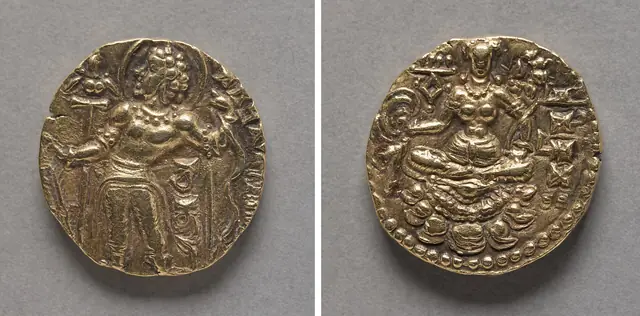
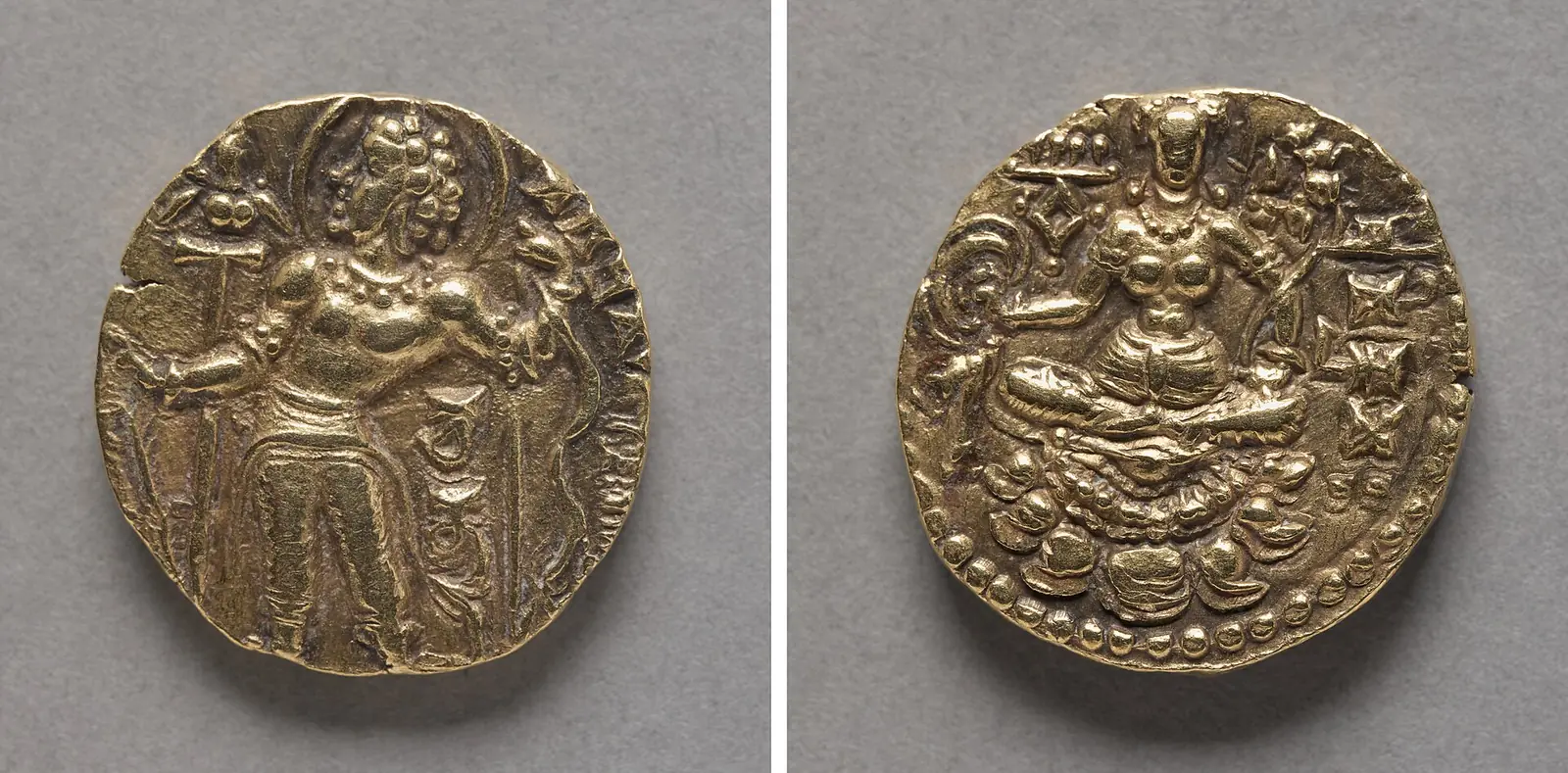
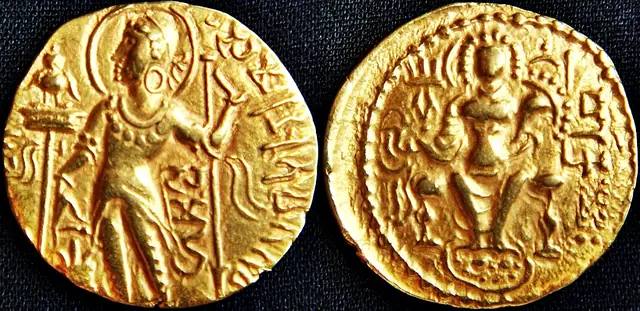
The inscription gives no dynasty and no date. Its script is Gupta Brahmi of about 400 CE, and most historians identify Chandra with Chandragupta II, whose short name on his own coins is Chandra and who was a devoted Vaishnava. Some have argued for Samudragupta or another king, and the question is not closed. The Vahlikas are usually placed in the Bactria region or the lands west of the Indus. The pillar itself, over six metres of wrought iron that has stood sixteen centuries with little rust, was moved to Delhi in later centuries.
It is the only contemporary record of these wars, and it is cut on one of the great metallurgical works of the ancient world.