01Anangpal’s Delhi
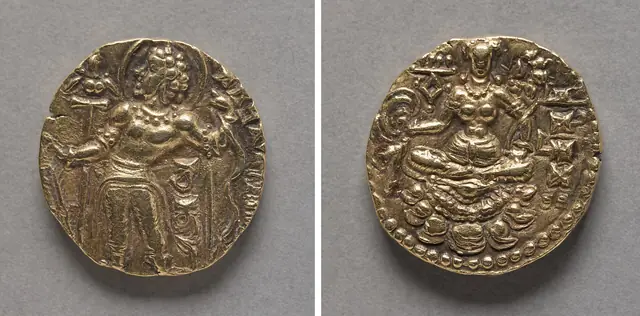
The Tomara rajputs ruled the Delhi country from the 8th or 9th century, and tradition credits Anangpal Tomar with building Lal Kot, the red fort of rubble masonry on the Aravalli ridge at Mehrauli, in the 11th century. He also built the Anang Tal reservoir nearby. Excavations by B. R. Mani for the Archaeological Survey in 1991–95 found Tomara and Chauhan layers, pottery and coins inside the walls. Around 1150 the Chahamanas of Shakambhari took Delhi, and Prithviraj Chauhan threw a wider wall around Lal Kot, the city of Rai Pithora.
021192 and the 27 temples
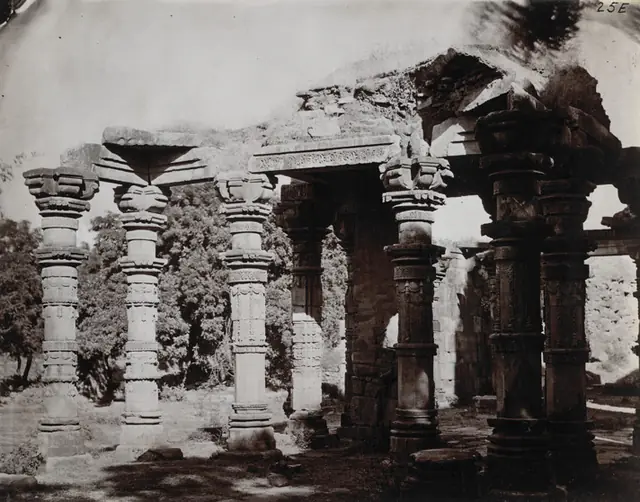
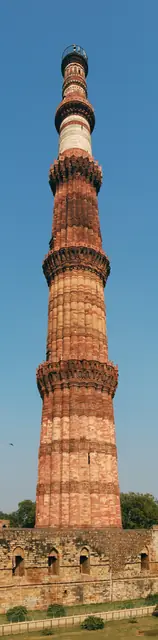
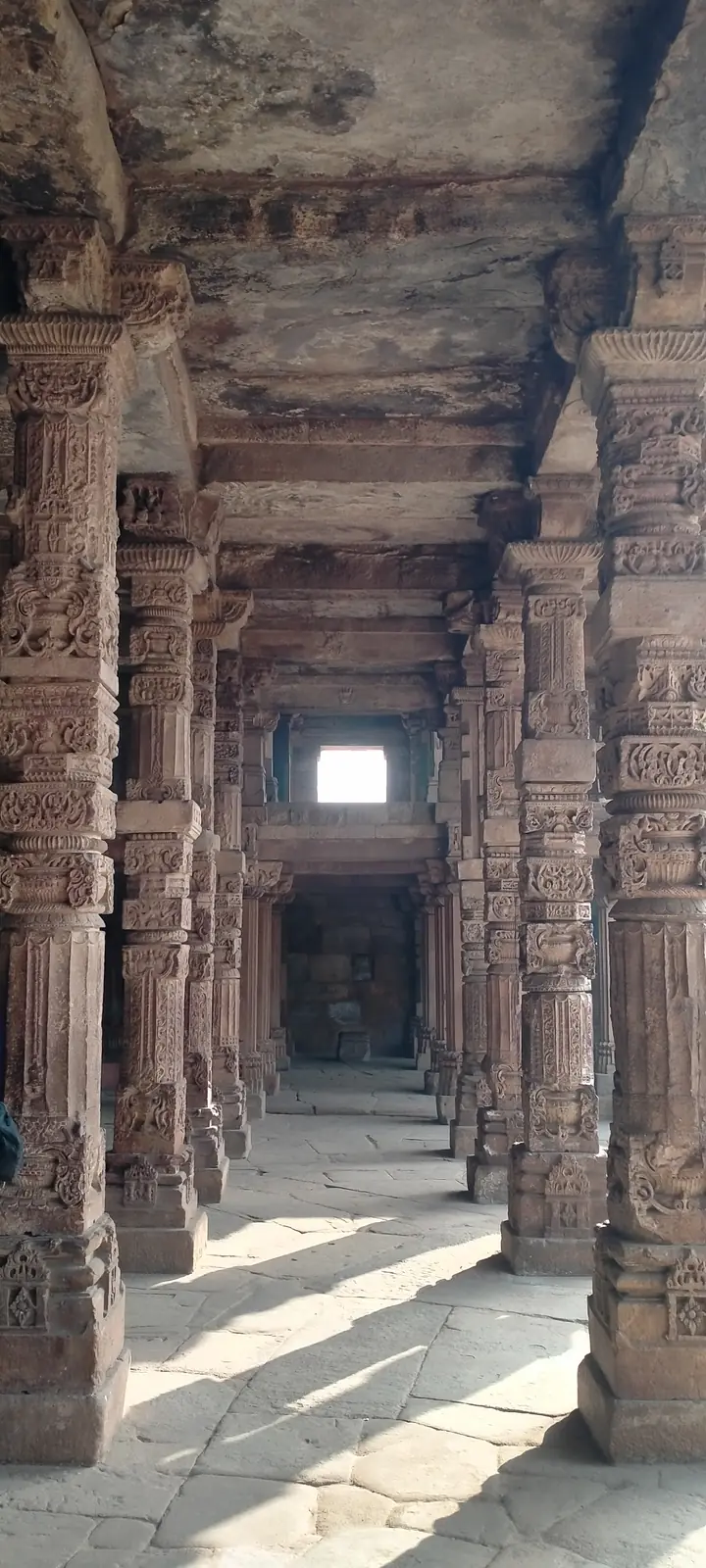
After Prithviraj’s defeat at the Second battle of Tarain in 1192, Muhammad Ghori’s general Qutb-ud-din Aibak occupied Delhi. Work on a congregational mosque began in the citadel in 1192–93. The Persian inscription over its eastern gateway states that the materials of 27 temples, each built at a cost of 20 lakh dehliwals, were used in it. The carved pillars still stand in the colonnades, with bells, kalashas and the scars of chiselled-away figures. In the courtyard stands the Iron Pillar of a king Chandra, a Gupta-era dhvaja of Vishnu brought here from elsewhere.
The life of this place
- 11th centuryAnangpal Tomar builds Lal Kot and Anang Tal.
- c. 1150The Chauhans take Delhi from the Tomaras.
- 1192 CEAfter Tarain, Qutb-ud-din Aibak takes Delhi.
- 1192–93 CEQuwwat-ul-Islam mosque begun from the materials of 27 temples (its gate inscription).
- 1991–95B. R. Mani excavates Lal Kot for the ASI.
The walls run through Sanjay Van and around the Qutb complex in Mehrauli; the Qutb complex is ASI ticketed, near Qutub Minar metro.