Cite
MLA
“Sushruta’s surgery.” Hindu History, 2026, https://www.hinduhistory.in/vijnana/sushruta-samhita-surgery/. Accessed .
APA
Hindu History. (2026). Sushruta’s surgery. Retrieved , from https://www.hinduhistory.in/vijnana/sushruta-samhita-surgery/
01Instruments and practice
The text, set in the voice of Divodasa Dhanvantari teaching Sushruta at Kashi, has five sthanas and the later Uttaratantra, 186 chapters in all. Sutrasthana 7 and 8 describe 101 blunt yantras, many shaped like the beaks of animals and birds, and 20 sharp shastras. Chapter 9 makes the student practise incision on gourds and cucumbers, scraping on hairy hide, puncture on the veins of dead animals and suturing on cloth and leather before touching a patient. Sharirasthana 5 tells how to study anatomy from a body softened in running water for seven days.
02Nose, ear and the 1794 letter
Sutrasthana 16 rebuilds a cut nose from a leaf-shaped flap of cheek skin left attached, and repairs torn ear lobes. Cutting the nose was a common punishment, so the operation was in demand, and families of surgeons kept it for centuries. In October 1794 the Gentleman’s Magazine of London printed a letter signed B. L. describing a forehead-flap rhinoplasty done near Pune on Cowasjee, a bullock-driver of the Company’s army. Joseph Carpue tried the method in London and published two cases in 1816; it became the Indian method of European surgery.
03Manuscripts and dating
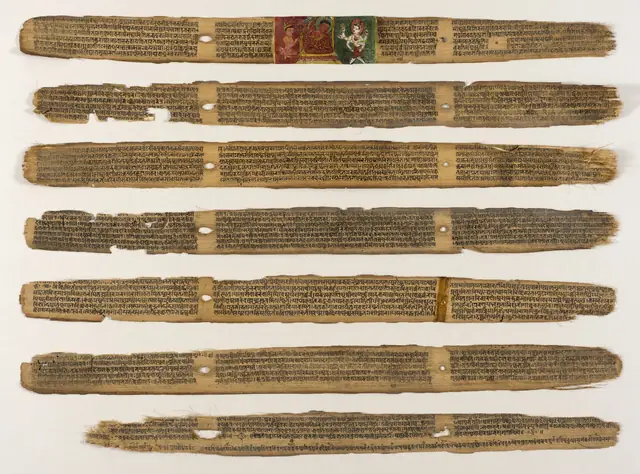
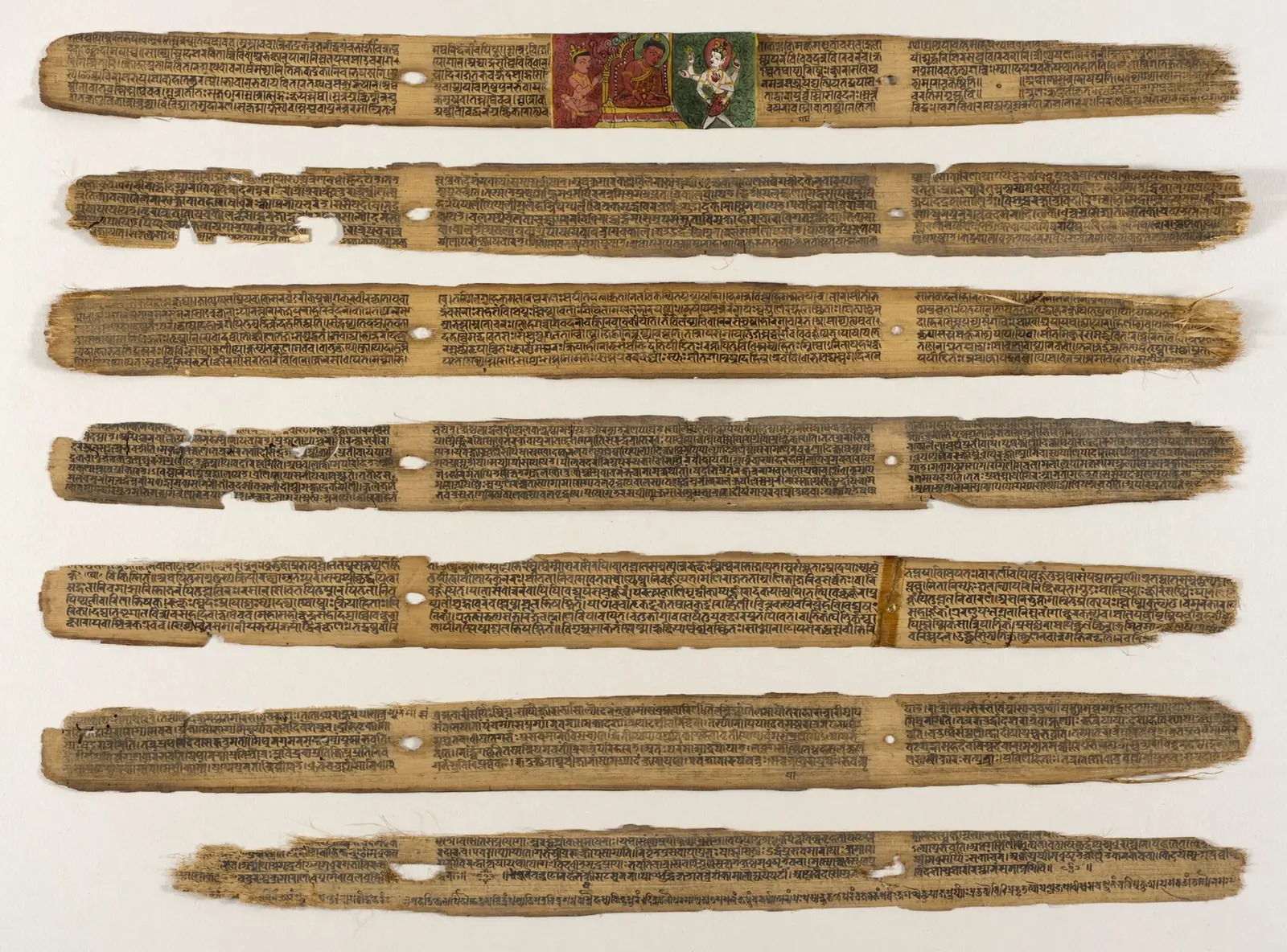
The oldest dated manuscript of the Sushruta Samhita is a palm-leaf copy from Nepal of 878 CE, now in the Kaiser Library at Kathmandu. Dalhana’s commentary of the 12th century is the standard guide to the text. Ibn al-Nadim’s Fihrist of 987 says the Indian physician Manka translated the book of “Susrud” for the Barmakids at Baghdad. Scholars date the core of the text widely, and accept that it was revised; the work called the Sushruta Samhita today is the version of a later redactor, traditionally named Nagarjuna.
In the texts
- Sushruta Samhita
- Nibandhasangraha of Dalhana