Cite
MLA
“Drilled teeth of Mehrgarh.” Hindu History, 2026, https://www.hinduhistory.in/vijnana/mehrgarh-dentistry-drilling/. Accessed .
APA
Hindu History. (2026). Drilled teeth of Mehrgarh. Retrieved , from https://www.hinduhistory.in/vijnana/mehrgarh-dentistry-drilling/
01What was found
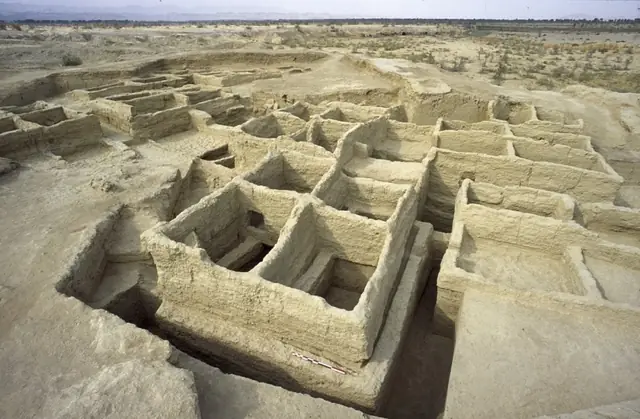
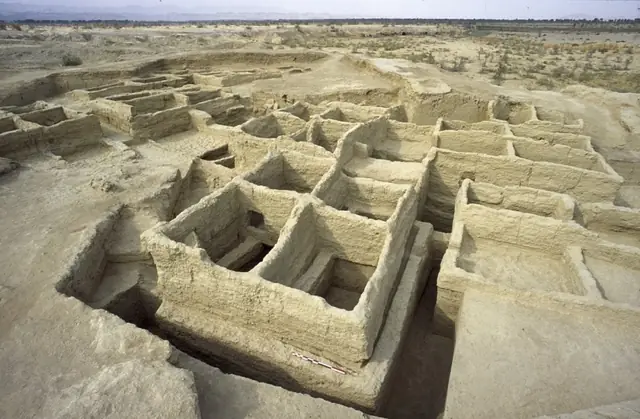
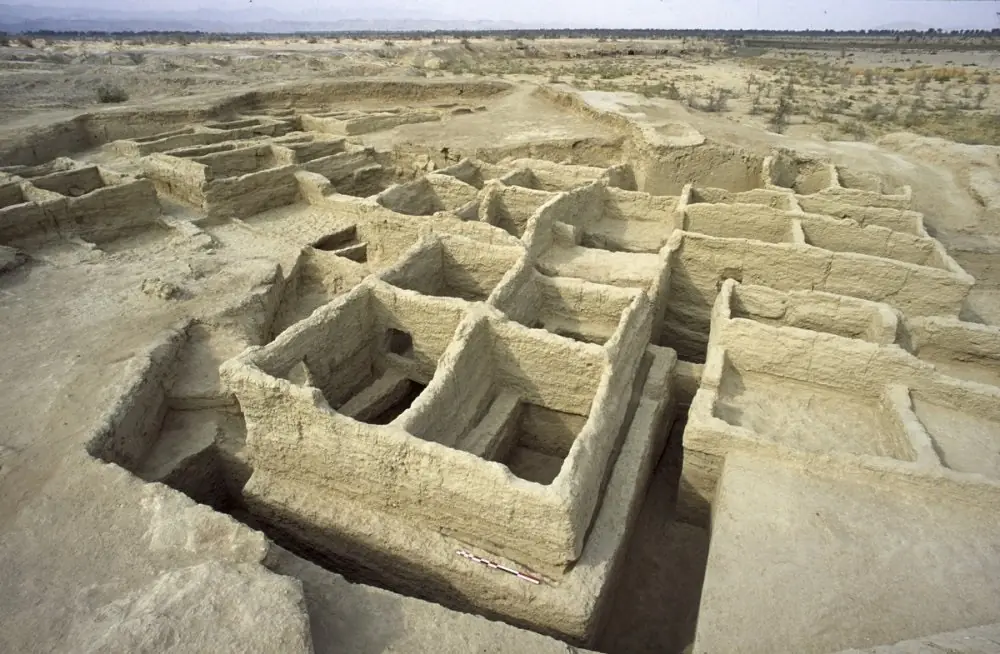
Mehrgarh, at the foot of the Bolan Pass in Balochistan, is one of the oldest farming villages of South Asia, excavated by Jean-François Jarrige’s French team from 1974. In 2006 Andrea Coppa and colleagues reported in Nature that eleven molar crowns from nine adults in the Neolithic graveyard had been drilled. The holes are conical or cylindrical, up to 3.5 mm deep, and the worn edges show the people went on chewing for some time after.
02How it was done
The same village had a busy bead workshop, where craftsmen drilled stone beads with flint drill-heads on a bow drill. The researchers made a bow drill of the same kind and found it could bore a human tooth in under a minute. No filling survives in the holes, and some may have been packed with something that has decayed. Several drilled teeth show decay, which suggests the drilling was meant to treat pain, not to decorate.
03Limits of the find
The practice seems to have lasted about 1,500 years and then stopped; later graves at Mehrgarh show no drilled teeth. So this is not the start of an unbroken Indian dental tradition, and it should not be linked straight to Ayurveda. What it proves is that the people of the Bolan valley, ancestors in part of the Sindhu-Sarasvati cities, were treating living patients with skill thousands of years before writing.