Cite
MLA
“Krishna I (Akalavarsha).” Hindu History, 2026, https://www.hinduhistory.in/people/krishna-i-rashtrakuta/. Accessed .
APA
Hindu History. (2026). Krishna I (Akalavarsha). Retrieved , from https://www.hinduhistory.in/people/krishna-i-rashtrakuta/
Life in moments
- 01756
Uncle of Dantidurga; reigned c. 756–774 with the titles Akalavarsha and Shubhatunga.
- 02757
Defeated Kirtivarman II in 757, ending the Chalukyas of Badami.
- 03
Took Gangavadi from the Western Ganga king Shripurusha and humbled the Eastern Chalukyas of Vengi.
- 04812
Credited by the Baroda plates (c. 812) and the Kadaba grant with the Kailasa temple at Ellora.
- 05765
His Hattimattur inscription of 765 is among the early records in Old Kannada.
01The end of the Badami Chalukyas
Krishna I took the throne around 756 after the death of his nephew Dantidurga; the Baroda plates of his line hint that he first had to put down another claimant. In 757 he defeated Kirtivarman II, the last of the Chalukyas of Badami, as a grant of his grandson Govinda III records, and the empire that had ruled the Deccan for two hundred years was over. He then pressed south and east. He beat the Western Ganga king Shripurusha and took much of Gangavadi in southern Karnataka, subdued the Shilaharas of the Konkan, and sent his son Govinda against the Eastern Chalukya Vishnuvardhana IV of Vengi, who had to sue for peace. His titles were Akalavarsha, Shubhatunga, Prithvivallabha and Shrivallabha, and the people knew him as Kannara or Kanhara.
02Kailasa, cut from the top down
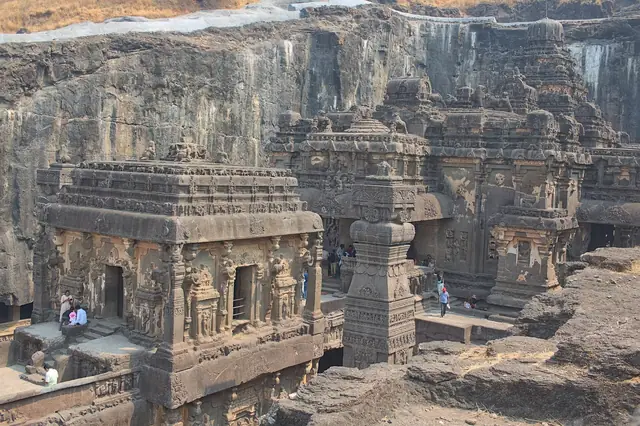
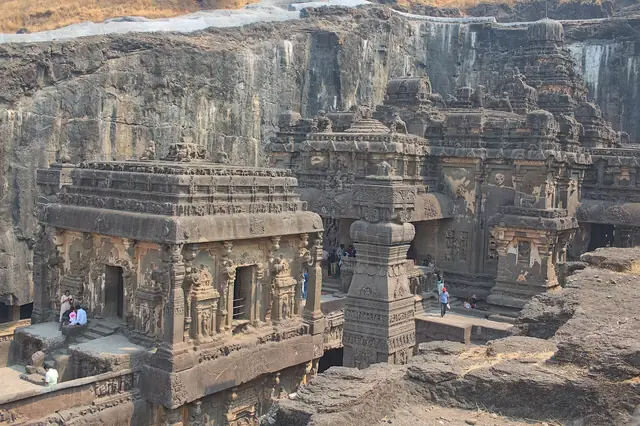
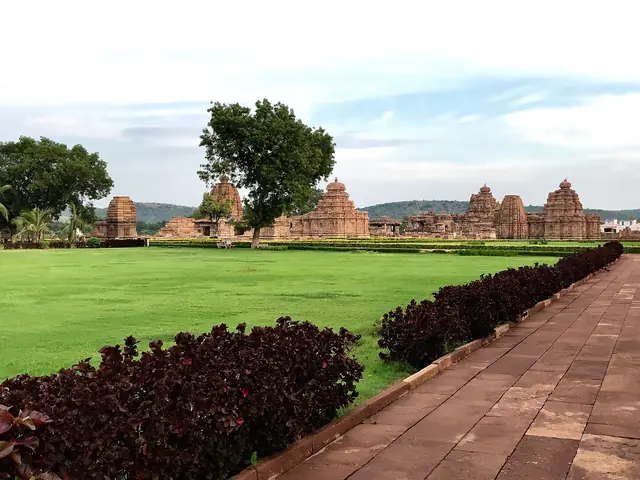
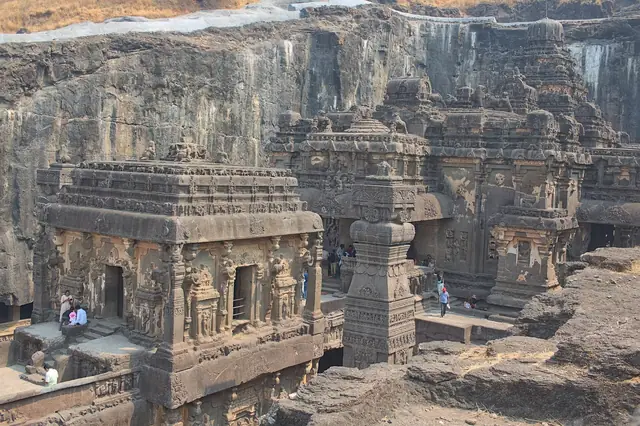
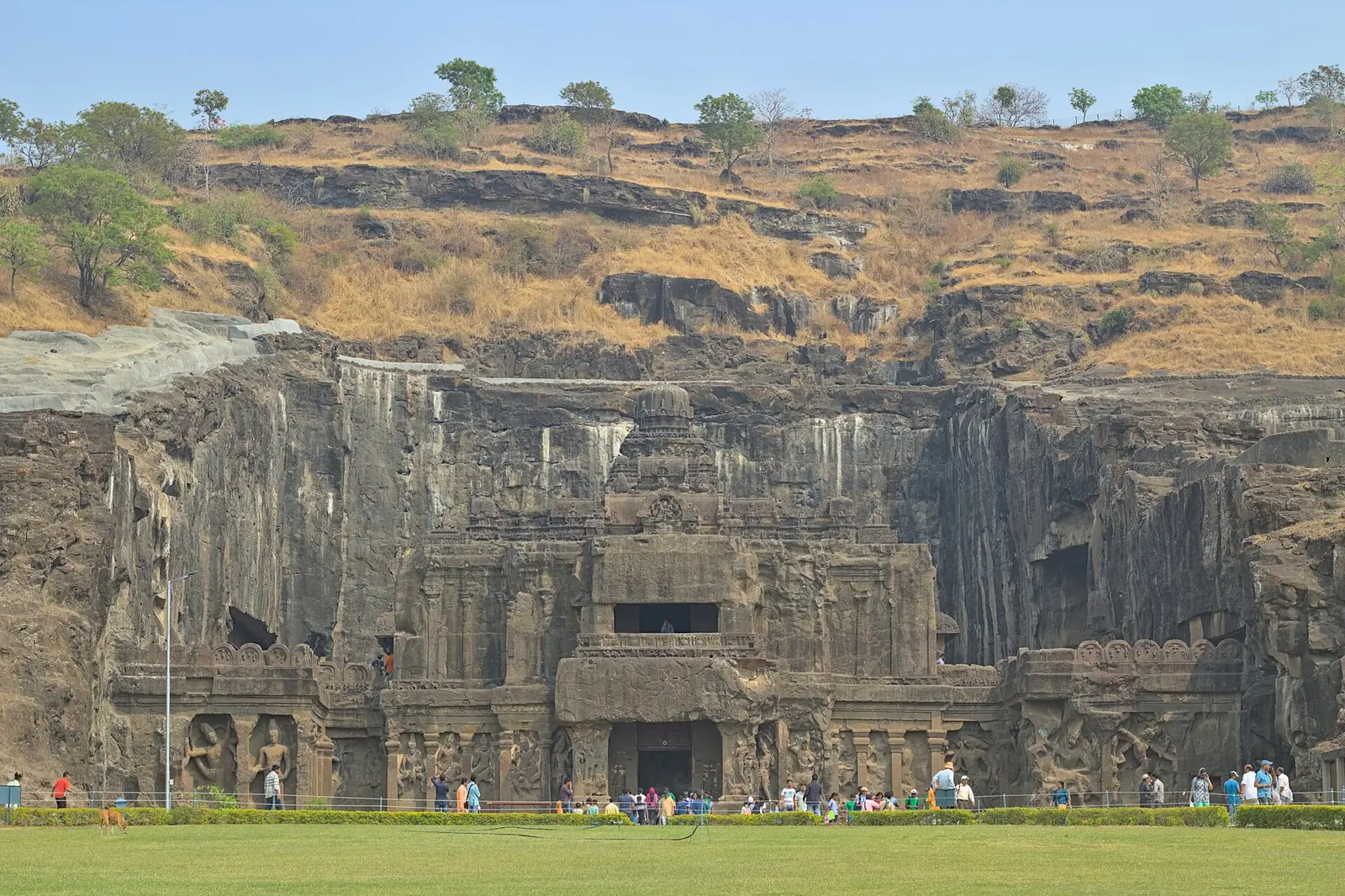
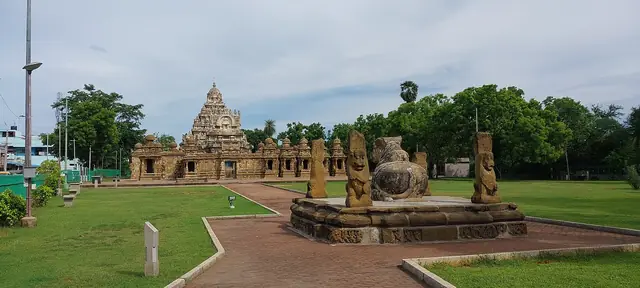
The Kailasa temple, Cave 16 at Ellora, has no dedication inscription. Two grants are the evidence for its builder. The Baroda plates of Karkaraja II of the Gujarat Rashtrakuta branch, of about 812, say that Krishnaraja built at Elapura a temple to Shiva so marvellous that the gods in their chariots stopped to wonder, and its architect himself asked how he had made it. The Kadaba grant of Govinda III also credits Krishnaraja. The temple was cut downward from the top of the basalt hill, the courtyard quarried out around a shrine left standing in the living rock, with its Nandi mandapa, its gateway, its life-size elephants and its two victory pillars. The design follows the Virupaksha at Pattadakal, itself modelled on the Kailasanatha of Kanchi, and M. K. Dhavalikar argued that Krishna brought the Chalukya and Pallava craftsmen of Pattadakal to Ellora.
03What was finished and what came later
Scholars agree the main shrine, its gateway, the Nandi mandapa, the lower storey with its frieze of elephants and lions, and the pillars belong to Krishna’s reign. The great relief of Ravana shaking Kailasa, among the finest carvings in India and perhaps the reason the temple took its name, Dhavalikar dated three or four decades later, and Goetz under Krishna III. The Lankeshvara cave and the shrine of the river goddesses were added by later kings. Dhavalikar reckoned that 250 workers cutting four cubic feet a day could have finished the main temple in about five and a half years. A Marathi katha recorded by about 1500 tells of a queen who vowed to fast until she saw a temple’s shikhara, and of the architect Kokasa who cut one from the top of a rock within a week. Krishna I died in 774 and was followed by his son Govinda II.