Cite
MLA
“Karaikkal Ammaiyar.” Hindu History, 2026, https://www.hinduhistory.in/people/karaikkal-ammaiyar/. Accessed .
APA
Hindu History. (2026). Karaikkal Ammaiyar. Retrieved , from https://www.hinduhistory.in/people/karaikkal-ammaiyar/
Life in moments
- 01
Born Punitavati at Karaikkal, daughter of the merchant Dhanadattan.
- 02
One of three women among the 63 Nayanars; her katha is told in Sekkizhar’s Periya Puranam.
- 03
Her four works are in the 11th Tirumurai; the Arputa Tiruvantadi is the first known Tamil antadi.
- 04
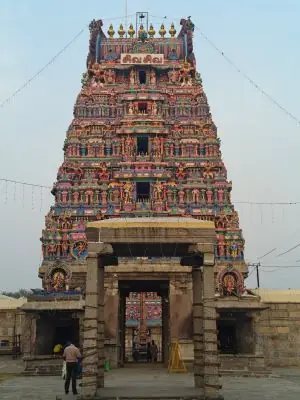
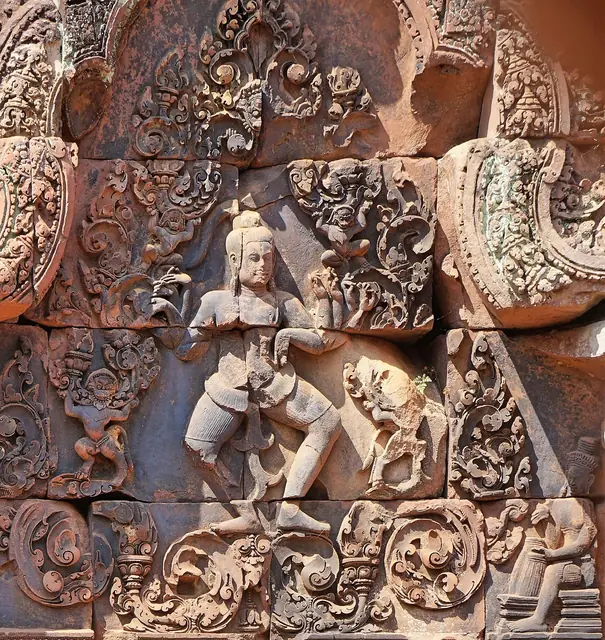
Shown seated at the feet of the dancing Shiva at Tiruvalangadu and on a pediment of Banteay Srei in Cambodia.
- 05
Karaikkal keeps the Mangani (mango) festival in her honour every year.
01Punitavati and the two mangoes
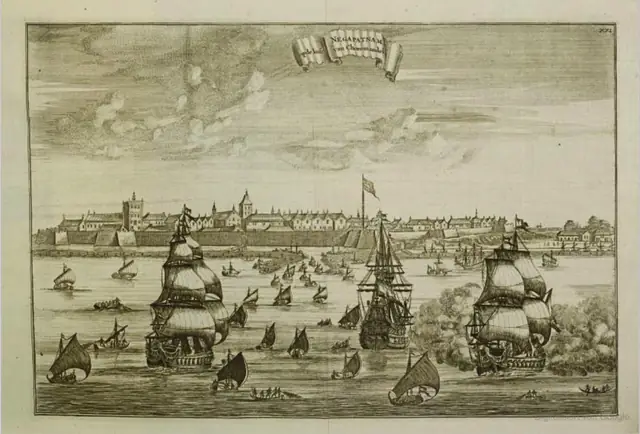
Karaikkal was a trading port on the Chola coast. Punitavati was born there to the merchant Dhanadattan and married Paramadattan, a rich merchant of Nagapattinam. The Periya Puranam of Sekkizhar tells her katha. One day her husband sent home two mangoes. A Shiva devotee came to the door hungry, and she fed him with rice and one of the mangoes. When her husband ate the other and asked for the second, she prayed, and a mango appeared in her hand, sweeter than the first. He asked for another to test her, and that too came. Frightened that his wife was something more than a woman, Paramadattan sailed away, settled in the Pandya country and married again. The town still keeps the Mangani festival, the feast of mangoes, in her honour.
02‘Ammai’ on Kailasa
When she found her husband and he bowed to her as to a goddess, Punitavati asked Shiva to take away the beauty she had kept only for him, and to give her the form of a pey, one of the gaunt spirits who attend him in the cremation ground. The Periya Puranam says the prayer was granted. She then went to Kailasa, and out of reverence would not set her feet on the holy mountain but climbed it on her hands. Parvati asked who this was. Shiva answered that she was the mother who cared for him, and greeted her as Ammai. Asked what she wished, she asked for no more births, and if birth must come, never to forget him, and to sing at his feet while he danced. He sent her to Tiruvalangadu.
03The hymns and the dancing Lord
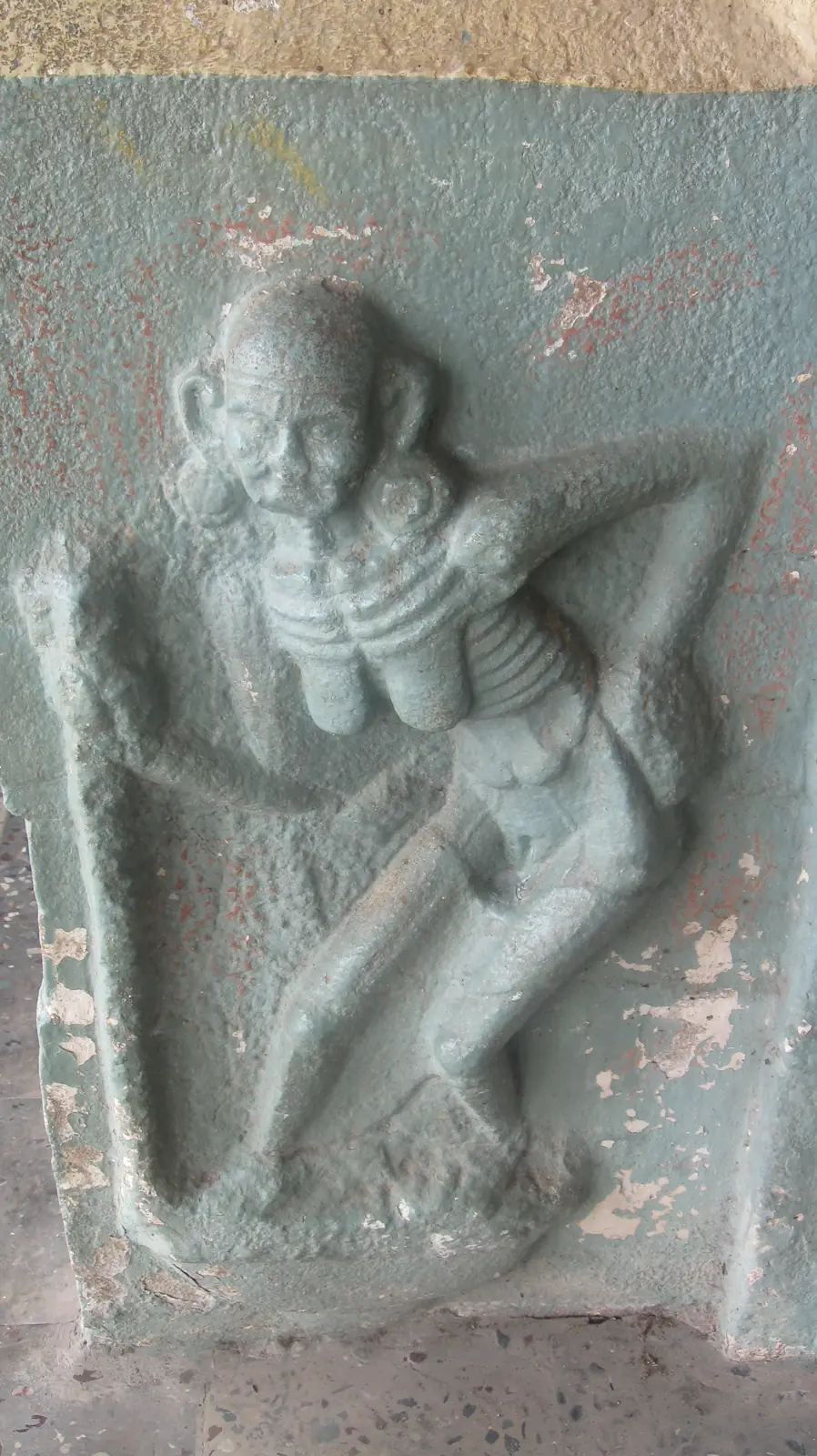
Her works stand in the eleventh book of the Tirumurai: the Arputa Tiruvantadi, the Tiruvirattai Manimalai, and two hymns on Tiruvalangadu. The Arputa Tiruvantadi is the first known Tamil poem in the antadi form, where the last word of each verse begins the next. Her Tiruvalangadu hymns sing of Shiva dancing in the burning ground at night among the spirits, with herself as one of them, and they are among the earliest poems anywhere on the dance of Nataraja. In Chola bronzes she sits beside the dancing Lord, emaciated, cymbals in hand. Her image travelled far: on a pediment of Banteay Srei, the 10th-century Shiva temple near Angkor in Cambodia, she is carved at the feet of the dancing Shiva.