01The vihara of a Sumatran king
The Larger Leiden plates, a Chola copper-plate charter now in the university library at Leiden, record that in his 21st regnal year, about 1006 CE, Rajaraja Chola granted the village of Anaimangalam to the Chudamani vihara at Nagapattinam. The vihara had been raised by Maravijayottungavarman, the Shailendra king of Kataha and Srivijaya, in the name of his father Chudamanivarman; Rajendra issued the charter after his father’s death. A Hindu emperor endowing a Buddhist house built by a foreign king on his own coast tells you how open the Chola ports were. A tall brick tower of the old vihara, which sailors called the China Pagoda, stood until 1867, when it was pulled down to build a Jesuit college. Several hundred bronze Buddhas dug up in the town are now in the Government Museum, Chennai.
02Kayarohanam and the later centuries
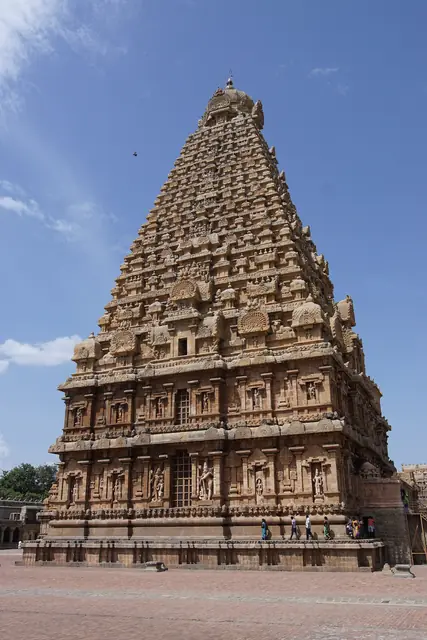
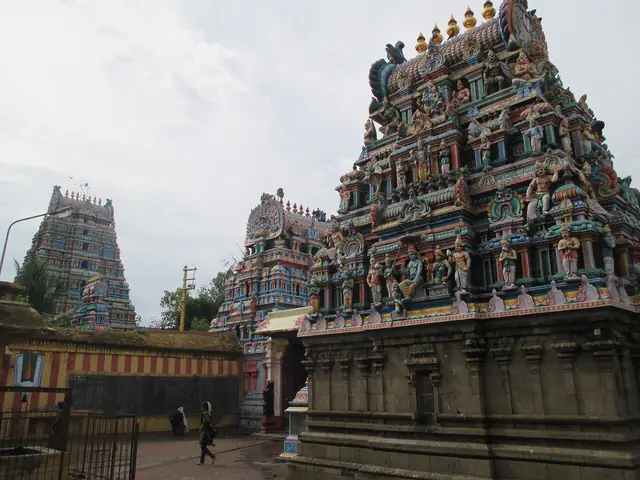
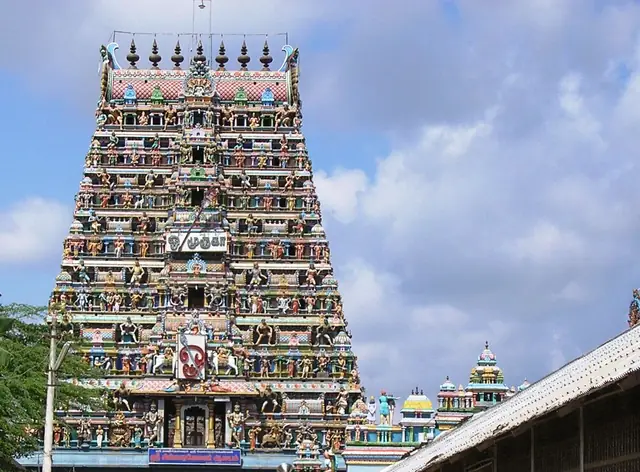
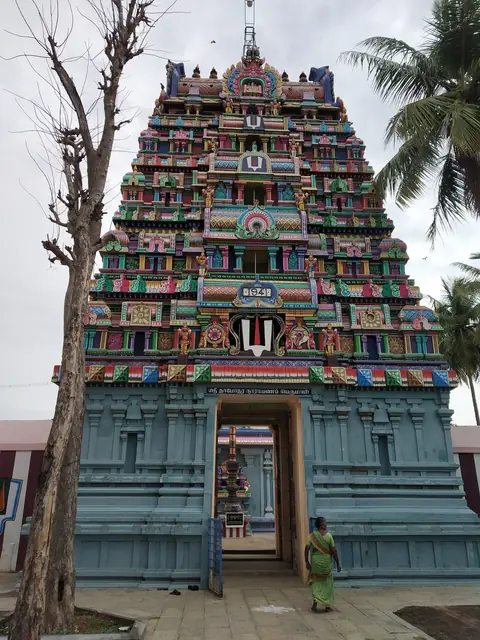
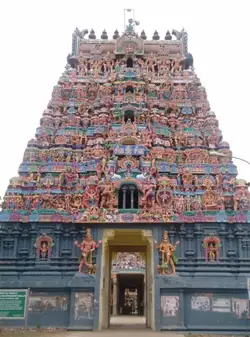
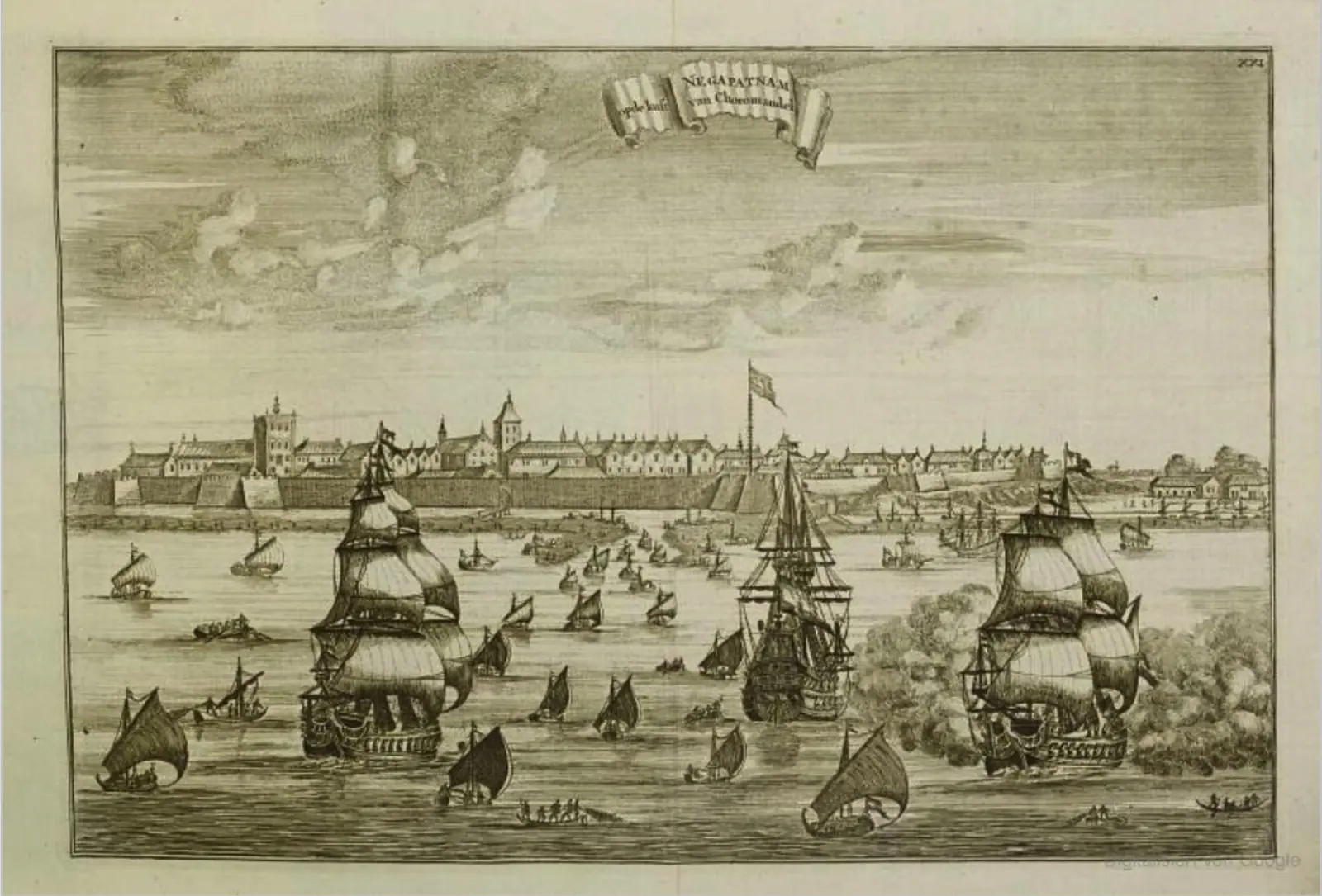
To the Tevaram poets the town was Tirunagaikkaronam, and the Kayarohanaswamy temple, with the Devi as Neelayadakshi, is one of the paadal petra sthalams sung by Sambandar, Appar and Sundarar. The Portuguese settled here in the sixteenth century; the Dutch took the town from them in 1658 and later moved their Coromandel headquarters here from Pulicat. The British captured it in 1781. On 26 December 2004 the tsunami struck this coast harder than any other place in India, and more than six thousand people died in Nagapattinam district alone.
The life of this place
- c. 1006 CERajaraja Chola grants Anaimangalam to the Chudamani vihara built by the Srivijaya king (Larger Leiden plates).
- 1658The Dutch East India Company takes the town from the Portuguese.
- 1781British forces capture Nagapattinam from the Dutch.
- 1867The last tower of the old vihara is demolished to make way for a Jesuit college.
- 26 December 2004The Indian Ocean tsunami devastates the town and district.
Kayarohanaswamy temple is in the old town; the Velankanni shrine and the sea are a short ride south.