Cite
MLA
“Savitribai Phule.” Hindu History, 2026, https://www.hinduhistory.in/people/savitribai-phule/. Accessed .
APA
Hindu History. (2026). Savitribai Phule. Retrieved , from https://www.hinduhistory.in/people/savitribai-phule/
Life in moments
- 011831
Born 3 January 1831 at Naigaon, Satara district; married Jyotirao Phule in 1840.
- 02
Trained as a teacher at Ahmednagar and at the Normal School, Pune.
- 031848
Taught at the girls’ school opened at Bhide Wada in January 1848; the Phules opened eighteen schools in all.
- 041854
Published Kavya Phule (1854) and Bavan Kashi Subodh Ratnakar (1892).
- 051897
Died of plague on 10 March 1897 after carrying a sick child to her clinic.
01Naigaon to the Normal School
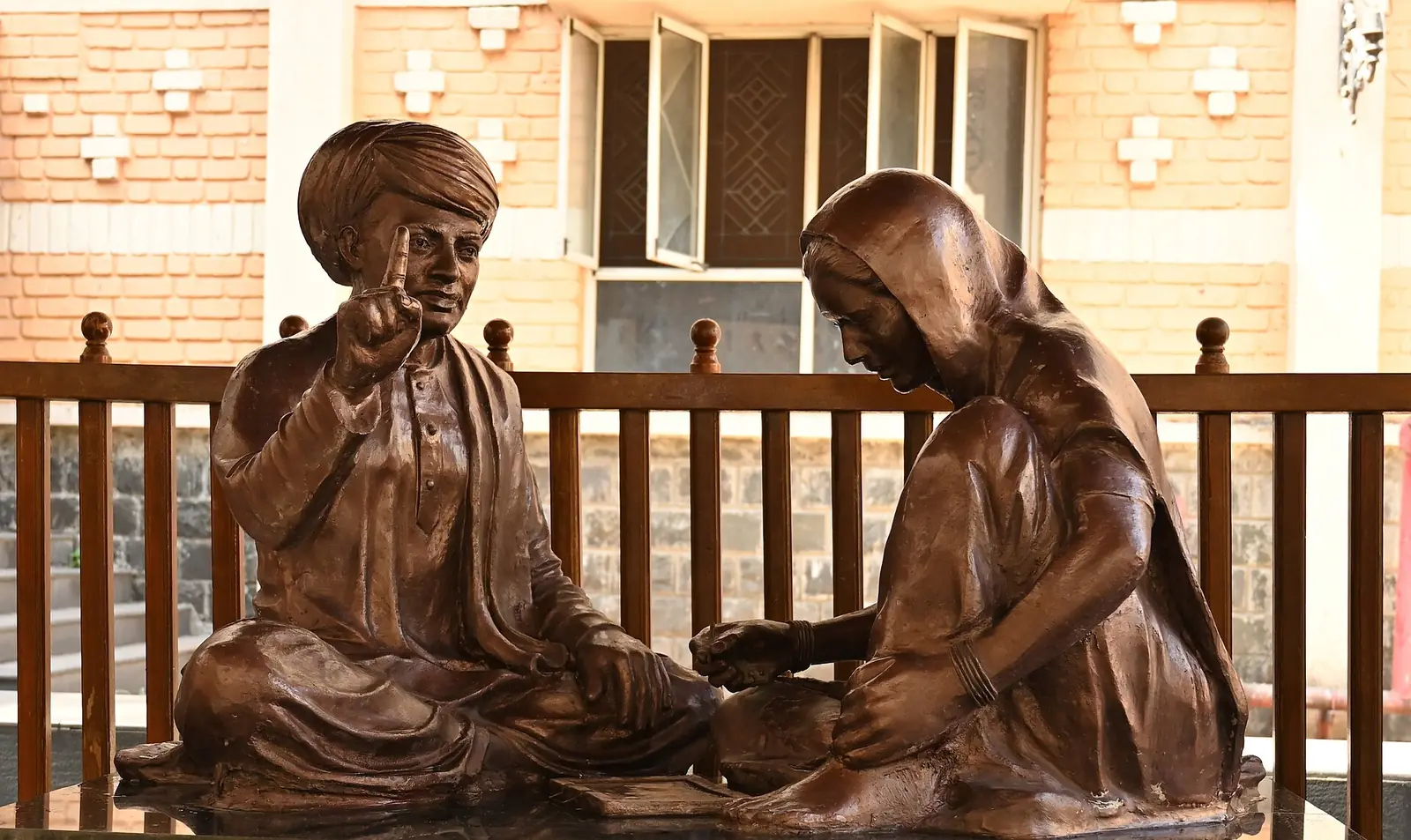
She was born on 3 January 1831 at Naigaon in Satara district, the youngest of four children of Lakshmi and Khandoji Nevse Patil, of the Mali community. In 1840, at nine, she was married to Jyotirao Phule, who was thirteen. She could not read. Jyotirao and Sagunabai Kshirsagar, a relative who had brought him up, taught her at home and in the fields where she took him his meals; later she studied under Sakharam Yeshwant Paranjpe and Keshav Shivram Bhavalkar. She trained as a teacher in two courses, at Cynthia Farrar’s institution in Ahmednagar and at the Normal School in Pune, and became one of the first trained women teachers of India. With Fatima Sheikh, who trained beside her, she began to teach.
02An extra sari in the bag
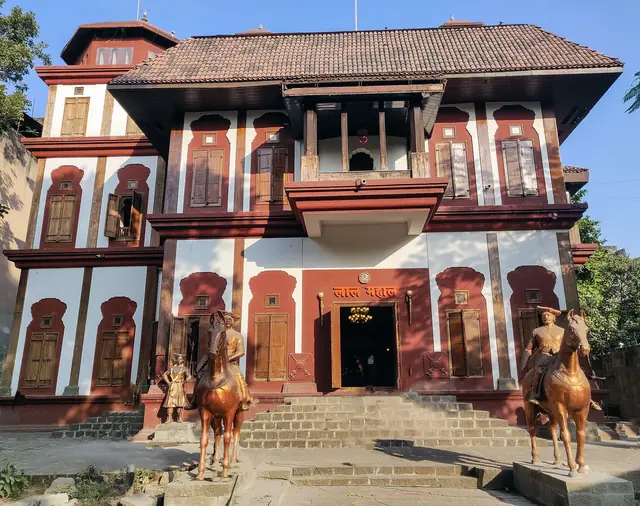
In January 1848 she, Jyotirao and Sagunabai opened the school for girls at Bhide Wada in Pune, with a syllabus of reading, arithmetic, science and social studies. People who thought it wrong for a woman to teach, and for girls to learn, waited for her on the road and threw stones, mud and cow dung at her, and she carried a second sari to change into when she reached the school. By the end of 1851 the Phules ran three girls’ schools in Pune with about 150 pupils, and over the years they opened eighteen. She started the Mahila Seva Mandal for women’s causes, ran the home for widows that the Phules opened in 1863, and led the women’s side of the Satyashodhak Samaj after 1873.
03Kavya Phule and the plague of 1897
She published a book of poems, Kavya Phule, in 1854, and Bavan Kashi Subodh Ratnakar in 1892; her poems tell the poor and the women of her time to go and get learning. The couple had no children of their own and brought up Yashwant, who became a doctor. After Jyotirao died in 1890 she carried on the Samaj. When bubonic plague reached Pune in 1897, she and Yashwant opened a clinic on the southern edge of the city, away from the infection. Hearing that the son of Pandurang Babaji Gaikwad had fallen ill in the Mahar settlement near Mundhwa, she went and carried him on her back to the clinic. She caught the plague herself and died at nine at night on 10 March 1897. In 2014 the University of Pune was renamed Savitribai Phule Pune University.