
Cite
MLA
“Queen Didda of Kashmir.” Hindu History, 2026, https://www.hinduhistory.in/people/queen-didda/. Accessed .
APA
Hindu History. (2026). Queen Didda of Kashmir. Retrieved , from https://www.hinduhistory.in/people/queen-didda/
Life in moments
- 01
Daughter of Simharaja of Lohara; granddaughter, through her mother, of the Hindu Shahi Bhimadeva.
- 02958
Wife of Kshemagupta of Kashmir; regent from 958 for her son and three grandsons.
- 03980
Sole ruler of Kashmir from 980 until her death in 1003.
- 04
Kalhana credits her with the Diddasvamin temples, Diddapura and the Diddamatha of Srinagar.
- 05
Adopted her nephew Samgramaraja, founder of the Lohara dynasty of Kashmir.
01Lohara and the Shahis
Didda was the daughter of Simharaja, king of Lohara, a hill kingdom in the Pir Panjal on the road between western Punjab and Kashmir, and through her mother a granddaughter of Bhimadeva, of the Hindu Shahis of Kabul and Udabhandapura. She was married to Kshemagupta, king of Kashmir, and coins have been found that carry her name with his, a sign of her place even then. When he died in 958 after a fever caught on a hunt, their son Abhimanyu II was a child, and Didda ruled as regent. She drove out the ministers and nobles who stood against her, and when they rose in revolt she put it down, with help bought where it was needed, and executed the rebels and their families. Kalhana, writing in the 1140s, a century and a half later, does not hide his dislike of her.
02Grandsons on the throne
Abhimanyu died in 972. His son Nandigupta, a small boy, was put on the throne with Didda as regent, and in 973, Kalhana says, she had him done away with; his brother Tribhuvanagupta followed in 975. The youngest, Bhimagupta, reigned in name until 980, when she had him tortured to death and took the crown for herself. By then she relied on Tunga, a herdsman from the hills of Parnotsa, today’s Poonch, whom she made prime minister and who was also her lover. The Damaras, the landholding lords who would trouble Kashmir for two centuries, were held down by force and by bargaining. Aurel Stein, who translated the Rajatarangini in 1900, wrote that in spite of the defects of her character she showed the instinct of a statesman, since she alone of the rulers of her age kept the throne in peace and passed it on without dispute.
03Temples, and the heir from Lohara
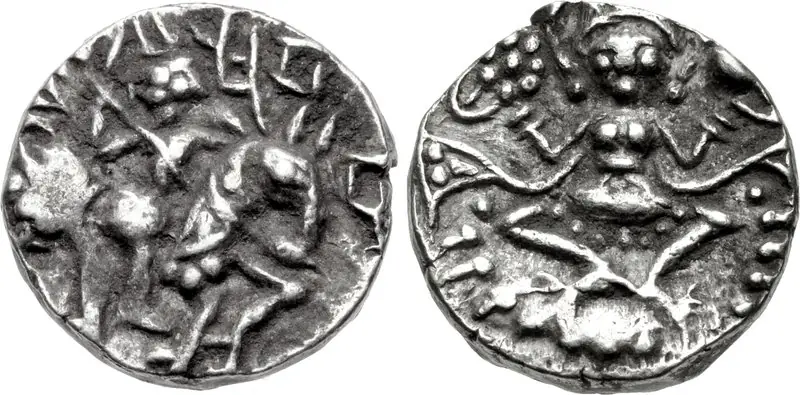
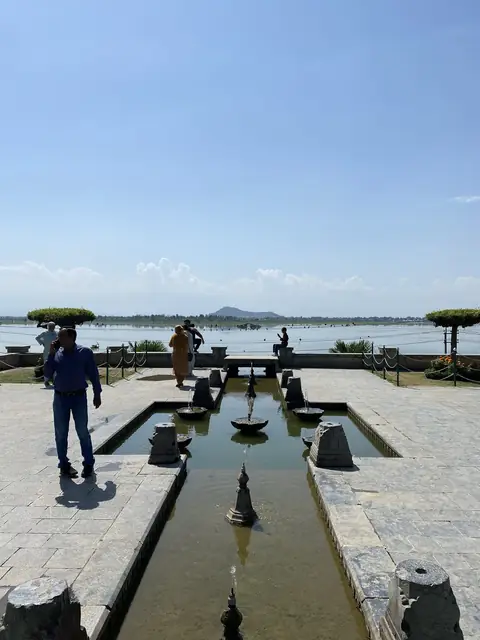
Kalhana credits her with building many shrines, as many as sixty-four by one count. In Nandigupta’s brief reign, he says, she raised temples to Vishnu, the Abhimanyusvamin and two Diddasvamins, and rebuilt Buddhist viharas. She founded the town of Diddapura and the Diddamatha in Srinagar; the shrine is gone, but the quarter on the right bank of the Jhelum is still called Diddamar. Coins bearing her name survive, in the Kashmir style with a seated figure on one side and a standing one on the other. Having no living heir of her own line, she adopted Samgramaraja, eldest son of her brother Udayaraja of Lohara, and when she died in 1003, aged about seventy-nine, he took the throne in peace. The Lohara dynasty that followed held Kashmir into the 12th century, and it was Samgramaraja, not Didda, who faced Mahmud of Ghazni; Mahmud’s attempt on the fort of Lohkot in 1015 failed.