What it says
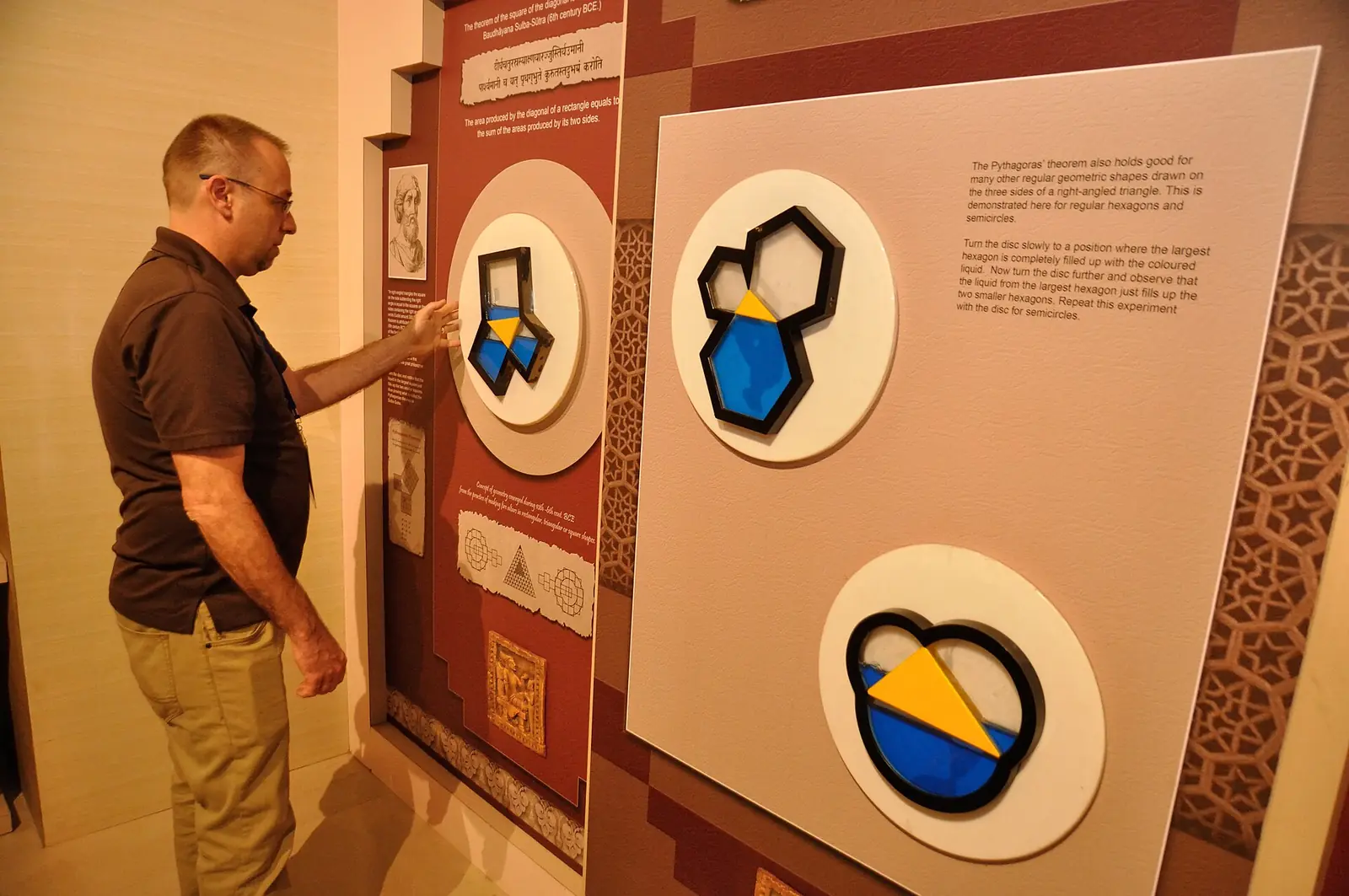
Baudhayana states: “The diagonal cord of a rectangle produces both the areas that its length and breadth produce separately”, the rule the world now calls Pythagoras’ theorem. He gives the diagonal of a square as the side increased by its third, and that third by its own fourth, less the thirty-fourth part of that fourth: 1.4142156, close to the square root of two. The texts show how to turn a square into a circle of equal area and how to build the falcon-shaped altar of the Agnichayana from layers of bricks.
What it proves
They show that geometry in Bharat grew out of the yajna, worked out by the rishis for the exact building of the altar.