Cite
MLA
“Panwar (Parmar) Rajas of Garhwal.” Hindu History, 2026, https://www.hinduhistory.in/dynasties/panwar-garhwal/. Accessed .
APA
Hindu History. (2026). Panwar (Parmar) Rajas of Garhwal. Retrieved , from https://www.hinduhistory.in/dynasties/panwar-garhwal/
01Kanak Pal and the fifty-two garhs
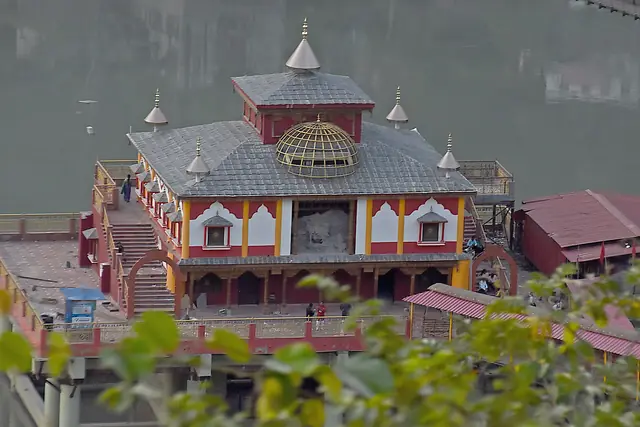
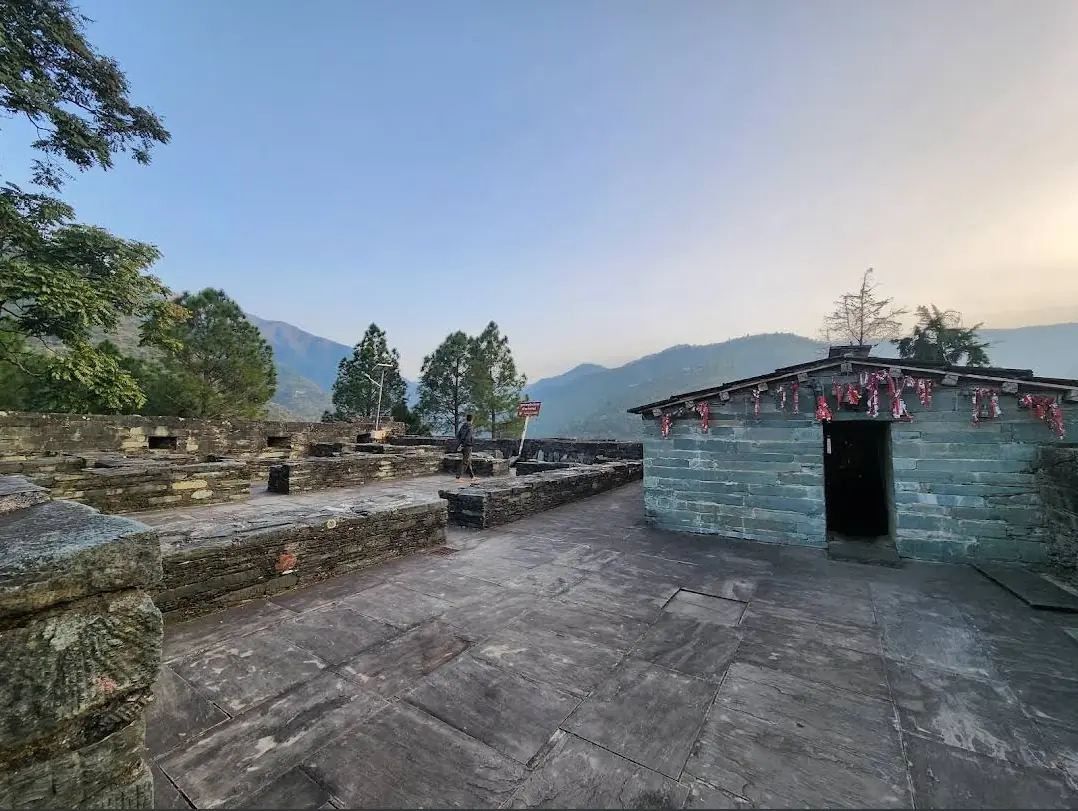
Garhwal remembers that Kanak Pal, a Panwar prince from Malwa, came to Badrinath on pilgrimage, married the daughter of Bhanu Pratap, chief of Chandpur Garhi, and inherited his fort. The family lists place this in the ninth century, giving 888 or a nearby year. For centuries his descendants were one of many hill chiefs; the land was split among fifty-two garhs, each a fort with its own lord. Ajay Pal, remembered as the thirty-seventh of the line, brought them under one rule and moved his seat to Devalgarh, where the Raj Rajeshwari temple of the royal house still stands; his date is given variously from the fourteenth to the early sixteenth century.
02Srinagar and the Nak-kati Rani
Balbhadra Shah, who ruled from 1575, was the first raja to use the title Shah. Mahipat Shah, crowned in 1622, settled the court at Srinagar on the Alaknanda. He died in 1631, leaving a seven-year-old son, Prithvi Pat Shah, and his widow Rani Karnavati ruled for the boy. Around 1640 a Mughal army under Najabat Khan came up into the hills; the Garhwalis trapped it in the passes and sent the survivors back with their noses cut off, and Karnavati is still called the Nak-kati Rani. In 1658 Prithvi Pat Shah gave shelter to Suleiman Shikoh, Dara Shikoh’s son, who was handed over to Aurangzeb in 1660.
03Bhangani, the Doon and the Gorkhas
Fateh Shah ruled from 1684 to 1716. On 18 September 1688 he led the hill rajas against Guru Gobind Singh at Bhangani, on the Yamuna, and the Guru’s force won the day. In his reign Ram Rai, the eldest son of Guru Har Rai, settled in the Doon, and the town of Dehradun grew around his dera. Pradip Shah ruled for more than fifty years; the Rohillas seized the Doon in 1757 and were driven out in 1770. Then the Gorkhas came. In 1803 they took Srinagar, and on 14 May 1804 Pradyumna Shah was killed fighting them at Khurbura, near Dehradun. For twelve years Garhwal lay under Gorkha rule, remembered for its taxes and for the sale of hill people as slaves at Haridwar.
04Tehri
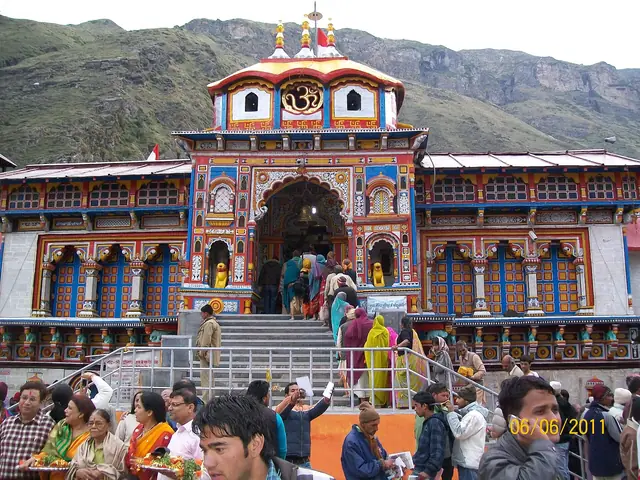
Pradyumna Shah’s son Sudarshan Shah allied with the East India Company, and after the Gorkhas were beaten in 1815 he got back the lands west of the Alaknanda; the Company kept the east, with Srinagar. He founded a new capital at Tehri, where the Bhagirathi meets the Bhilangana. Narendra Shah built Narendranagar and moved the court there in 1919. In 1949 Manabendra Shah signed the merger, and Tehri Garhwal became a district of Uttar Pradesh. The old town of Tehri now lies under the waters of the Tehri dam. The raja’s place in the worship of Badrinath continues: the date of the temple’s opening each spring is still fixed at the palace in Narendranagar on Basant Panchami.
The rulers
- 1Kanak PalFounder at Chandpur Garhic. 9th century (by tradition)
- 2Ajay PalUnited the fifty-two garhs; seat at Devalgarhc. 14th–early 16th century (dates differ)
- 3Balbhadra ShahFirst to use the title Shahc. 1575–1591
- 4Mahipat ShahSettled the court at Srinagar1622–1631
- 5Rani Karnavati (regent)Turned back Najabat Khan’s armyfrom 1631
- 6Prithvi Pat ShahSheltered Suleiman Shikoh, 1658from 1631
- 7Fateh ShahFought at Bhangani, 16881684–1716
- 8Pradip ShahWon back the Doon from the Rohillas1717–1772
- 9Pradyumna ShahFell at Khurbura fighting the Gorkhasto 1804
- 10Sudarshan ShahFounded Tehri1815–1859
- 11Kirti Shah1892–1913
- 12Narendra ShahBuilt Narendranagar1913–1946
- 13Manabendra ShahSigned the merger with India1946–1949
What they left
- The ruins of Chandpur Garhi, the first fort of the line
- The Raj Rajeshwari temple at Devalgarh
- The Garuda flag and the title Bolanda Badrinath
- The opening date of Badrinath, still fixed at the palace on Basant Panchami
- The memory of Rani Karnavati and of Pradyumna Shah’s last stand at Khurbura