01The Belanjong pillar, 914
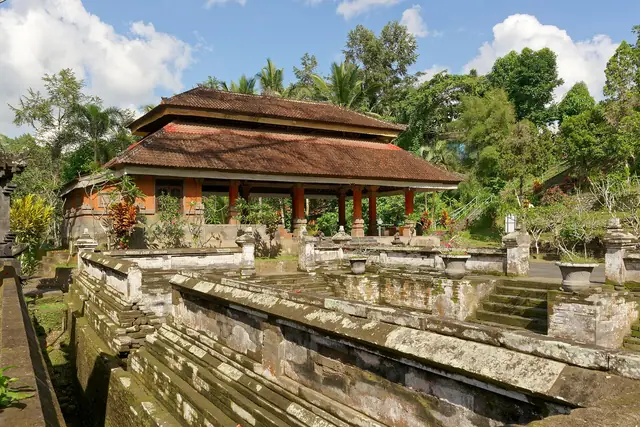
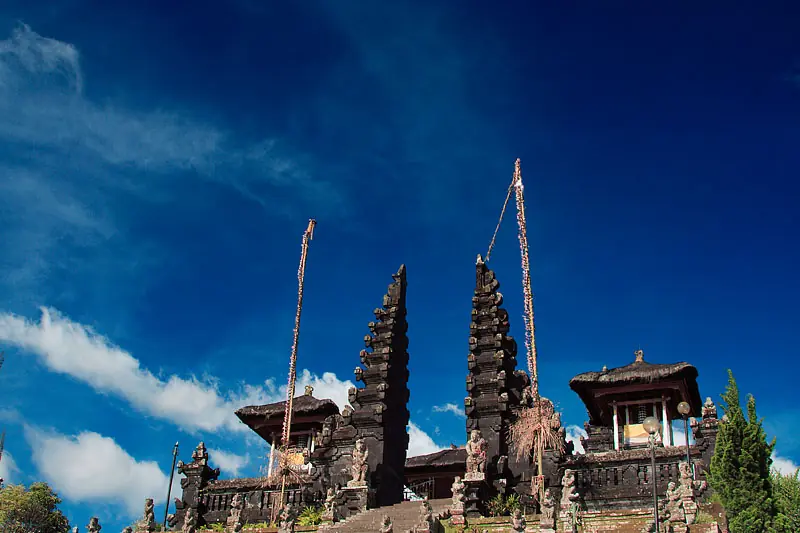
At Sanur, inside the Belanjong temple, stands a short stone pillar inscribed in Sanskrit and Old Balinese, in two scripts, and dated 914 CE. It names Sri Kesari Warmadewa and records a military campaign. It is the oldest dated inscription of Bali. Other copper-plate charters of the 10th century, written in Old Balinese, regulate villages, temple lands and taxes, and name Shaiva and Buddhist priests side by side.
02Udayana and Mahendradatta
Late in the 10th century King Udayana Warmadewa married Mahendradatta, a princess of the East Javanese royal house, who ruled beside him under the name Gunapriya Dharmapatni. Their son Airlangga, born around 991, went to Java and became its king. Under Udayana, charters begin to be written in Old Javanese, and Bali’s court drew closer to Java’s. Balinese tradition links Mahendradatta with the Calon Arang katha, which the Barong and Rangda dance still enacts.
03Gunung Kawi and Tirta Empul
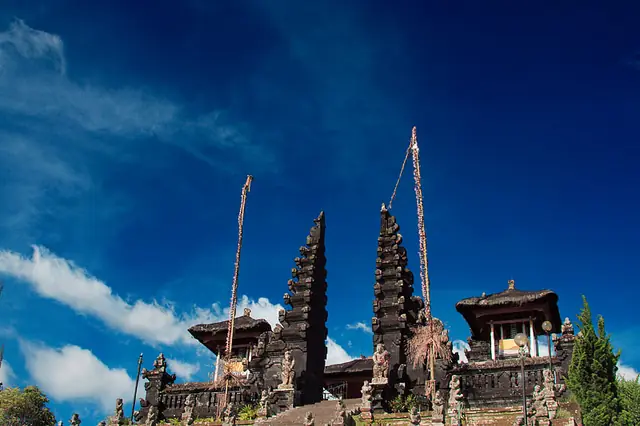
In the gorge of the Pakerisan river at Tampaksiring, ten shrine-facades about seven metres high are cut into the rock face. Gunung Kawi is linked with Anak Wungsu, a younger son of Udayana, who ruled Bali in the second half of the 11th century and left more inscriptions than any other Balinese king. A little upstream is Tirta Empul, a spring where Balinese Hindus still bathe under a row of spouts to be purified; a 10th-century inscription records the founding of a sacred bathing place there.
04The conquest of 1343
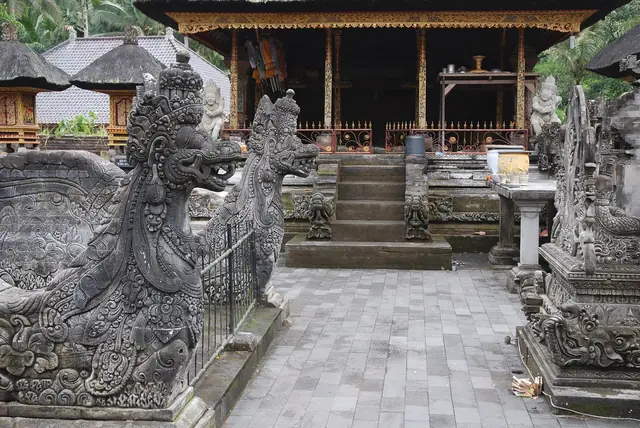
The kings who followed the Warmadewas ruled from Bedulu until 1343, when Gajah Mada and the Majapahit general Arya Damar invaded and defeated the last Bedulu king. Majapahit set a new line at Samprangan and later Gelgel. What had been Bali’s own Shaiva and Buddhist kingship then merged with the court culture of Java, and that blend is the Hindu Bali you can visit today.
The rulers
- 1Sri Kesari WarmadewaBelanjong pillar, Bali’s oldest dated inscriptionc. 914
- 2Udayana WarmadewaRuled with Queen Mahendradatta; father of Airlanggac. 989–1011
- 3Marakatac. 1022–1025
- 4Anak WungsuLinked with Gunung Kawic. 1049–1077
What they left
- The Belanjong pillar at Sanur (914)
- Gunung Kawi rock-cut shrines at Tampaksiring
- Tirta Empul, the purification spring
- Goa Gajah, the 11th-century cave sanctuary