Cite
MLA
“Chand Rajas of Kumaon.” Hindu History, 2026, https://www.hinduhistory.in/dynasties/chand-kumaon/. Accessed .
APA
Hindu History. (2026). Chand Rajas of Kumaon. Retrieved , from https://www.hinduhistory.in/dynasties/chand-kumaon/
01Som Chand at Champawat
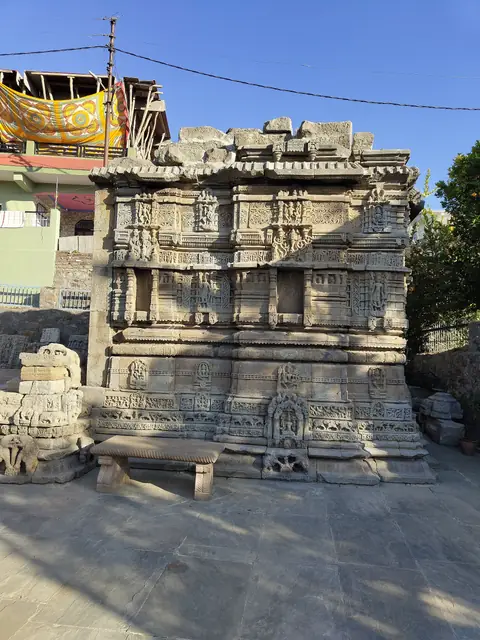
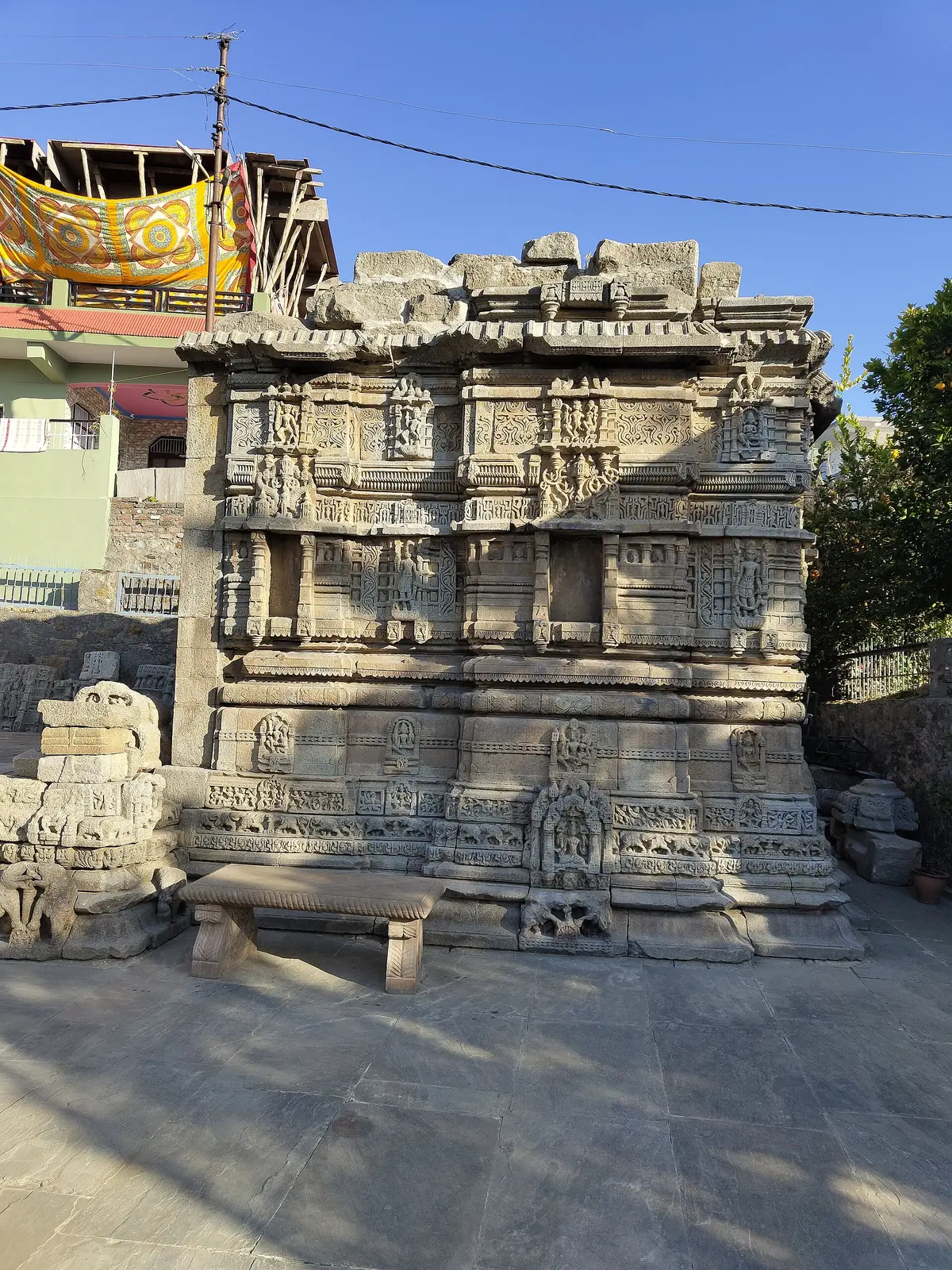
The family lists say Som Chand came from Jhusi near Prayag, married a daughter of a local chief, and set up his seat at Champawat. Those lists, written down in the nineteenth century, put him in the seventh or eighth century, but the Katyuri plates show Kumaon still under Katyuri kings in the tenth. A Baleshwar temple inscription of 1223 names a Vinaya Chand among the feudatories of a Nepali conqueror, which fits a start in the eleventh century. Champawat’s Baleshwar and Nagnath temples, carved stone shrines of the old capital, still stand. Ratan Chand and Kirti Chand in the fifteenth century broke the hold of Doti and pushed west into the old Katyuri lands.
02Almora and Akbar’s court
In 1563 Kalyan Chand moved the capital to a ridge above the Kosi and laid out the town of Almora, called Rajapur in the copper plates of the time. His son Rudra Chand ruled from 1565 to 1597, took Sira from the Raika king Hari Malla, and fought Garhwal again and again without success. In 1587 he went to Lahore to meet Akbar, after Raja Todar Mal sent his son to reassure him, and the Ain-i-Akbari lists a sarkar of Kumaon with twenty-one mahals. Lakshmi Chand, who followed him, kept up the Garhwal wars and built the Bagnath temple at Bageshwar in 1602.
03Baz Bahadur and the temples of Almora
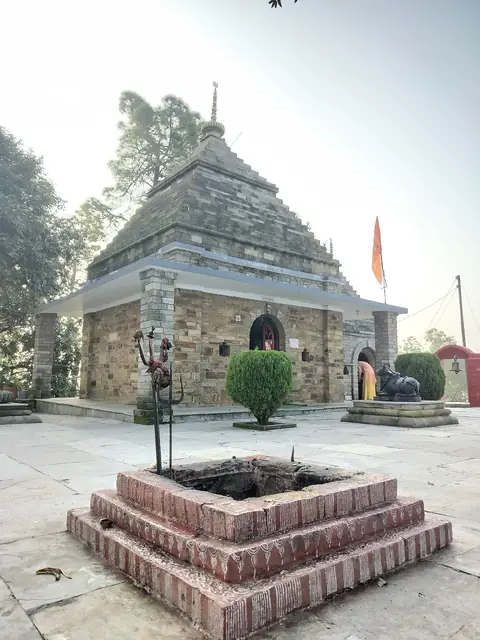
Baz Bahadur Chand, who ruled from 1638 to 1678, was the strongest of the line. He joined Shah Jahan’s army against Garhwal in 1655, took the Terai, and pushed his border east to the Karnali. He built the Bhimeshwar Mahadev temple at Bhimtal, and the shrine of Golu Devta at Ghorakhal is linked with his reign. Udyot Chand raised temples at Almora in 1688 after victories over Garhwal and Doti; one of them, the Parbateshwar, became the present Nanda Devi temple when the goddess’s image was moved there under British rule. Jagat Chand, early in the eighteenth century, even drove the Garhwal raja out of Srinagar for a time.
04Rohillas and Gorkhas
In 1744 the Rohilla chief Ali Mohammed Khan came up through Bhimtal and took Almora. His men stayed seven months, broke images in the temples, and left only after Kalyan Chand paid three lakh rupees; a second attack was stopped at Barakheri at the foot of the hills. Under Deep Chand and his successors the court fell into feuds between ministers, and the plains slipped away. Early in 1790 the Gorkha army crossed the Kali, came through Gangoli and took Almora, and Mahendra Chand fled to the plains. Gorkha rule lasted until the British took Almora on 26 April 1815, and the Treaty of Sugauli in 1816 made Kumaon British territory.
The rulers
- 1Som ChandFounder at Champawatc. 11th century
- 2Ratan Chandc. 1450–1488
- 3Kirti Chandc. 1488–1503
- 4Kalyan ChandFounded Almora, 1563c. mid-16th century–1565
- 5Rudra ChandMet Akbar at Lahore, 15871565–1597
- 6Lakshmi ChandBuilt Bagnath temple, Bageshwar, 1602c. 1597–1621
- 7Baz Bahadur ChandTook the Terai; Bhimeshwar temple, Bhimtal1638–1678
- 8Udyot ChandTemples at Almora, 1688c. 1678–1698
- 9Jagat Chandc. 1708–1720
- 10Devi Chandc. 1720–1726
- 11Kalyan Chand (later)Rohilla invasion of 1744c. 1730–1747
- 12Deep Chandc. 1748–1777
- 13Mahendra ChandLast raja; driven out by the Gorkhasto 1790
What they left
- The town of Almora, founded in 1563
- Baleshwar and Nagnath temples at Champawat
- Bagnath temple at Bageshwar, 1602
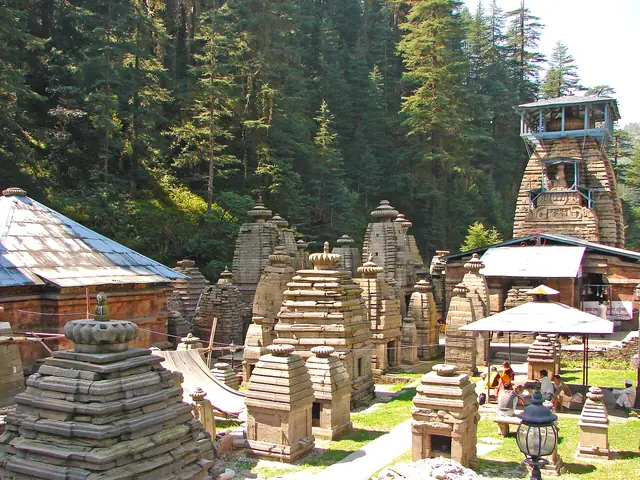
- The Nanda Devi temple complex at Almora
- Bhimeshwar Mahadev at Bhimtal and Golu Devta at Ghorakhal