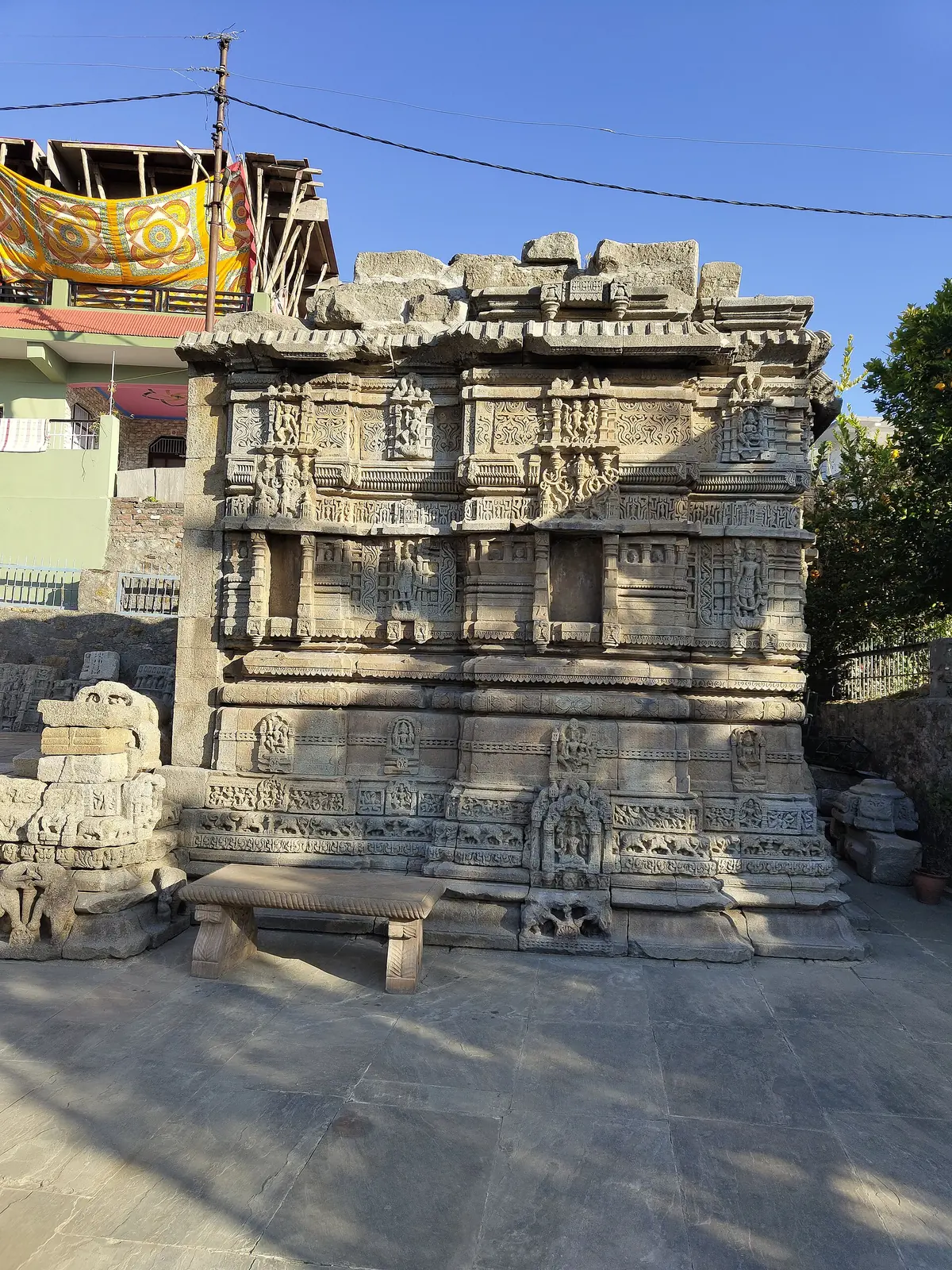
01Capital of the Chands
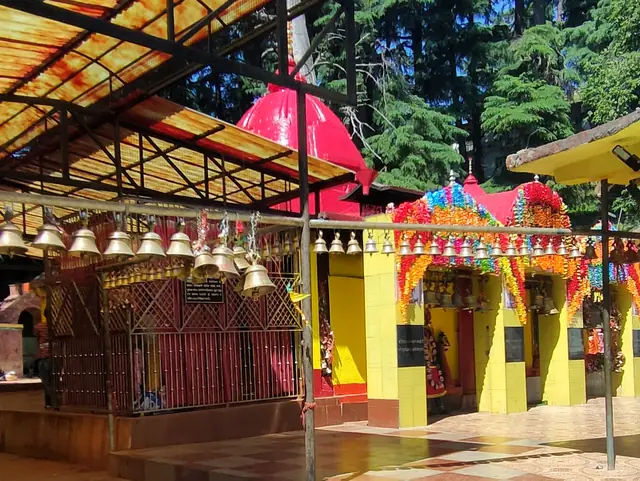
The Chand rajas ruled Kumaon for centuries, first from Champawat and from the 1560s from Almora. Baleshwar was their family temple at Champawat. The main shrine is to Shiva as Baleshwar, and two more stand in the same compound, to Ratneshwar and to Champavati Durga, the Devi from whom the town takes its name. A copper-plate grant kept at the temple records the completion of work under Raja Hari Chand in the 1420s. Close by is an old naula, the stone-lined spring well of the Kumaoni hills.
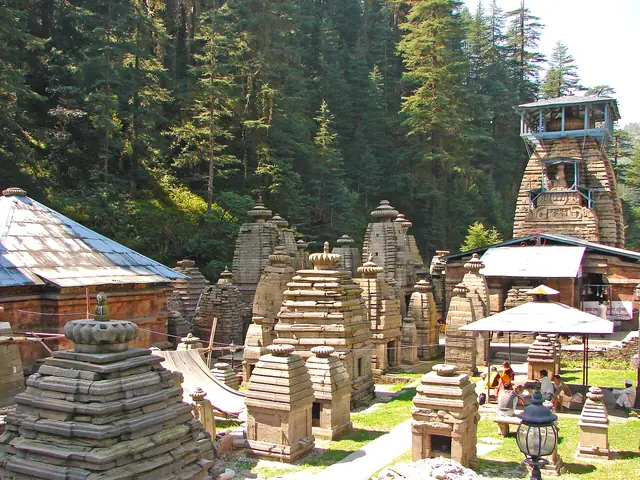
02Stone like lace
The temple is famous among Kumaonis for its carving. Ceilings are cut into nested lotuses, walls carry deities and dancers, and every course of stone has a band of ornament. Parts of the shikhara have fallen, but what stands is fine work. Mahashivaratri brings a large mela to the compound. Champawat is also the place where, the local tradition says, Bhagwan Vishnu took the Kurma avatar on the nearby Kanadev hill.
The life of this place
- c. 1420–1427Reconstruction begun under Uday Chand is completed under Hari Chand, as a copper plate at the temple records.
- 1560sThe Chands move their capital to Almora; Baleshwar remains a royal temple.
The temple is in Champawat town, a short walk from the bus stand; Lohaghat and the Advaita Ashrama at Mayavati are nearby.