Cite
MLA
“Kamakhya.” Hindu History, 2026, https://www.hinduhistory.in/devata/kamakhya/. Accessed .
APA
Hindu History. (2026). Kamakhya. Retrieved , from https://www.hinduhistory.in/devata/kamakhya/
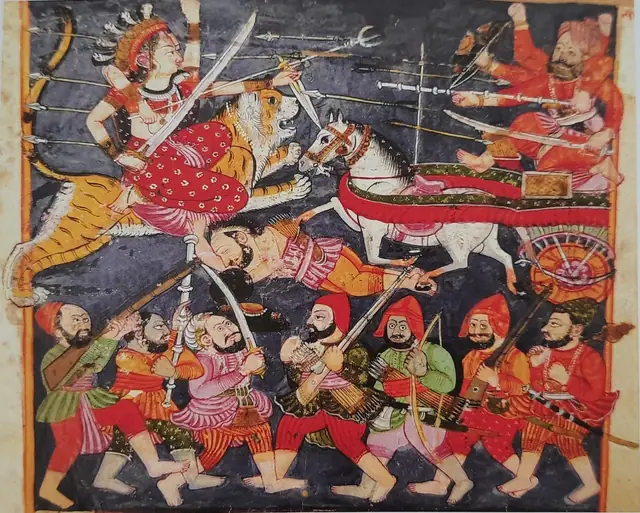
No image is worshipped in the sanctum: the Devi is a natural cleft in the stone, below ground, covered with red cloth and flowers. In paintings and on the temple walls she is shown seated, red-clad, holding a noose, goad and lotus.
01Where Sati fell
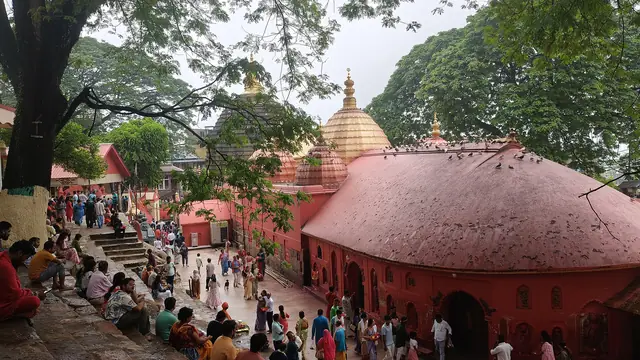
When Mata Sati gave up her body in Daksha’s yajna, Shiva wandered the worlds carrying it, and Vishnu’s discus cut it so that its parts fell across Bharat, each place becoming a peetha of the Devi. The Kalika Purana says the yoni fell on Nilachal, the blue hill above the Brahmaputra, and that this is the seat where Shiva and Shakti meet in love, which is what Kamakhya means. You go down a few steps into a dim chamber cut below the floor of the temple. There is no murti. The Devi is a cleft in the rock, kept wet by an underground spring, covered in red cloth and flowers, and pilgrims touch the water. The Yogini Tantra, another text of this land, also praises her.
02Ambubachi
In mid-June, in the Assamese month of Ahar, when the sun enters Mithuna and the Brahmaputra is in flood, the doors of Kamakhya are shut for three days. The Devi is in her yearly menstruation, the earth herself is held to be in that state, and across Assam households do not plough, cook in the usual way or read holy books. On the fourth day she is bathed, the doors open, and lakhs press in for darshan. The prasad is of two kinds: angodak, water from the spring, and angabastra, pieces of the red cloth that covered the stone. The Ambubachi Mela brings sadhus, tantrics, Bauls from Bengal and householders from every part of Bharat to the hill.
03Kings of Kamarupa and the Koch rebuilding
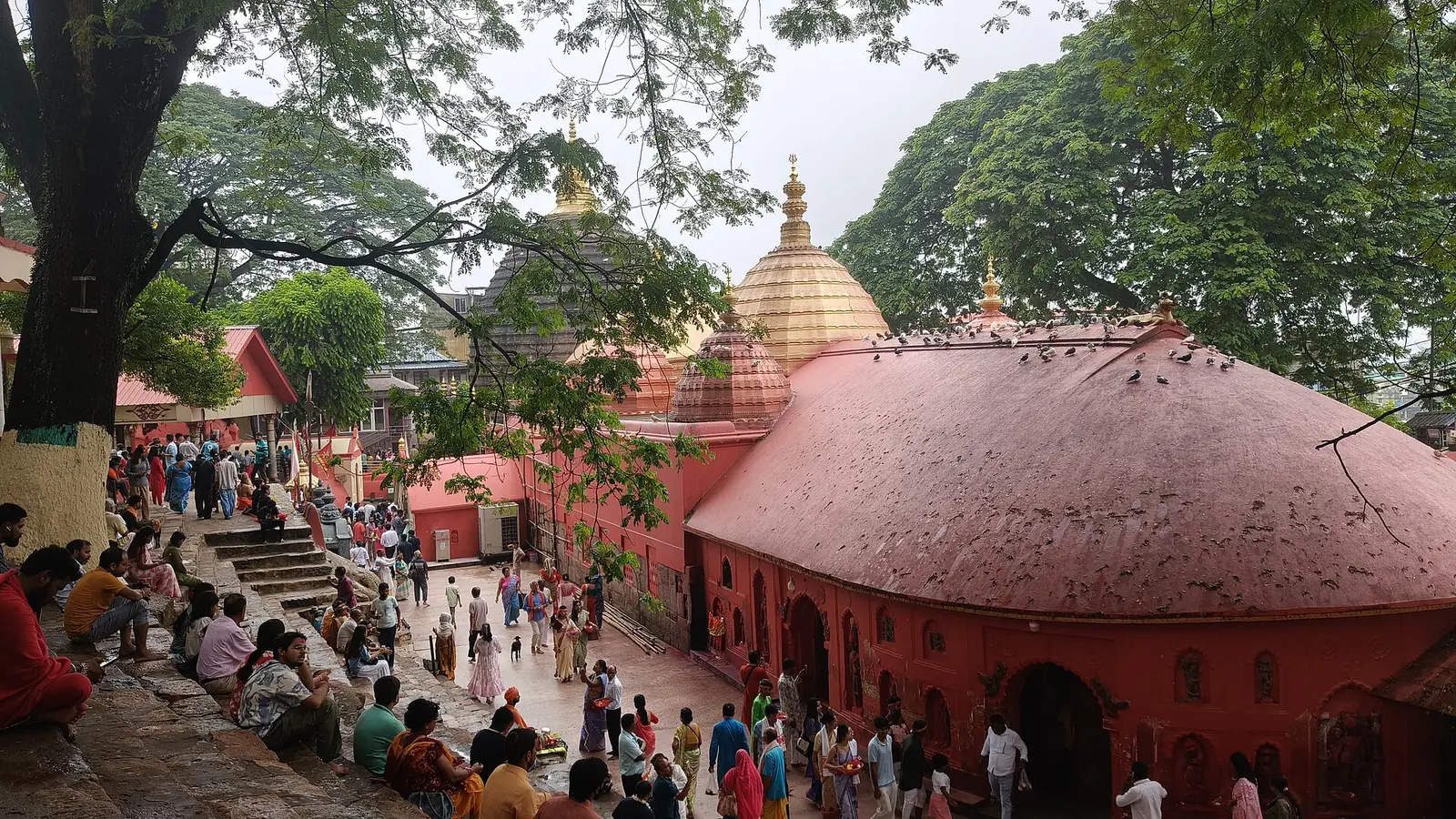
The kings of old Kamarupa, first the Mlechchha line and then the Palas, were the temple’s early patrons, and parts of its plinth and carved stones go back to the eighth and ninth centuries. The old temple was wrecked around 1498, during the invasion of Alauddin Hussain Shah of Bengal; an older account blamed the iconoclast Kalapahar, but historians now place the damage in that campaign. The Koch king Naranarayana had it rebuilt, and the work, supervised by his brother and general Chilarai, was finished in 1565. Its beehive-shaped dome of brick on a cruciform plan began what is called the Nilachal style. From 1681 the Ahom kings held Guwahati, and they too endowed the temple and added shrines on the hill.
04The ten Mahavidyas on the hill
Kamakhya is not one shrine but a hill of them. The ten Mahavidyas, the great wisdom-forms of the Devi, are all worshipped on Nilachal: seven in temples of their own, Kali, Tara, Bhuvaneshwari, Bagalamukhi, Chhinnamasta, Bhairavi and Dhumavati, and three, Tripurasundari, Matangi and Kamala, inside the main temple with Kamakhya herself. For this reason the hill has long been a centre of Shakta sadhana in the east. Besides Ambubachi, the temple keeps Durga Puja in Ashvin and the Manasha Puja in the monsoon. The Assamese scholar Banikanta Kakati’s study, The Mother Goddess Kamakhya, remains the standard account of the temple’s texts and worship.
In the texts
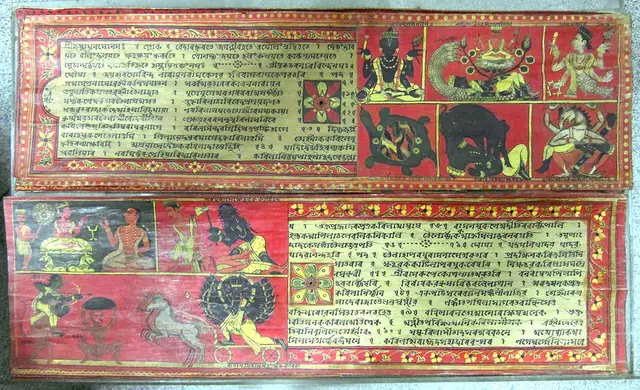
- Kalika Purana
- Yogini Tantra
- Devi Bhagavata Purana (Shakti Peetha lists)